

At the outer reaches of our Solar System, beyond Neptune’s orbit, lies an icy realm known as the Kuiper Belt. Here, in the darkness and cold, the remains of the building blocks that formed the planets more than 4.5 billion years ago are still preserved. Among these objects, known as planetesimals, astronomers have long noticed a strange pattern: about one in ten of them has a bizarre shape resembling two snowmen joined together. These structures, which scientists call contact binary systems, remained a mystery until recently: how did they appear?
A simple explanation of complex forms
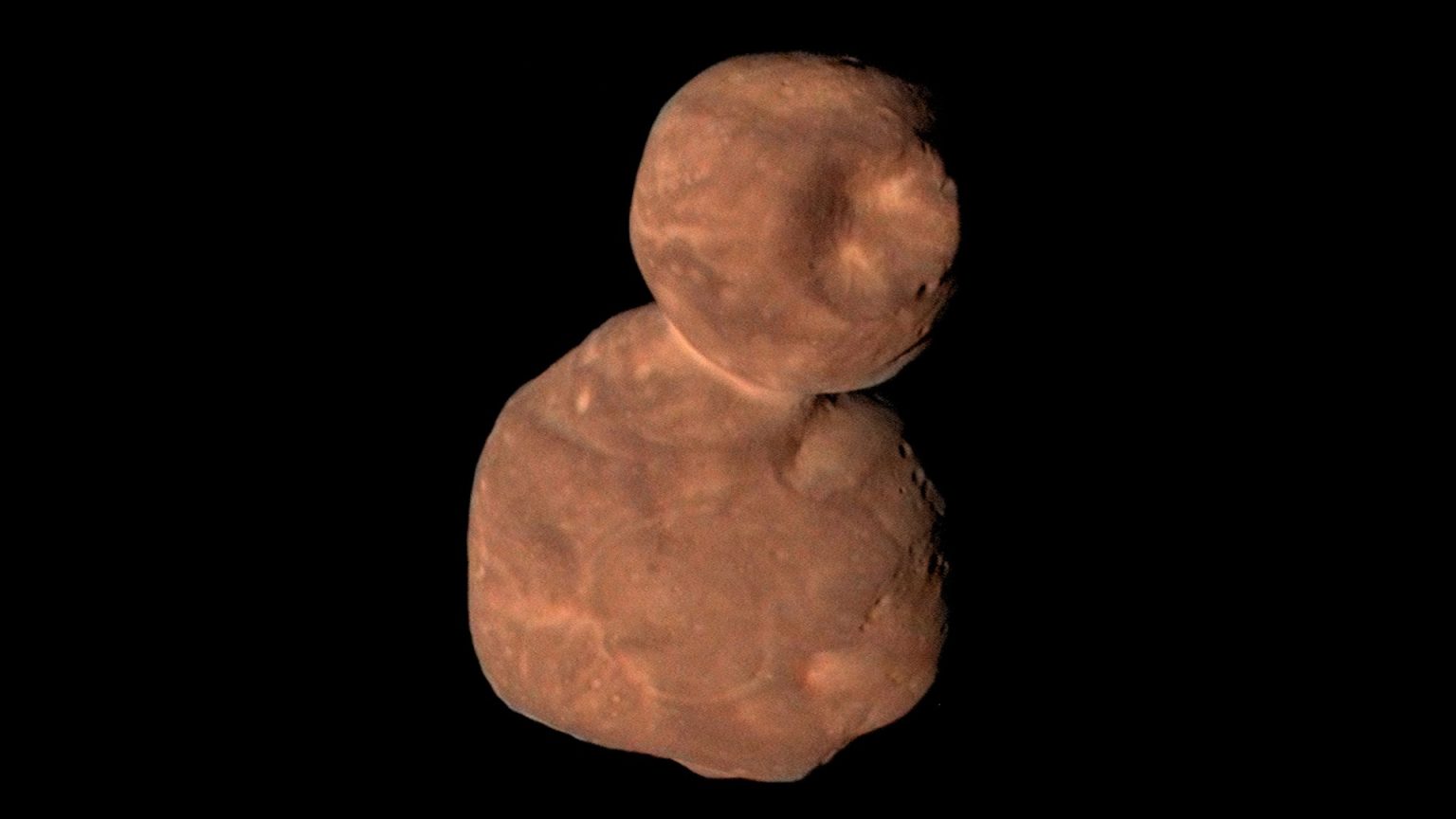
Researchers at Michigan State University (MSU) have proposed an elegant solution to this cosmic puzzle. Using the power of the high-performance computing cluster at the Institute for Cybernetic Research, graduate student Jackson Barnes created the first successful simulation that reproduces the process of forming these “snowmen.”
Previously, scientists assumed that such objects were the result of rare collisions. However, previous computer models treated them as drops of liquid, which, when merging, should have formed perfect spheres rather than double-bladed shapes. The secret of the new modeling lies in taking into account the physical strength of the material. Barnes’ simulation shows that planetesimals are capable of maintaining their integrity by gently leaning on each other under the influence of gravity.
“If 10% of such objects are contact binary systems, then the process of their formation cannot be a random or exotic phenomenon,” explains Professor Seth Jacobson, co-author of the study. “Gravitational collapse fits perfectly into the overall picture.”
How ice giants are formed
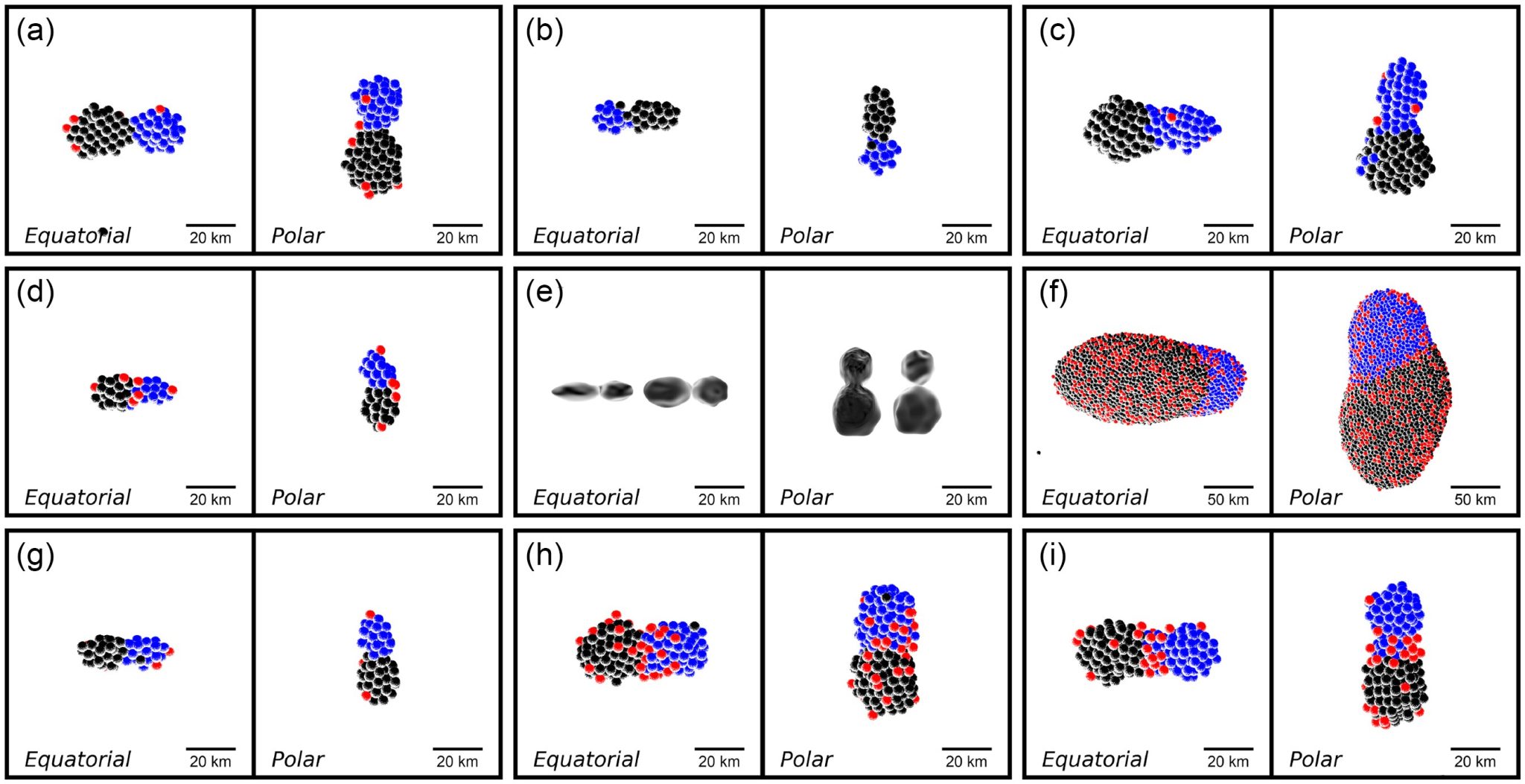
The process of forming “snowballs” turns out to be surprisingly simple and resembles the formation of a snowball from snowflakes. At the dawn of the Solar System’s existence, clouds of cosmic dust and small rocks began to pull together under the influence of their own gravity. Sometimes, due to rotation, such a cloud would split into two separate clumps that would begin to rotate around each other. In Barnes’ model, the orbits of these bodies gradually spiraled inward until they touched, forming the familiar shape of a snowman.
Interestingly, in the Kuiper Belt, where space is sparse and collisions are extremely rare, such structures can exist unchanged for billions of years. Most of them do not even have craters, because nothing has disturbed them since the moment of their “birth.”
First-hand confirmation
Such objects were first seen with the naked eye in January 2019 thanks to NASA’s New Horizons spacecraft, which sent back images of the Arrokoth contact binary system. These images provided a powerful impetus for reviewing old data and confirmed that “snowmen” are not an exception, but a common phenomenon.
The model created not only explains the past, but also paves the way for new discoveries. The team’s next step will be to model triple systems and conduct a more in-depth study of the collapse process. Scientists do not rule out the possibility that Frosty (as these amusing space objects are often called) may have undiscovered distant relatives waiting to be discovered.
Earlier, we reported on how the Solar System has only one place left to search for the ninth planet.
According to scientificamerican.com

