

One of the main mysteries that scientists want to solve in the Solar System is the existence of life on Mars – today or in the past. But why do scientists think there should be something there at all? The reasons for this are quite complex and interesting, because history and biology, physics and chemistry are intertwined.
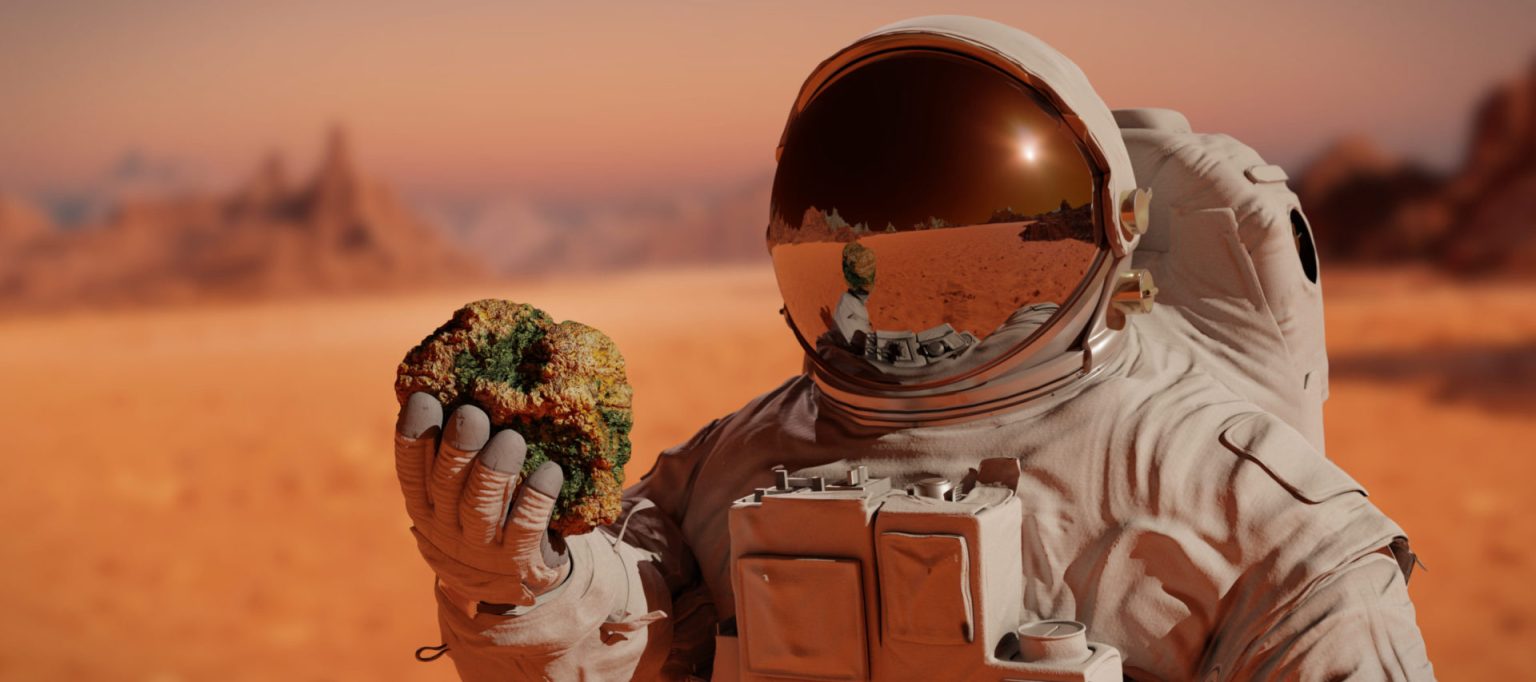
Life on Mars and beyond
One of the topics that inevitably arises when discussing space exploration is life on Mars. One of the largest space programs currently being implemented by NASA is dedicated to discovering whether life exists there now or may have existed in the past. But why do scientists think that something can be found on Mars? Why not on some other planet?
The reason for this is primarily historical. In general, the idea that there may be living beings on other planets is relatively new. Back in the early 17th century, this statement, made by Giordano Bruno, was used to prove that he was a heretic. And when scientists finally got the chance to speak more freely, they immediately started talking about the possibility of life on absolutely all celestial bodies.
For example, intelligent beings were sought for quite a long time (and even claimed to have been found) on the Moon. Today, we could immediately come up with a whole bunch of scientific arguments, but it is worth remembering that in the 18th century, people were just beginning to learn about things such as the presence of oxygen in the atmosphere and its role in biological processes.

Gradually, scientists realized how much life depends on the availability of certain substances and physical conditions, but even in the 19th century, Mars seemed to be a planet with changing seasons and fairly large bodies of water.
However, at the beginning of the 20th century, scientists realized that Martian canals were just an optical illusion, and that Mars itself was, at best, a dry steppe and, at worst, bare rock. However, it was at this time that the popularization of science and science fiction was born, so the public continued to believe in the existence of life on Mars.
Everything finally fell into place when, in 1965, Mariner 4 flew past Mars and photographed it from close range for the first time. Scientists were presented with a planet with a very thin atmosphere unsuitable for breathing, a weak magnetic field, and no trace of water or green foliage. So why have we not yet decided, once and for all, that there is no life there?
What do you need to live?
One of the reasons why people are still searching for life on Mars is habit. People have believed for so long that there is a biosphere there that it is not so easy to give up on this idea. However, there are also purely scientific reasons not to stop searching.
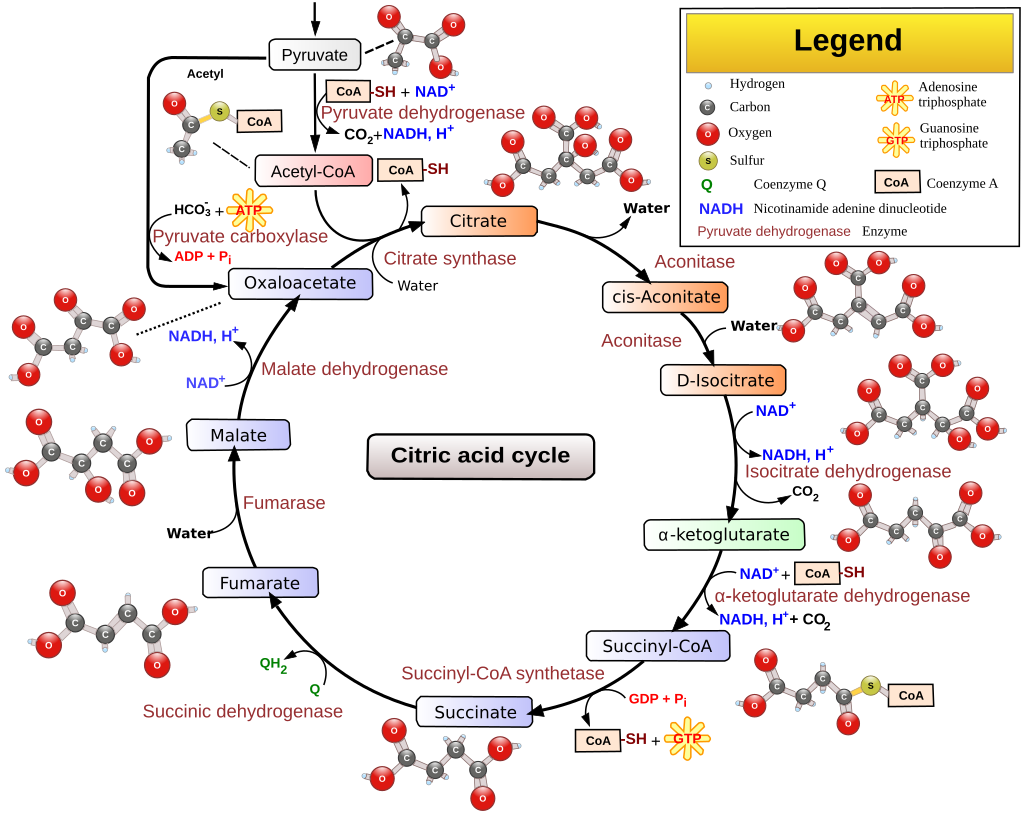
First of all, we must remember what life is. Its general definition is rather vague, but it is quite possible to use the description of what it is on Earth. Life is a set of chemical processes involving complex carbon compounds that occur in an aquatic environment and ensure the ability of biological systems to reproduce themselves. Most often, these processes occur with the participation of oxygen.
It follows that the two main factors determining the possibility of life are the presence of carbon and water. Carbon is not a problem on Mars. The entire atmosphere consists of carbon dioxide, i.e., carbon monoxide. And there is plenty of carbonate rock on the surface.
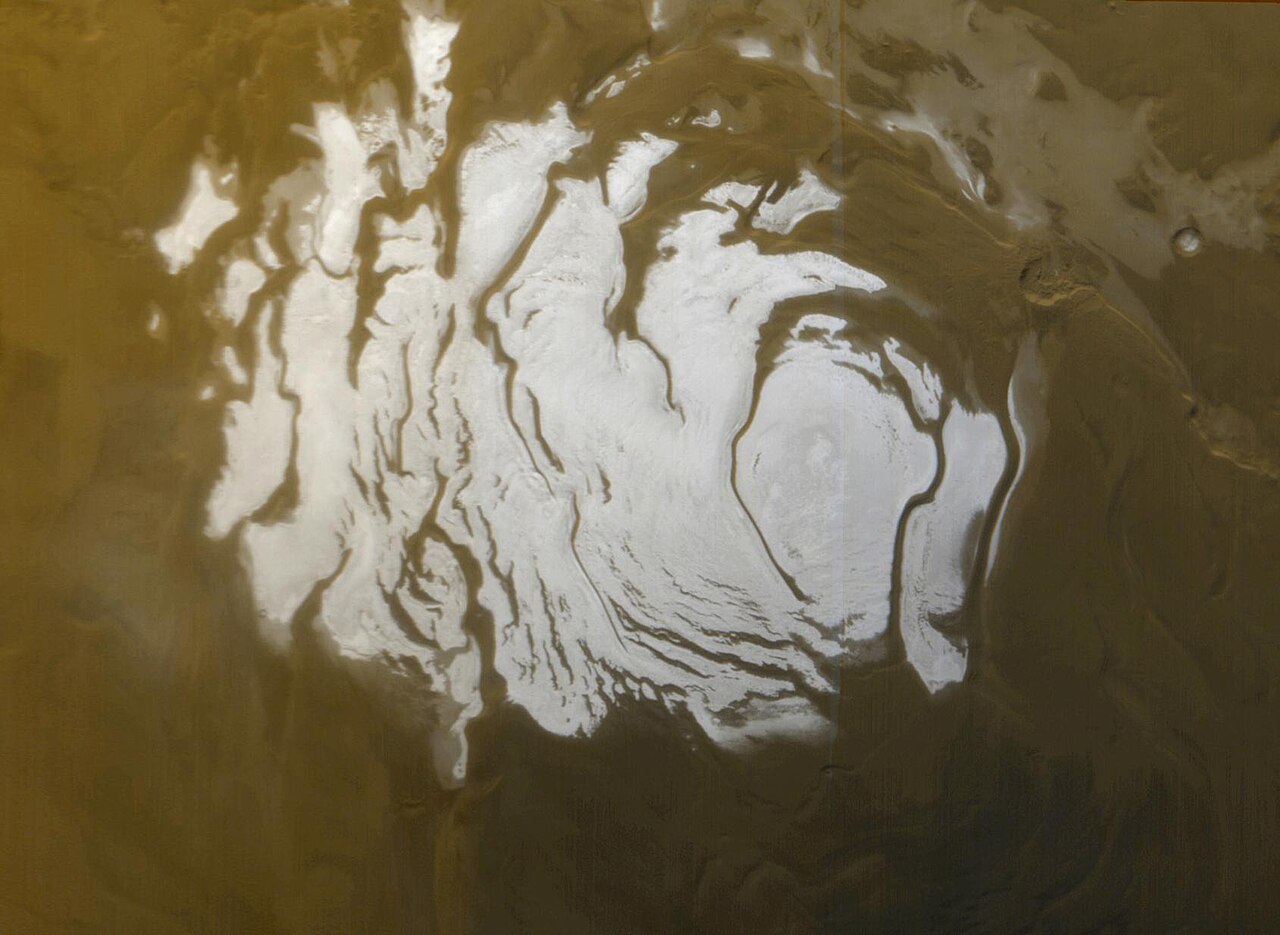
Water is not so simple. There is a lot of it in the form of ice on the surface of Mars, mainly concentrated in the ice caps at the poles, although it can also be found beneath the surface in temperate latitudes. However, for life to exist, water must be in a liquid state. On Mars, temperatures range from +20°C at the equator during the day to -153°C at the poles at night.
That is, at least somewhere it should be in a liquid state, but that would be true for Earth. On Mars, with its pressure 170 times lower than Earth’s, ice immediately turns into a gaseous state.
Oxygen is also essential for life, and there is plenty of it on Mars. It is the second component of carbon dioxide in the planet’s atmosphere, and the famous red color of its surface is due to iron oxides.
Thus, all the components necessary for life exist on the surface of Mars, and this is what makes it one of the best targets for the search for life beyond Earth. If only this planet were a little warmer and its atmosphere had higher pressure…
The Past of Mars
There were such periods in the history of Mars. We are talking about the Noachian period, which began about 4.1 billion years ago and ended 3.8 billion years ago. During this time, Mars had a primitive atmosphere of hydrogen, which gradually changed to a fairly dense carbon dioxide atmosphere. Scientists have found numerous traces of volcanism, which enriched the planet’s gas envelope with substances that caused the greenhouse effect.
During this period, Mars’ climate was warm enough for water to flow on its surface. Scientists know this for sure because they have found numerous riverbeds and former lakes, and at their bottoms – clay and other rocks that can only form in conditions of constant water presence.
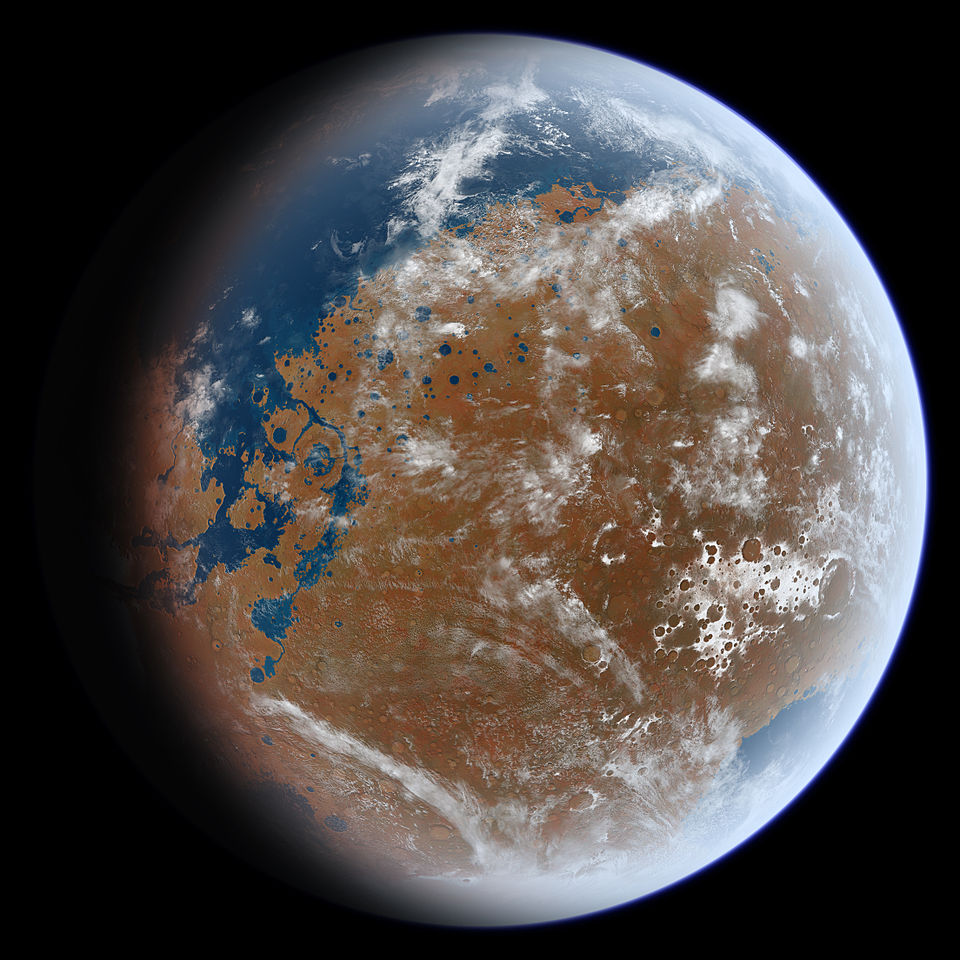
At the same time, the water was of very different quality. At least in the beginning, volcanic geysers with acidic water played a major role. Later, they were replaced by colder reservoirs. The entire northern basin of the planet was occupied by the ocean.
At the same time, the atmosphere remained oxygen-free. Therefore, multicellular animals could not exist on Mars, but various anaerobic microorganisms could. And it is precisely on the search for their remains that scientists have focused in recent decades.
If life once existed on Mars, then it must first be sought in the sediments of that era. Structures resembling bacteria have been found in a meteorite that was once part of the Red Planet. However, scientists are still not entirely sure about their identification.
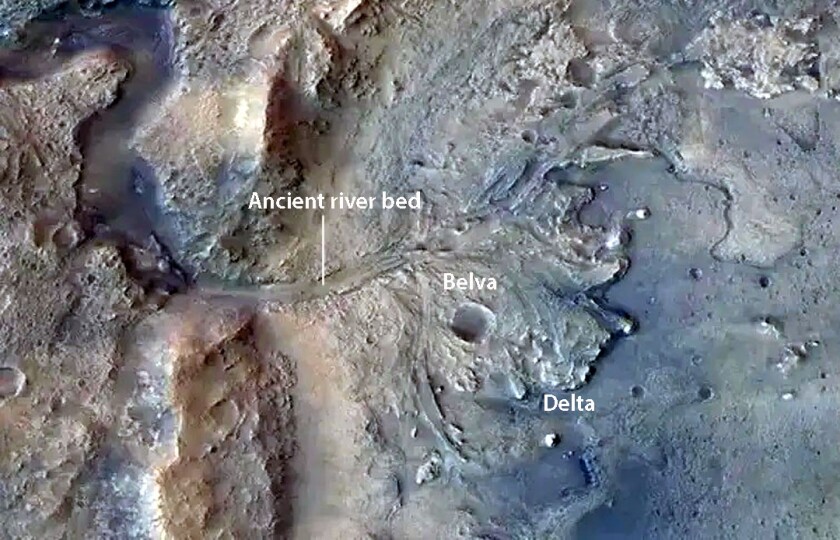
The greatest hopes for finding traces of life on Mars are pinned on samples collected in the Jezero crater by the Perseverance rover. These are mainly fossilized clays, and they are the most likely place where the remains of microorganisms, if they ever existed on Mars, could have survived to this day. It is expected that in the next decade, these samples will be delivered to Earth laboratories, where they can be thoroughly studied.
Life on Mars today
The very discovery of ancient microorganisms could be a real sensation. After all, it would mean that life is indeed widespread throughout the universe. But it would be even more exciting if some of these bacteria could be brought back to life.
This scenario is one of the most popular among horror movie writers. Because our imagination immediately conjures up images of humanity dying out from an unknown disease. These fears are based on the fact that our immune system will not be ready to fight them.
However, they forget that all past cases of deadly epidemics are associated with viruses and bacteria that had been spreading for a long time in other human populations and among species relatively close to us.
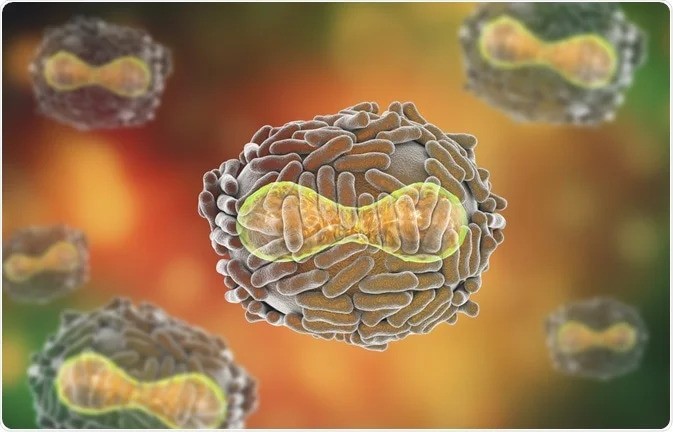
Ancient Martian life did not have millions of years of evolution to adapt to existence inside terrestrial multicellular organisms. Of course, there is a chance that it poses a danger to Earthlings, which is why research must be conducted in compliance with all safety requirements. However, it is equally likely that Martian organisms themselves will need much greater isolation in order not to perish in the Earth’s environment.
However, no one expects to find signs of life that existed on Mars billions of years ago. But if much younger samples are found on Mars, everything may turn out differently.
It is believed that in the middle of the era following the Noachian and Hesperian periods, the planet’s climate began to change rapidly, and soon it became what we know today: cold, dry, and virtually devoid of atmosphere. However, almost since the visit of Mariner 4, there has been an opinion that the current state of Mars has not lasted for hundreds of millions of years, but is a relatively temporary phenomenon, only a few tens of thousands of years.
Source: phys.org
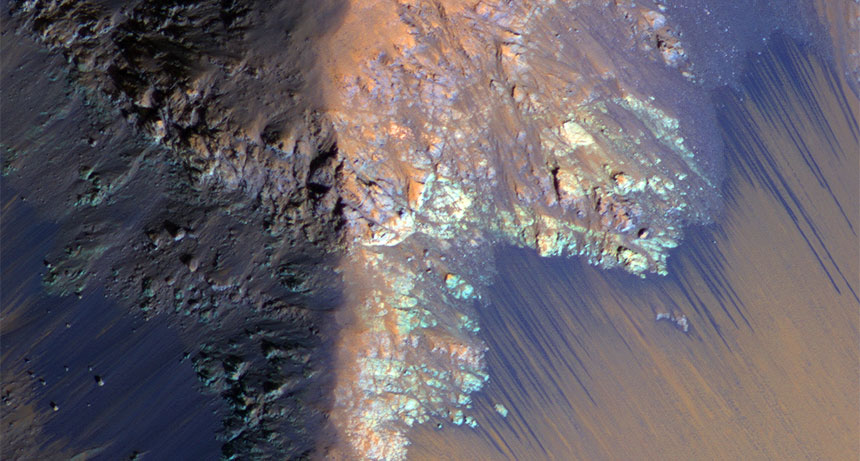
In particular, in recent years, its concept as a geologically dead planet has been significantly revised. Earthquakes recorded by the InSight device on the surface indicate that liquid magma is hidden somewhere in the depths. This means that volcanic eruptions and geysers are entirely possible. Traces of such activity have been observed over the last 50 million years.
So the main question of whether life on Mars is possible now depends not so much on the conditions there as on our knowledge of what conditions living organisms can withstand in general. Already today, we can name species that could exist on the Red Planet even under the conditions it has.
At the same time, “surviving now” does not mean “surviving for billions of years.” We still know too little about evolution to claim that extremophile bacteria could have emerged even if they never had ancestors living in much more comfortable conditions. Moreover, no one can claim that isolated populations preserved in Mars’ glaciers throughout its existence can ensure global evolution.
However, it is still worth searching for life on Mars.

