

During their flight to the Moon, the astronauts on the Artemis II mission wore special wrist-worn devices called actigraphs. These devices were developed by the Brazilian company Condor Instruments and were designed to monitor the astronauts’ health.
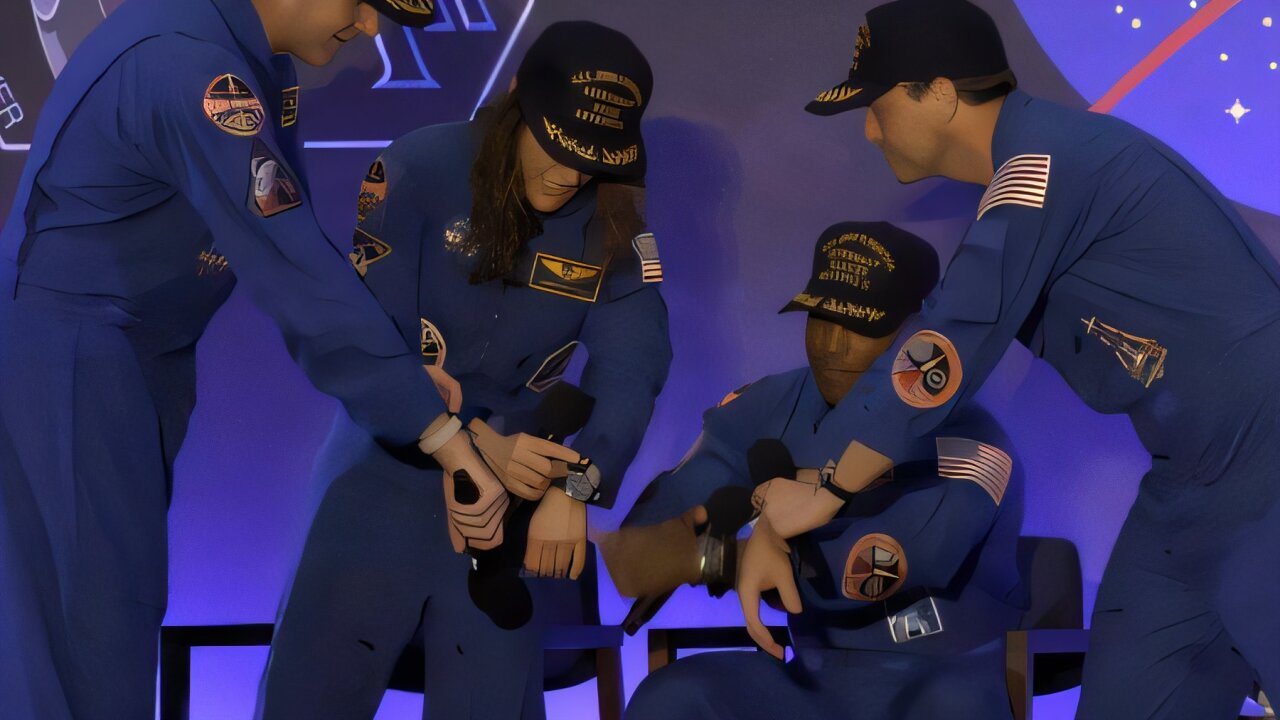
Actigraph — a device for measuring circadian rhythms
The Actigraph is shaped like a wristwatch and is equipped with accelerometers, as well as light and temperature sensors, which allow it to accurately track the user’s sleep and wake cycles over several days or weeks.
The device operates using an activity sensor that tracks the frequency and intensity of arm movements. By analyzing this data, it is possible to identify periods of rest (absence of movement) and activity (presence of movement). This allows for the precise recording of circadian rhythms in human behavior. This “biological clock,” which operates approximately 24 hours a day and regulates the physical and behavioral functions of most living beings, is most strongly influenced by light.
To monitor the operation of this clock, the device is equipped with ten built-in sensors that measure light intensity across various spectral ranges. This data is crucial because it allows for the determination of light intensity and spectral composition throughout the light-dark cycle. This cycle is the primary external regulator that synchronizes the internal biological clock with the environment.
“The light-dark cycle is defined by Earth’s rotation, and it’s based on this that the brain anticipates the time to sleep. In space, that reference is lost, as astronauts may remain in constant light or darkness, depending on their position relative to the sun,” explains Mario Pedrazzoli Neto, a professor at the School of Arts, Sciences, and Humanities at the University of São Paulo (EACH-USP). He is an expert in chronobiology—the science that studies the rhythms and internal biological clocks of living organisms. He coordinated the research that formed the basis for the development of the Brazilian actigraph.
Problem of sleep disturbances in space
For example, on the International Space Station (ISS), astronauts experience 16 sunrises and sunsets per day, which can seriously disrupt their sleep-wake cycle. To mitigate this stress, LED systems have been installed on the station that mimic Earth’s cycle and help maintain the crew’s sleep hygiene.
“Due to these and other factors still under investigation, such as the effect of gravity, astronauts tend to experience sleep deprivation. In space, rest is inherently disrupted,” says Pedrazzoli.
Since sleep deprivation causes cognitive and motor impairments that can jeopardize the success of long-duration missions, agencies such as NASA are constantly conducting research to assess the impact of irregular light cycles and sleep disturbances on the human body. These disturbances pose health risks in both the short and long term, the researcher explains.
For example, researchers affiliated with the agency are studying how factors such as light and caffeine intake affect the crew’s biological clocks and sleep quality.
Using the device in the Artemis monthly program
In 2023, as part of the Artemis program, the U.S. space agency launched a study to monitor astronauts’ well-being, activity levels, sleep patterns, and interactions. The ARCHeR (Artemis Research for Crew Health and Readiness) project was initiated due to the extreme conditions inside the Orion capsule—a confined and cramped space where, during deep-space missions, the crew faces prolonged biological and psychological challenges, particularly isolation and radiation.
To make the study possible, NASA engineers searched the global market for actigraphs capable of monitoring the crew in real time. The agency took notice of a device from Condor Instruments after representatives from the startup participated in international scientific conferences on chronobiology, sleep, and light.
“In 2023, they contacted us looking for a new supplier. Initially, they made a small purchase for the science and engineering sectors. Since then, we’ve participated in several meetings as the project evolved. The device underwent rigorous testing to assess whether the data met the needs of the mission and whether it was safe and reliable for flight,” Okamoto recalls.
Although there had been indications since late 2025 that it would be used on Artemis II, official confirmation was only given on the day of launch.
What else can an actigraph do?
According to Okamoto, the Brazilian actigraph stands out from its international competitors because it tracks physical activity, light exposure, and body temperature. Body temperature is a key indicator, as it drops by 1–2 °C during sleep as part of the circadian cycle, promoting relaxation and conserving energy.
Another unique feature is the device’s ability to measure melanopic light—a spectrum of blue-violet light (around 490 nanometers). Melanopic light activates light-sensitive ganglion cells in the retina, which suppresses melatonin production and signals to the brain that it is daytime. This increases alertness and suppresses sleep.
“Cell phones emit light precisely at that wavelength. That’s why using these devices at night radically alters the brain’s sleep regulation,” Pedrazzoli comments.
The device also features a button for recording events, which the astronauts pressed together during historic moments, such as on April 6, when Orion reached a distance of 406,777 km from Earth—the farthest point ever reached by humans.
During a press conference following the conclusion of the mission, Commander Reed Weisman noted another use for the device: “Using that device over the past two years allowed us to regain our focus whenever we got distracted.”
The actigraph data collected during the flight will be compared with the results of motor coordination tests and questionnaires completed before and after launch. The goal is to optimize the design of future spacecraft to ensure safety during long-duration missions.
Use of the device on Earth and in space
The development of the actigraph began with a need identified by Pedrazzoli while conducting research at the Sleep Research Center—the Center for Research, Innovation, and Knowledge Dissemination (RIDC)—part of the Federal University of São Paulo (UNIFESP). The first prototypes were used to assess the impact of the switch to daylight saving time on the population.
Thanks to a recommendation from Arturo Forner-Cordero, a professor at the School of Engineering at the University of São Paulo (POLI), Pedrazzoli met Okamoto and Luis Filipe Rossi, who were master’s students at POLI-USP at the time and interested in launching a tech startup. Ultimately, the engineers turned the prototype into a high-precision commercial product.
Today, the startup exports 80% of its products—between 200 and 300 devices per month—to more than 40 countries, serving leading universities and research centers. The device is widely used in research: from the myopia epidemic in Asia to the recovery of premature babies in neonatal intensive care units.
The current goal is to maintain our partnership with NASA for the next phases of the Artemis campaign, including a landing at the Moon’s South Pole in 2028.
According to phys.org

