

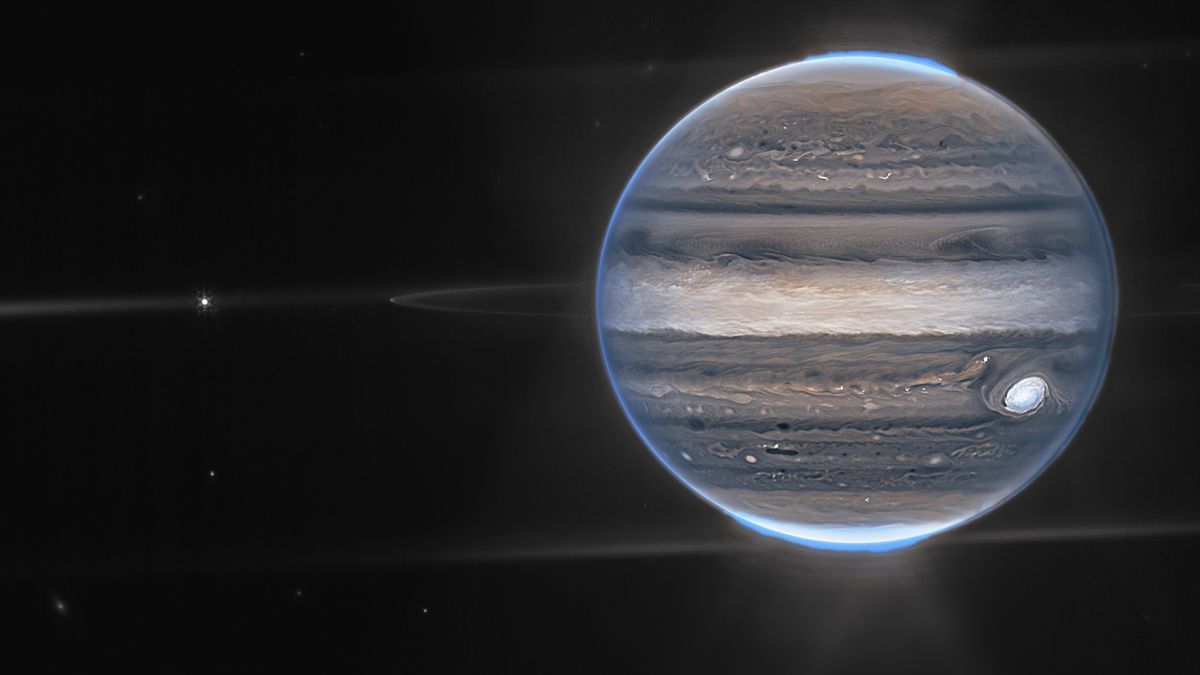
The formation of Jupiter radically changed the early Solar System, creating rings and gaps within it. This explains one of the oldest mysteries of planetary science: why many meteorites formed millions of years after the first solid bodies appeared.
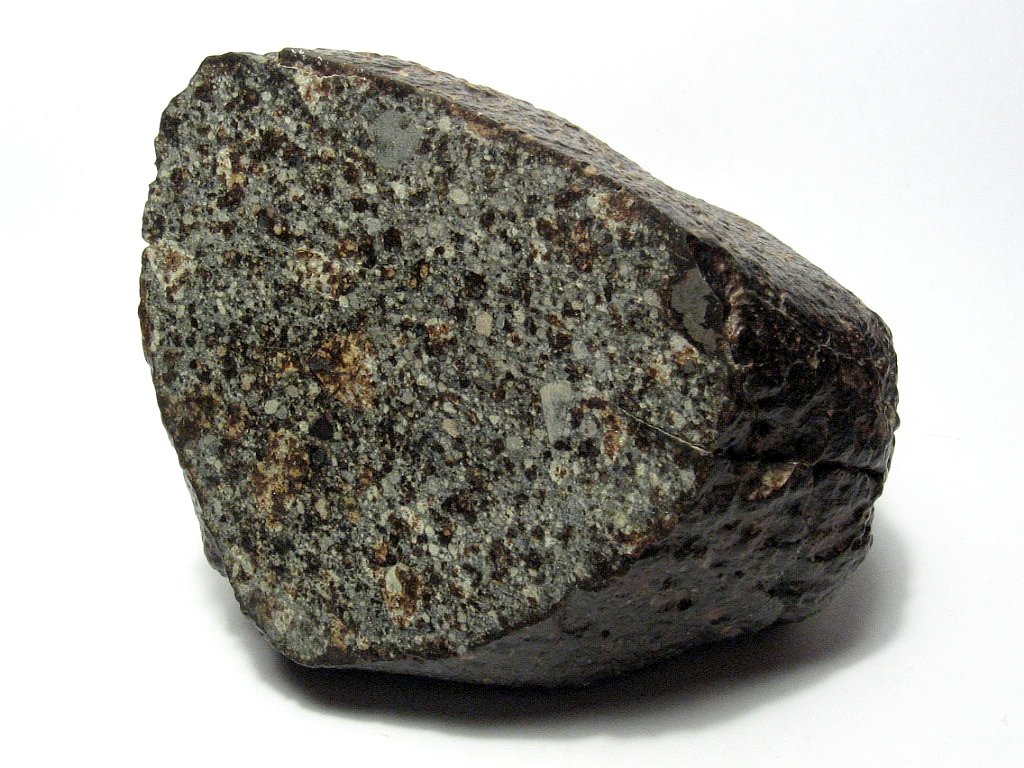
Most meteorites that fall to Earth are rocky bodies called chondrites. They are very important to scientists because they contain some of the most primitive materials available to science. Unlike first-generation meteorites, which are part of the early “building blocks” that melted, differentiated, and lost their original properties, chondrites have preserved the pristine dust of the solar system and tiny molten droplets (chondrules).
There is a long-standing mystery associated with chondrites that has long troubled many planetary scientists: why did they form so late? Analysis shows that chondrites appeared two to three million years after the formation of the first solid bodies in the Solar System.
A team of scientists from Rice University may have found the answer to this question. Their research suggests that the formation of chondrites is linked to Jupiter. Scientists came to this conclusion by combining hydrodynamic models of the gas giant’s growth with simulations of dust evolution and planet formation. Analysis showed that Jupiter’s rapid early growth destabilized the gas and dust disk surrounding the Sun. The planet’s enormous gravity caused turbulence, creating “space traffic jams” that prevented small particles from spiraling toward the Sun. Instead, these particles gathered into dense bands where they could cluster into planetesimals—rocky embryos of planets.
The most surprising thing is that the planetesimals formed in these bands were not the original building blocks of the Solar System. Instead, they were second-generation bodies. The time of their birth coincides with the birth of many chondrites, which is hardly a coincidence. Most likely, chondrites were formed as a result of the subsequent destruction of these planetesimals.
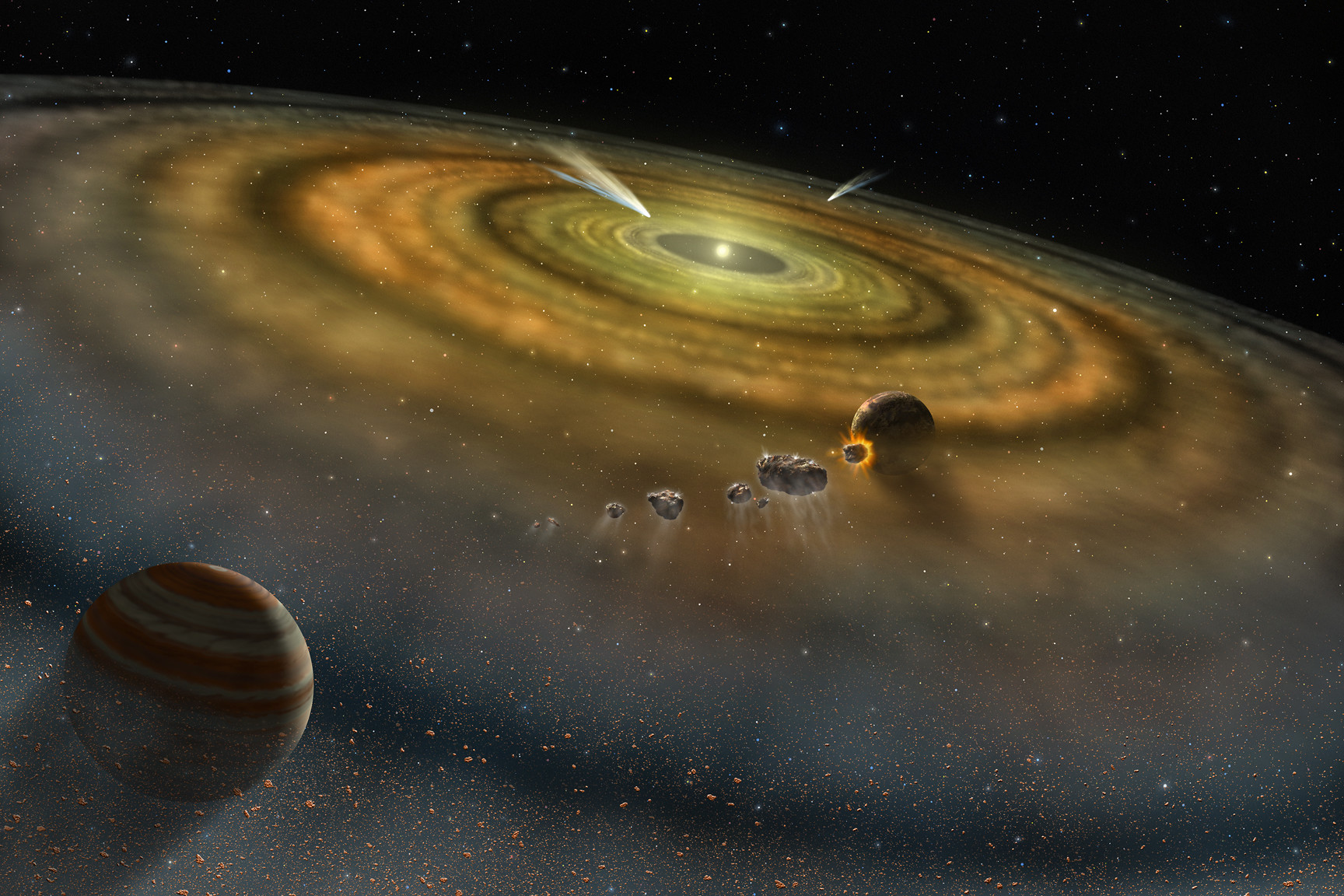
The study also helps explain another mystery of the Solar System: why Earth, Venus, and Mars clustered within 1.5 AU of the Sun rather than migrating closer to it, as has happened in many exoplanetary systems. The thing is, Jupiter blocked the flow of gas material to the inner part of the Solar System, suppressing the migration of young planets inward. Instead of rushing toward the Sun, these growing worlds remained in the region where Earth and its neighbors eventually formed. These conclusions align with the striking ring structures and gaps that astronomers are now observing in young star systems with the ALMA radio telescope.
“Jupiter didn’t just become the biggest planet—it set the architecture for the whole inner solar system,” Izidoro said. “Without it, we might not have Earth as we know it.”
According to Phys.org

