

An international team of scientists led by the Carnegie Institute has discovered chemical evidence of life in rocks dating back more than 3.3 billion years. They also found molecular traces indicating that photosynthetic organisms appeared nearly a billion years earlier than previously thought.
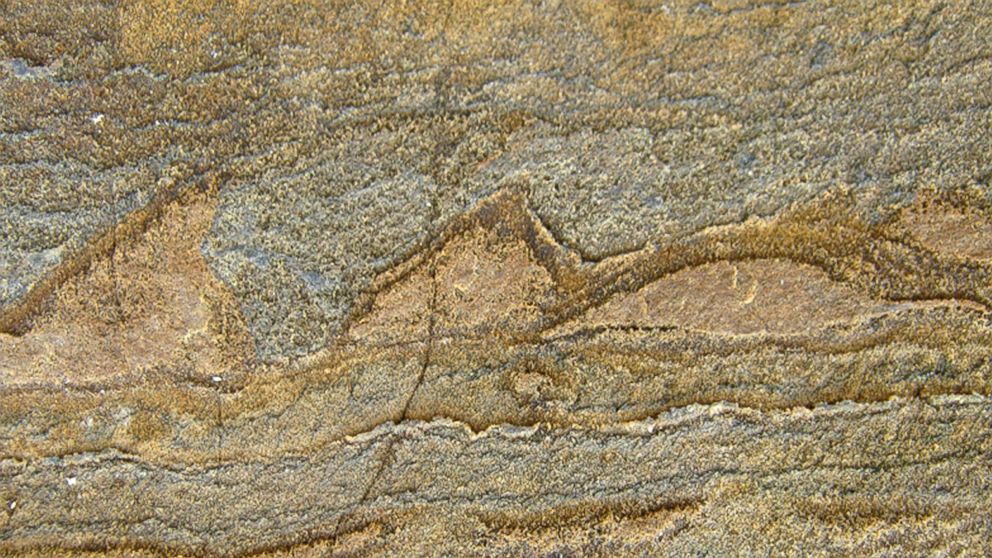
Source: Allen Nutman/University of Wollongong via AP
The earliest life on Earth left few molecular traces behind. The few fragile remains, such as ancient cells and bacterial mats, were destroyed by tectonic processes that led to the renewal of the Earth’s crust. All these transformations have virtually erased the biosignatures that contain crucial clues about the origin and early evolution of life.
Nevertheless, thanks to new technologies, scientists now have a chance to look into Earth’s past. An international team of researchers has suggested that the distribution of biomolecular fragments found in ancient rocks still preserves information about the biosphere, even if the original biomolecules have not been preserved. The team used high-resolution chemical analysis to break down organic and inorganic materials into molecular fragments, and then trained an artificial intelligence system to recognise the chemical ‘fingerprints’ left behind by life.
Scientists examined more than 400 samples ranging from plants and animals to billion-year-old fossils and meteorites. The artificial intelligence model distinguished between biological and non-biological materials with over 90% accuracy and detected signs of photosynthesis in rocks at least 2.5 billion years old.
According to the team, until now, molecular traces reliably indicating life have only been found in rocks younger than 1.7 billion years old. This new method roughly doubles the time range that scientists can study using chemical biosignatures.
The new approach could be used not only in Earth science, but also in space exploration. It could be used to analyse samples from Mars or other celestial bodies to determine whether they were once habitable.
Provided by Phys.org

