

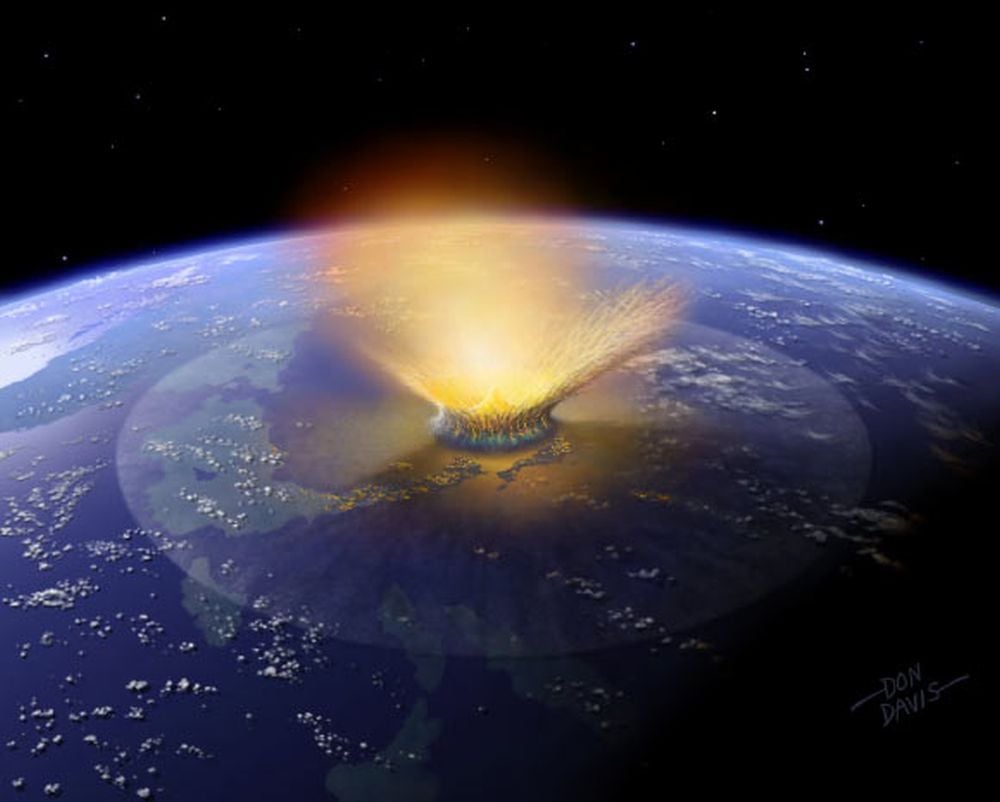
British scientists have discovered that icy comets colliding with exoplanets can alter their climate and atmosphere. According to computer modeling results, even a single large comet could transform a dead, cold exoplanet into a warmer and potentially habitable world.
Researchers simulated the collision of a large comet with a planet similar to TRAPPIST-1e. It is one of the most studied exoplanets in the habitable zone orbiting a red dwarf. Red dwarfs (stars of spectral class M) are cooler and less luminous than the Sun, but they are the most common type of stars in the Universe. Planets that orbit such stars are often located very close to them and may be tidally locked, meaning that they always face the star with the same side. This creates extremely harsh conditions: the daytime side can be too hot and dry, while the nighttime side can be freezing cold.
When a large comet consisting mainly of water ice collides with such a planet, a large amount of water vapor is released into the atmosphere. Part of this pair enters the upper layers of the atmosphere, where it can remain for a long time, altering the planet’s heat balance. Water vapor in the upper layers acts like a greenhouse “blanket”: it absorbs heat emitted by the planet and traps it, raising the surface temperature. This is similar to the natural greenhouse effect known on Earth.
In addition, under the influence of ultraviolet radiation, water molecules split into hydrogen and oxygen. This process, as well as subsequent chemical reactions, can lead to the formation of greenhouse gases such as methane and nitrogen oxide. They are significantly more effective at warming the planet than carbon dioxide.
Thus, modeling shows that even a single major collision could cause climate changes that would last for decades or even centuries. During this time, liquid water may appear on the planet. This creates a brief but important “window of opportunity” for the emergence of life.
This study helps us better understand how exoplanets that initially appear uninhabitable may have a chance to develop favorable conditions. Similar catastrophic events may have been significant in Earth’s past. According to one hypothesis, it was comets that brought the first supplies of water to our planet, which were necessary for the development of life.
According to The Astrophysical Journal.

