

Scientists have confirmed the existence of a companion star to the red giant π1 Gruis. The ALMA radio telescope helped to reveal the characteristics of its orbit. This is very important for understanding how the Solar System will evolve after our sun begins to turn into a red giant.
Red giant
An article devoted to the study of the giant star π1 Gruis recently appeared in the journal Nature Astronomy. Its authors used the Large Millimeter Array (ALMA) to confirm the existence of its companions.
The π1 Gruis star is located 530 light-years away from us. A long time ago, it was similar to our Sun, but since then it has aged, cooled, and expanded 400 times. However, its luminosity has increased significantly.
As a result of the latter fact, it is very difficult to find close companions to this red giant. Scientists had suspected the existence of a smaller star orbiting around it even earlier. But it was impossible to see it.
New research
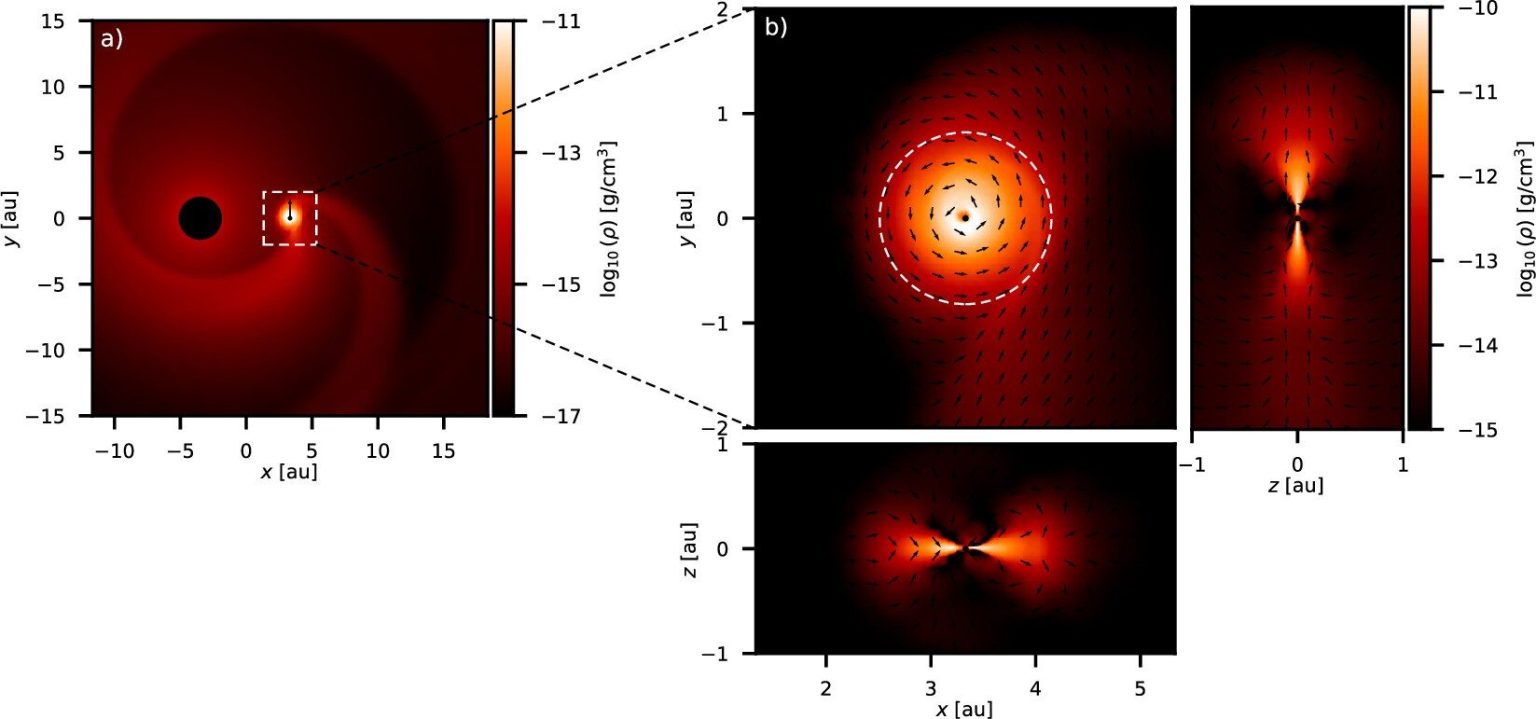
Research into π1 Gruis in the radio range using ALMA allowed us to peek behind this curtain of red light. Not only did it help confirm the existence of the second star, but it also helped refine its orbit.
Previously, it was believed that it should be elongated. The expansion of the central star certainly must affect it, causing it to evolve. However, new research indicates that it has low eccentricity, meaning it is practically circular.
This indicates that its evolution has already been completed. The companion of π1 Gruis has already taken up a position where it will remain until the red giant sheds its outer layers and turns into a white dwarf. Then, perhaps, the companion will have to fight its way through the nascent planetary nebula, lose energy, and move into a different orbit.
These studies are important in terms of predicting the future of our own Solar System. They suggest that as the Sun expands, the planets will also not remain in their orbits, but will adapt to the new conditions.
According to phys.org

