

Japanese scientists have discovered that at the turn of the 12th and 13th centuries, our sun experienced a period of high activity during which several so-called solar proton events occurred. They were aided in this by the study of tree rings and the diary of a medieval poet.
Solar protons from the event
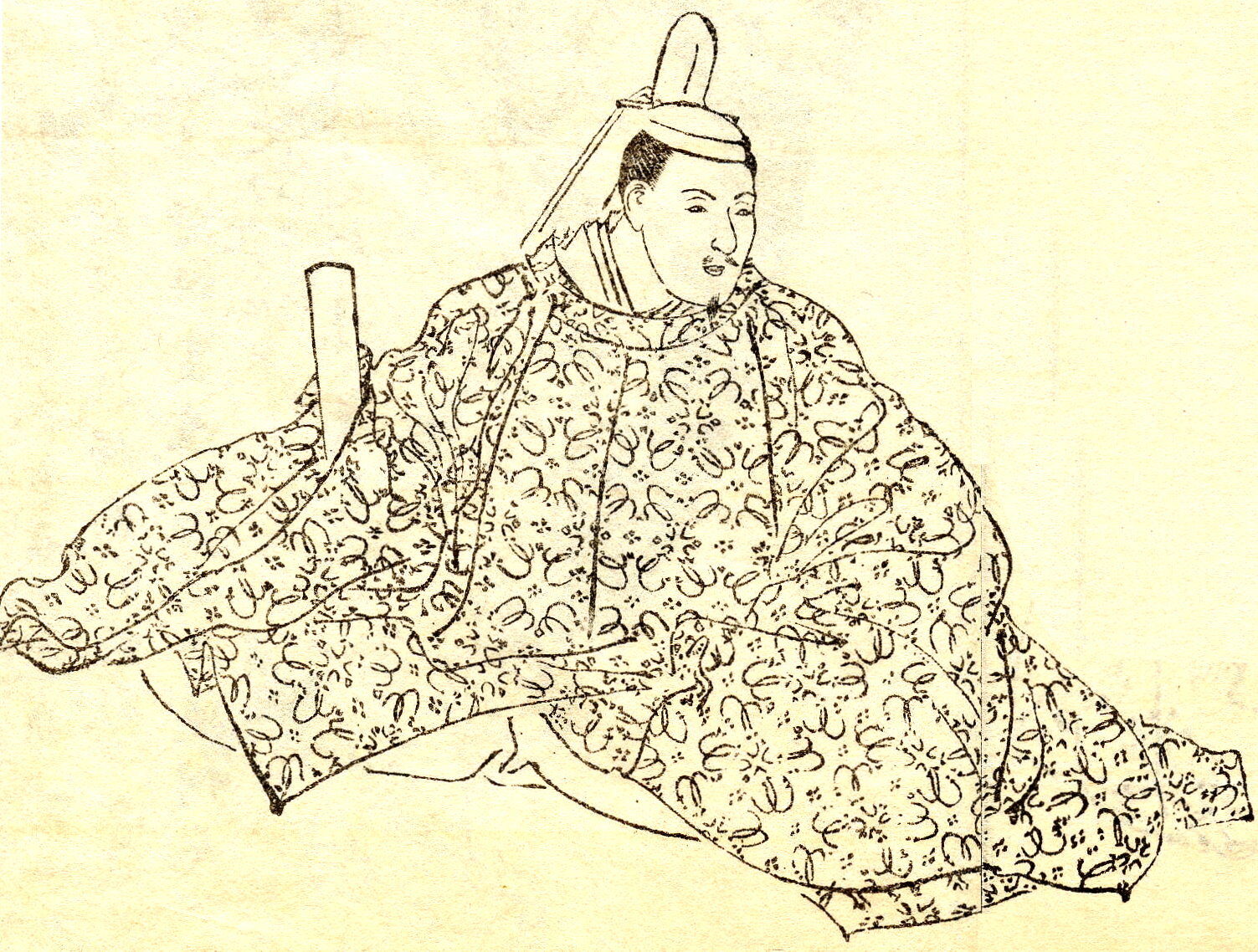
Nature and family relationships play a significant role in traditional Japanese poetry. In the early 13th century, the Japanese poet Fujiwara no Teika made a series of entries in his diary describing the incredibly beautiful red lights he had observed in the sky. It may seem unbelievable, but these observations and studies of trees have now helped recreate a truly dangerous cosmic phenomenon.
An article by researchers from Osaka University, recently published in Proceedings of the Japan Academy, Series B, is actually devoted to what are known as solar proton events. They are part of the overall picture of our star’s flare, but the particles they generate rarely reach the planet’s surface, as they interact with the atmosphere.
It’s a different story in space. Between the Apollo 16 and Apollo 17 missions, several such incidents occurred, and if any of them had happened while the astronauts were outside the Van Allen belts, it’s unclear whether they would have returned to Earth alive.
Another problem is that solar proton events do not always accompany solar flares. Sometimes there are many of them, and sometimes none at all, and the pattern behind their appearance remains a mystery. We need more historical data on the Sun’s behavior in the past.
The Past of the Sun
Here, scientists are faced with a very old problem. We know practically nothing about how the Sun’s magnetic field behaved in the past, except that at least at one point in time, its behavior was radically different from today. There has long been a suspicion that we are currently living in a period of reduced solar activity, and that this alone explains our successes in space exploration.
However, it is simply impossible to compile statistics, because three centuries ago, no one had even the faintest idea about solar activity cycles. Fortunately, it is precisely these proton events that leave a trace that can be detected even thousands of years later.
This refers to radioactive carbon-14, which is formed in the atmosphere when it absorbs protons. It enters plants and can be detected in tree rings, which can then be used to accurately determine when a particular proton event occurred.
Diary of Fujiwara no Teika
The only problem with this method is that it is labor-intensive. You need to have at least a rough idea of the time interval in which to look for traces of the proton event. And this is where Fujiwara no Teika’s diary comes into play. It’s clear that he mentioned the aurora borealis in it. Scientists already know that in the early 13th century, they were observed quite frequently in China and Japan.
The only problem is that proton events do not, by themselves, cause auroras. Other particles are responsible for this. However, the bright lights in the sky are still evidence of increased solar activity.
So, scientists began examining tree rings from that period and found what they were looking for. Between the winter of 1200 and the spring of 1201, a powerful proton event occurred. Moreover, research has led to the hypothesis that, during that period, the solar cycle lasted not 11 years as now, but only 8. This indicates that our sun was more active at that time.
According to phys.org

