

The potentially hazardous asteroid 152637 (1997 NC1) is set to make a historic close approach to our planet. In late June 2026, it will reach its closest approach to Earth in the last 400 years. Such close encounters with large celestial bodies occur only once a decade, and thanks to the object’s size, it will be visible even through small amateur telescopes.
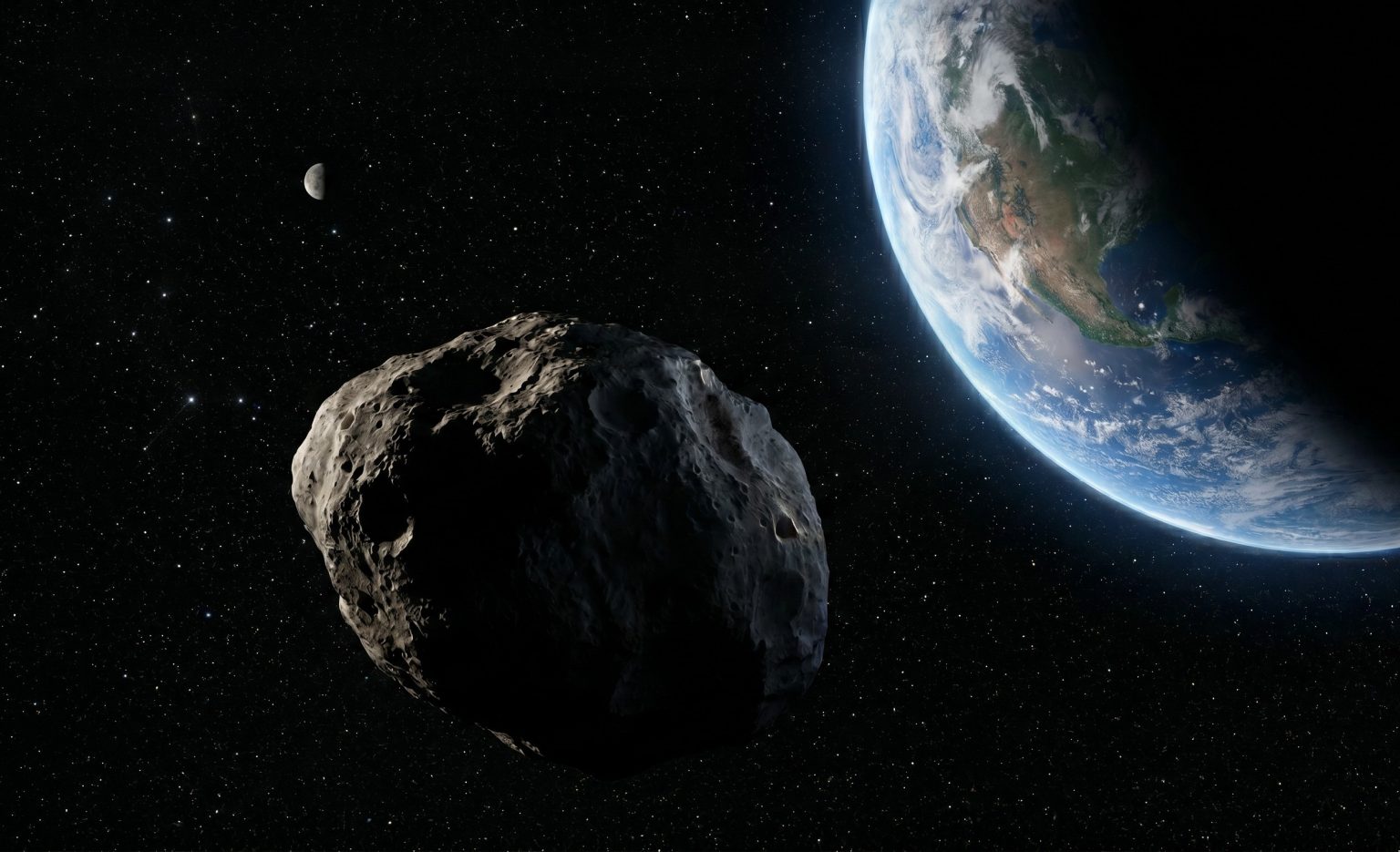
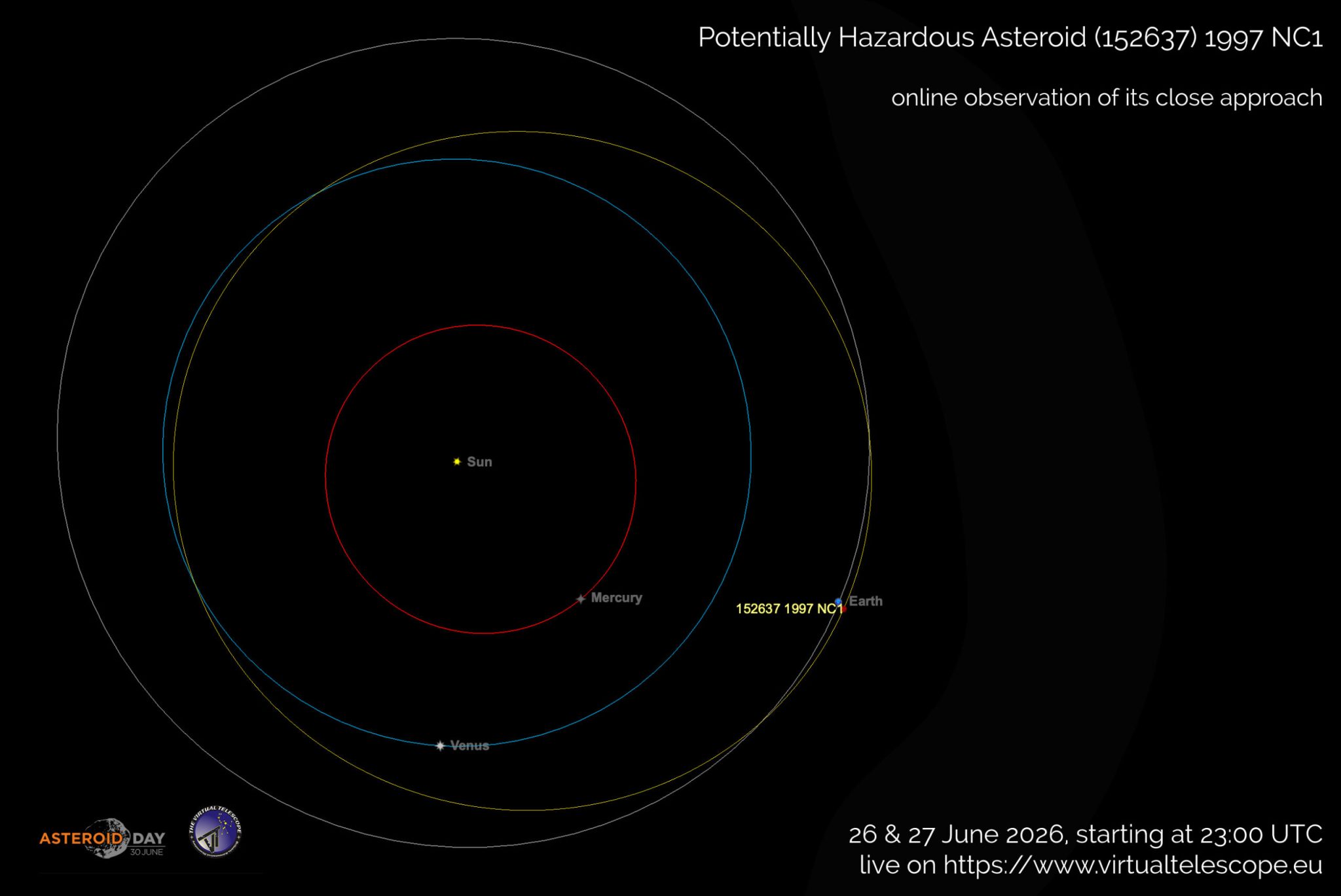
Humanity has made significant progress in monitoring near-Earth space. Currently, astronomers assure us that none of the known large asteroids poses a threat to Earth for at least the next 100 years. Object 152637 (1997 NC1) is no exception. It was discovered in 1997 through NASA’s NEAT program. Its classification as an Aten-class asteroid means that its orbit intersects with Earth’s, passing between Earth and Venus. However, trajectory calculations guarantee a completely safe flyby, albeit a fairly close one by cosmic standards.
Close, but safe
On June 27, 2026, the space traveler will pass within 0.01715 AU of Earth. That is about 2.5 million km, which is equivalent to 6.5 times the distance to the Moon. This distance fascinates scientists, while remaining completely safe for people on Earth.
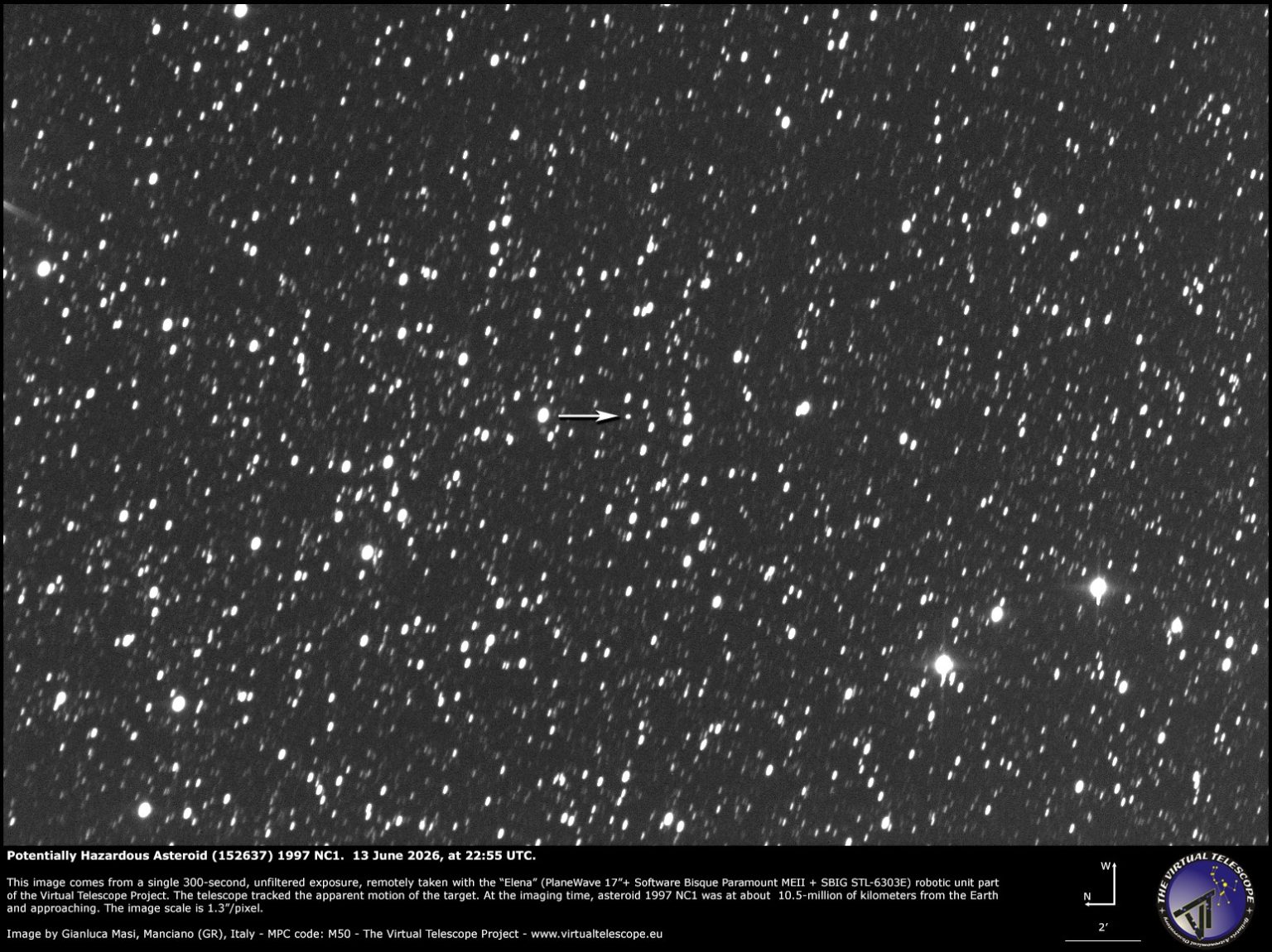
This close approach is unique—it is the closest since 1600. Interestingly, the next time the asteroid will come even closer to Earth—to a distance of 0.01699 AU—but that won’t happen until June 28, 2133. So for most of us, this upcoming event is our only chance to witness this flyby.
Mystery of the actual size
Although the asteroid has been known to science for a long time, astronomers still do not know its exact dimensions. The problem lies in a property called albedo—the surface’s ability to reflect sunlight. From vast distances, a large, dark asteroid may appear to telescopes just like a small but very bright one.
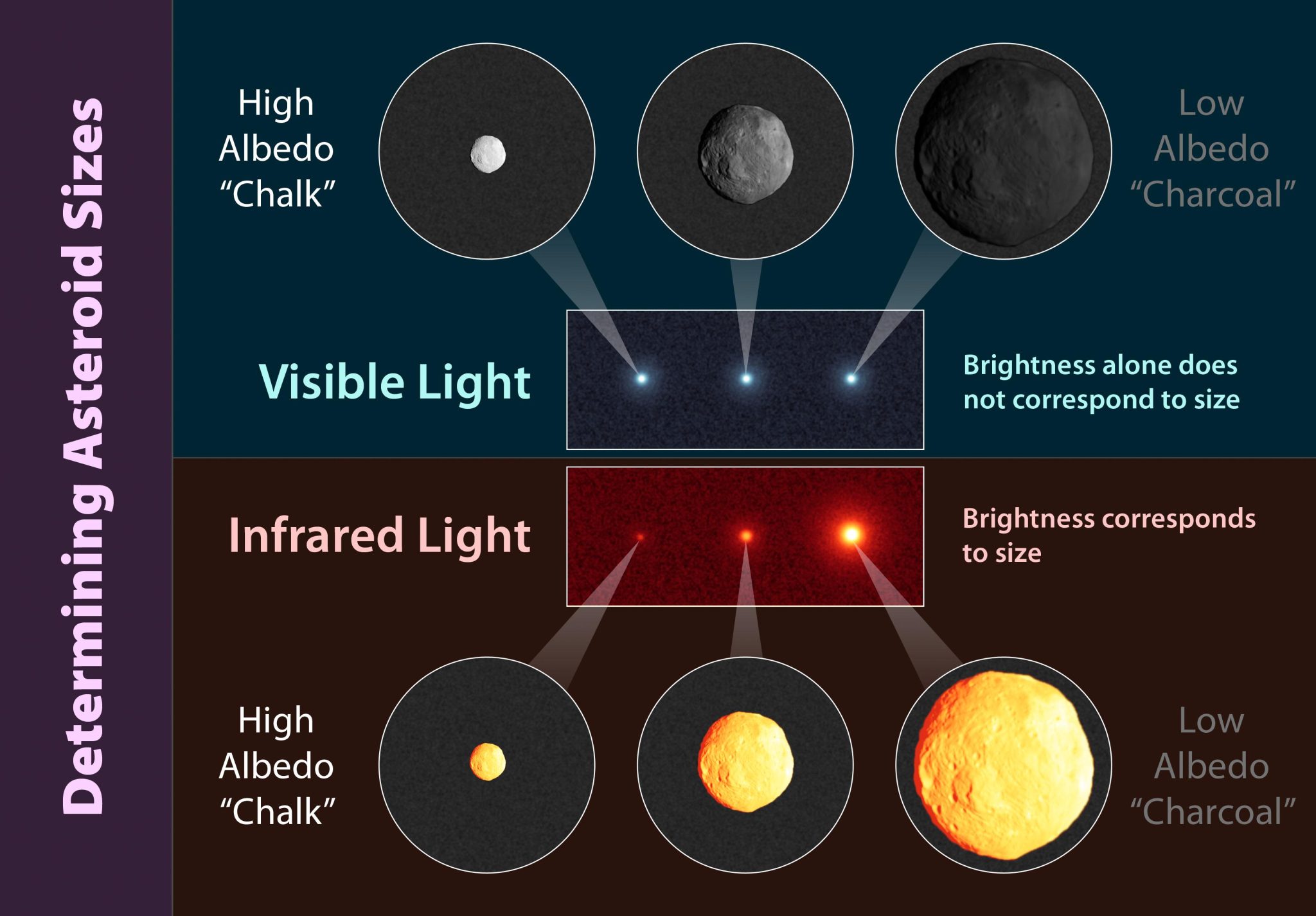
According to preliminary NASA estimates, given an absolute magnitude of 17.9, the diameter of asteroid 152637 (1997 NC1) is estimated to be approximately 900 m, although the actual size may range from about 450 to 1800 m. If the object belongs to the optically dark B-type asteroids, its size could reach 1.5 km. Current measurements of its spectral class and optical albedo yield conflicting results, so the upcoming close approach will be an ideal opportunity to finally determine the truth.
Radar “flashlight”
To uncover all the asteroid’s secrets, scientists plan to use the GSSR (Goldstone Solar System Radar). Marina Brozovic, a radar astronomer at NASA’s Jet Propulsion Laboratory, explains the advantages of this method: “All other methods in astronomy rely on reflected sunlight. But we’re bringing our own ‘flashlight’ with us. The reflected echo carries a wealth of valuable information—from highly precise measurements of the object’s position to its rotation speed.”
Since celestial bodies of this size approach Earth extremely rarely—the last one was asteroid 1994 PC1 in 2022—research using the GSSR is of immense scientific value, as the next opportunity will not arise until 2088.
How to witness a unique event
It is expected that as the asteroid approaches, its brightness will reach magnitude 10. This will make it visible through small telescopes or high-quality binoculars, although the bright light of the Moon may cause some interference.
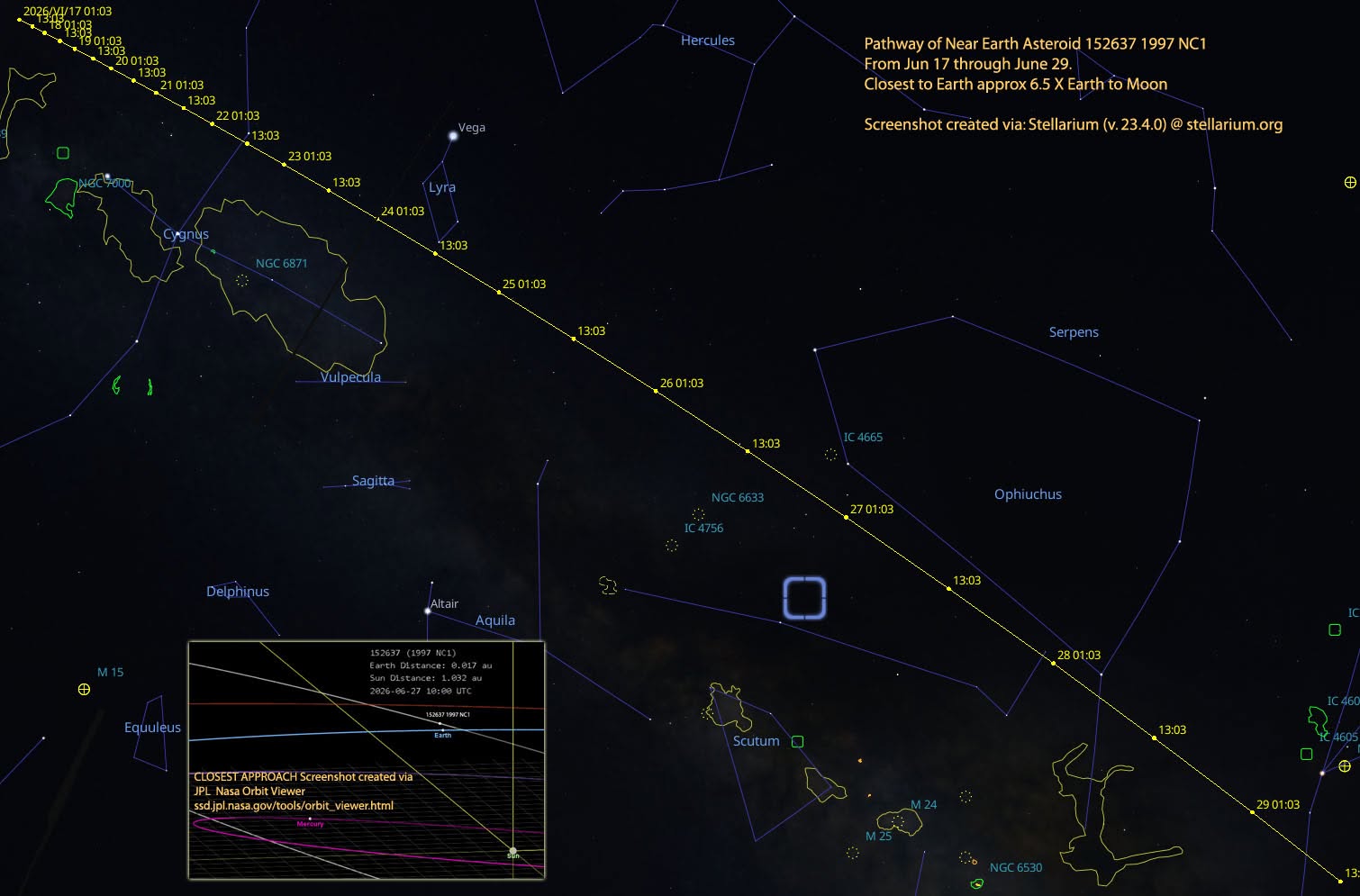
Residents of the Northern Hemisphere will be able to observe the object as it approaches us, while observers in the Southern Hemisphere will see it as it is already moving away.
We previously reported on Earth flying through the debris of an asteroid shattered by the Sun.
According to iflscience.com

