

In the coming days, Australian company Gilmour Space intends to make another attempt to launch its Eris carrier rocket. The first attempt failed because the rocket prematurely shed its nose cone. One possible reason for the failure was attributed to “sabotage” by a cockatoo: CCTV footage showed the bird chewing on one of the electrical cables.
Later, Gilmour Space specialists “exonerated” the parrot, reporting that an unexpected power surge caused the accident. Nevertheless, there are known cases in the history of cosmonautics when birds damaged rockets. In this article, you will learn about the most curious incidents that occurred during space launches.
Woodpecker vs. Shuttle
In early June 1995, NASA planned to launch Discovery. As part of the STS-70 mission, it was supposed to launch a TDRS satellite into orbit. However, when engineers inspected the shuttle’s fuel tank outer skin at the end of May, they were surprised to find that it was damaged. They found 71 holes in it, as well as several characteristic marks from beaks and claws.
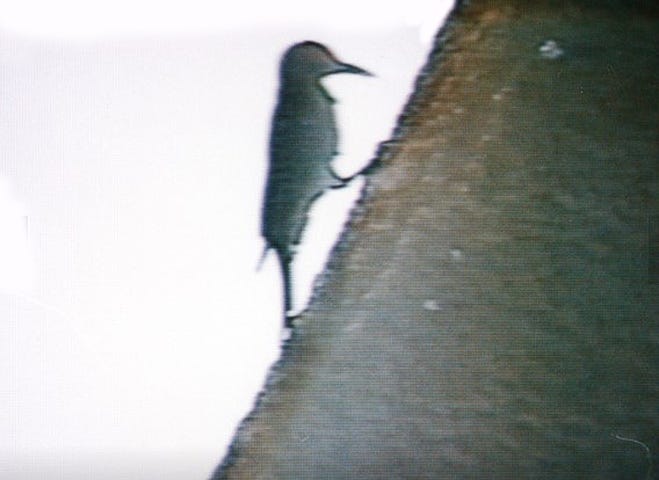
After reviewing CCTV footage, it was determined that a woodpecker was responsible for the damage. The bird mistook the orange fuel tank cover for a tree. Several other woodpeckers later joined it.

Engineers attempted to repair the skin directly on the launch pad, but the woodpeckers that had taken a liking to it did not give up and continued to make new holes. As a result, NASA had to return the shuttle to the Vertical Assembly Building for a full repair, and a protective system consisting of plastic owls, balloons, and speakers broadcasting the cries of birds of prey was installed around the launch pad.
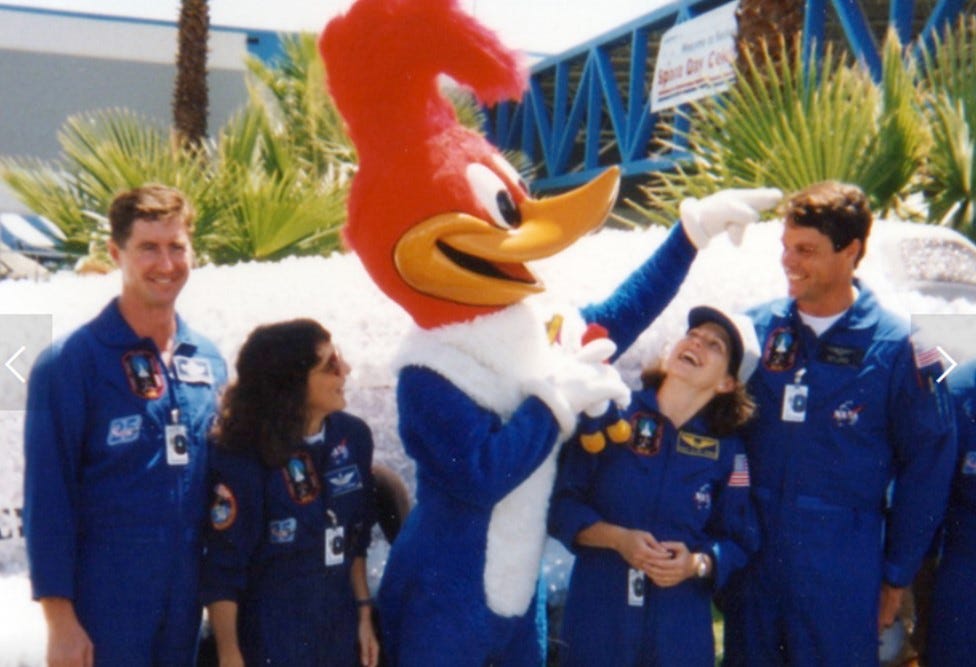
These measures proved effective, and the woodpeckers were successfully repelled. As a result, Discovery was launched into space on July 13, 1995. Interestingly, upon their return, they were greeted by a man dressed as Woody Woodpecker as a joke.
Unstoppable rocket
Rocket stage burn tests are an integral part of the aerospace industry. They are conducted on special test stands. Of course, not all burn tests go smoothly – especially when it comes to rockets that are still in the development stage. They often end in accidents.
However, what happened on June 30, 2024, in Gongyi, China, went far beyond a typical explosion. On that day, Space Pioneer was conducting a burn test of the first stage of its Tianlong-3 rocket, whose design was blatantly copied from the Falcon 9. At one point, to the amazement of the engineers, the stage broke free from the test stand and shot into the sky.
The engineers did not consider the possibility of such an accident, because Tianlong-3 was not equipped with emergency shutdown devices. The stage continued to gain altitude until its engines were shut down by the computer. After that, it fell to the ground 1.5 kilometers from the launch pad and exploded. Fortunately, there were no casualties. To date, this is the only known case of such a “runaway”.
Gliding rocket
If the launch succeeds, the rocket soars into the sky, quickly gaining altitude. Of course, sometimes things don’t go as planned. There have been many instances in the history of space exploration where rockets exploded on the launch pad or crashed back onto it shortly after launch. However, the incident involving Astra’s launch vehicle stands out even in this context, as at one point it simply froze in mid-air and then started to move horizontally.
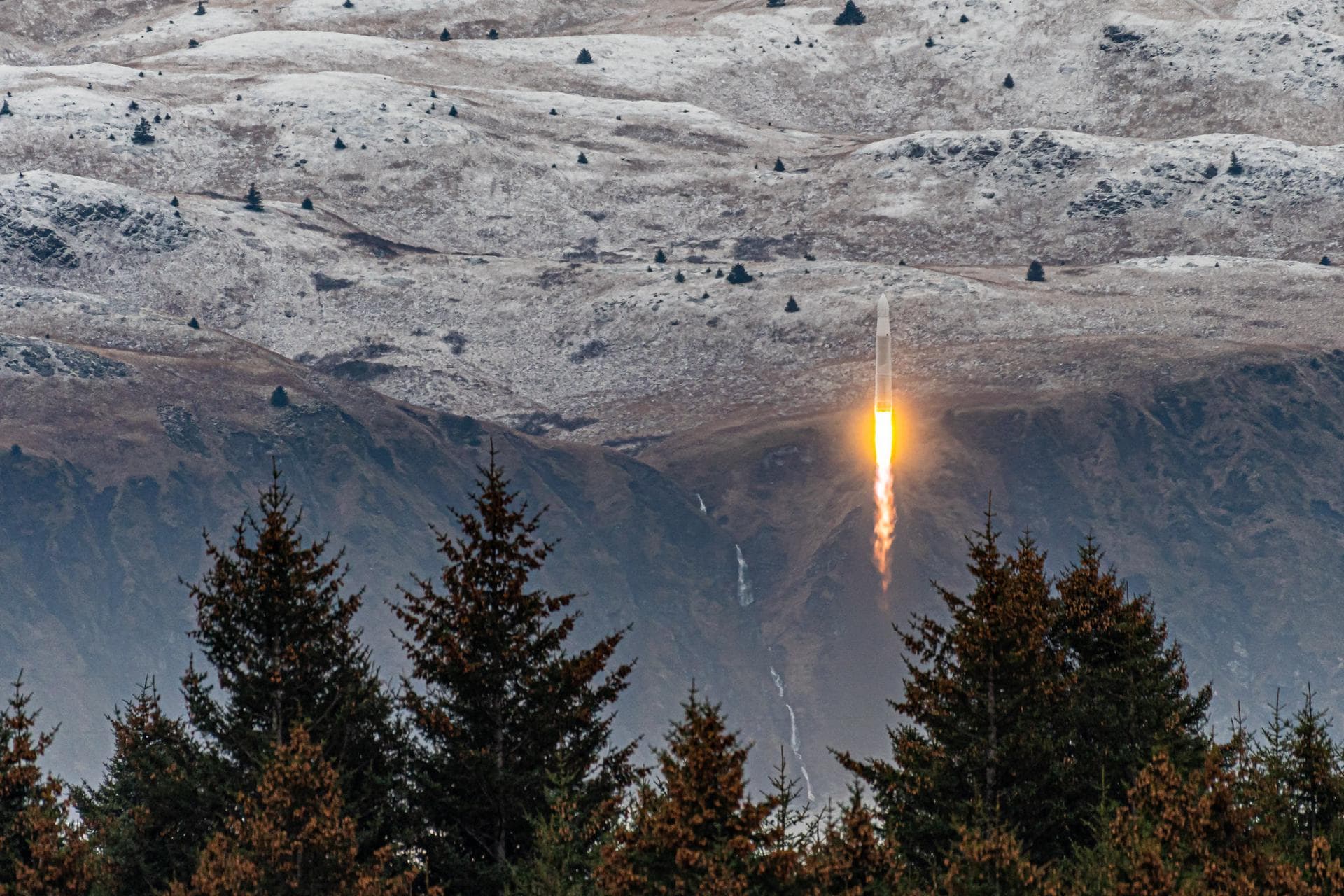
It all happened on August 29, 2021, at the Kodiak Launch Complex, located on the island of the same name off the coast of Alaska. At that point, Astra had already made several attempts at orbital launches, but all of them had failed. The company hoped to reverse this trend with a new modification of its launch vehicle, designated Rocket 3.3.
Unfortunately for the company, Rocket 3.3 did not live up to expectations. However, the launch vehicle gave us one of the strangest launches in history. Immediately after lifting off from the launch pad, one of the rocket’s engines failed. As a result, it hovered for a split second and then began to “slide”, moving sideways away from the launch pad.
Somehow, the control system managed to keep the rocket from tipping over. After about 20 seconds, when the remaining Rocket 3.3 engines burned enough fuel, it managed to stop moving sideways and start taking off. Later, the rocket was able to pass the point of maximum aerodynamic drag. However, due to all the anomalies that occurred, Rocket 3.3 began to deviate from its intended trajectory. As a result, ground operators had to shut down their engines, after which it fell into the ocean.
A rocket that could not support its weight
Developed in the late 1950s, Atlas Agena was, without exaggeration, a unique rocket in the history of world cosmonautics. Its walls were so thin that the payload had to crush them with its weight. This did not happen because, like a soda can, the rocket maintained its strength due to the internal pressure from the fuel inside it.
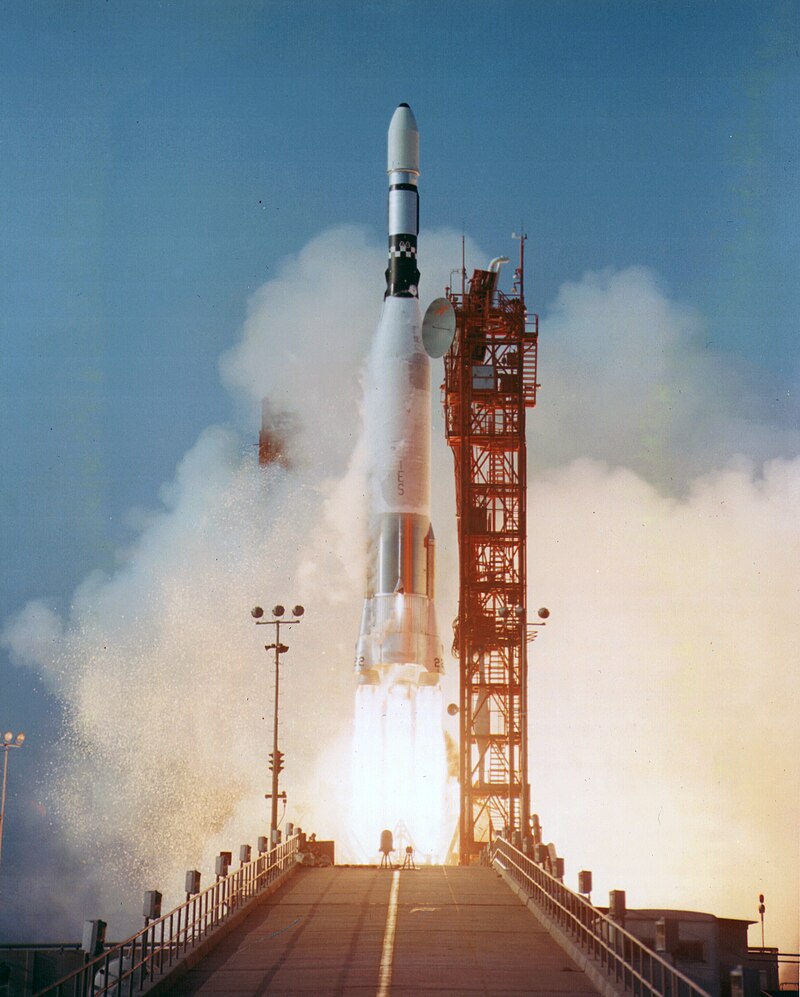
This design was advantageous in that it allowed the rocket’s weight to be reduced to a minimum and its efficiency to be increased. The downside was that in the event of a leak, the Atlas Agena would instantly collapse under its weight.
This is exactly what happened on May 11, 1963, at Vandenberg Air Force Base. During refueling, a gas bubble formed in the rocket’s fuel filling and drainage system. This created a hydraulic ram effect, weakening the connection through which liquid oxygen flowed into the Atlas. The launch pad crew attempted to prevent the accident by draining all the liquid oxygen from the upper tank. But this did not help, and the rocket simply collapsed, unable to withstand its weight.
Proton’s loop-the-loop
On July 2, 2013, a Proton-M rocket was launched from the Baikonur Cosmodrome. The mission’s objective was to place three Glonass satellites into orbit. The event was broadcast with great fanfare on Russian television.
But, as the observant presenter aptly noted, something went wrong. After lifting off from the launch pad, the rocket performed a loop-the-loop and, of course, disintegrated in the air, as it was not designed to withstand such loads. It all ended with a spectacular fireworks display, in which the expensive satellites burned up.
A subsequent investigation revealed that the accident was caused by the incorrect installation of the angular velocity sensors – they had been turned upside down. The funny thing is that the design made it extremely difficult to install them incorrectly. But the rocket assemblers found a solution to this problem by simply “hammering” them in with brute physical force. However, given the decline of Russian cosmonautics, this is hardly surprising.
Elon Musk’s Starship, however, proved to be much more durable than Proton. During its first orbital test in 2023, the spacecraft reached an altitude of 39 km, after which it began to spin uncontrollably. As a result, SpaceX had to activate the emergency flight termination system. However, the charge was not powerful enough to destroy the spacecraft immediately. For almost a minute after its activation, the steel giant continued to somersault until it finally broke apart.

