

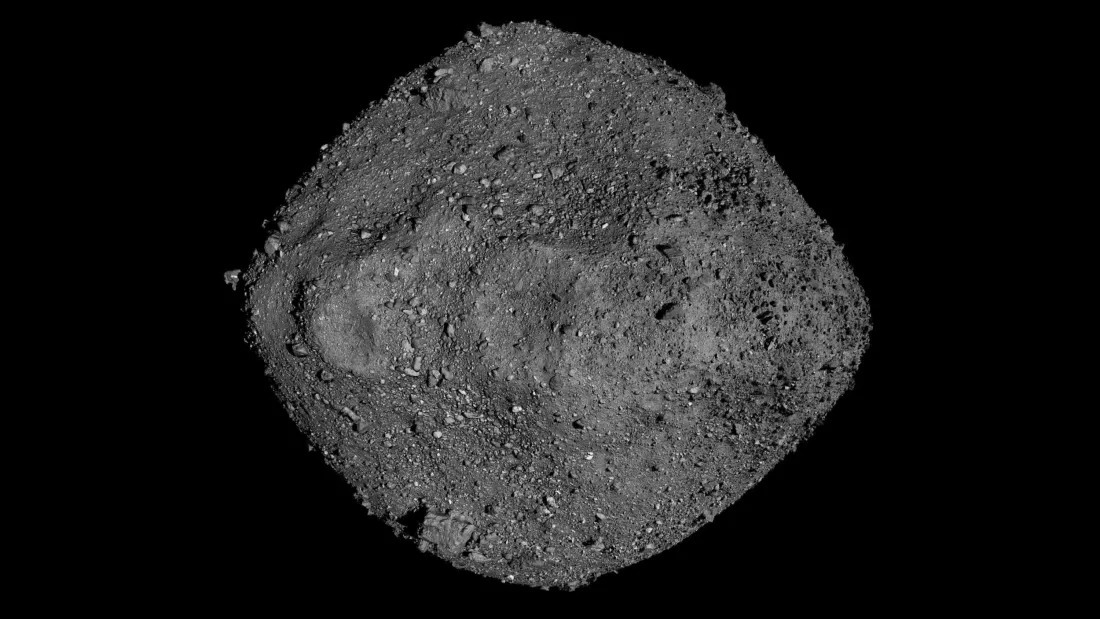
Scientists are still trying to figure out where the very first building blocks of life on our planet came from. The answer to this fundamental question may lie not in Earth’s warm prehistoric oceans, but in the cold vacuum of deep space. In samples of space rock collected from the near-Earth asteroid Ryugu, researchers have identified all five major nucleotides—the nitrogenous bases that make up the structure of DNA and RNA.
This unprecedented scientific breakthrough, the findings of which were published in the journal Nature Astronomy, fundamentally changes our understanding of evolution. For a long time, the scientific community was dominated by the belief that complex organic molecules—the building blocks of life—could have formed only under the unique, specific conditions of the early Earth. However, new data convincingly prove the opposite: the key components necessary for the emergence of living organisms can be freely synthesized directly in outer space.
Space time capsules
Asteroids like the carbon-rich Ryugu are true cosmic relics. They formed more than 4.5 billion years ago and have remained virtually unchanged ever since. In fact, these are remnants of the primordial “building material” from which our entire Solar System was formed. Scientists believe that Ryugu itself is a fragment of a much larger ancient celestial body that broke apart as a result of a collision.
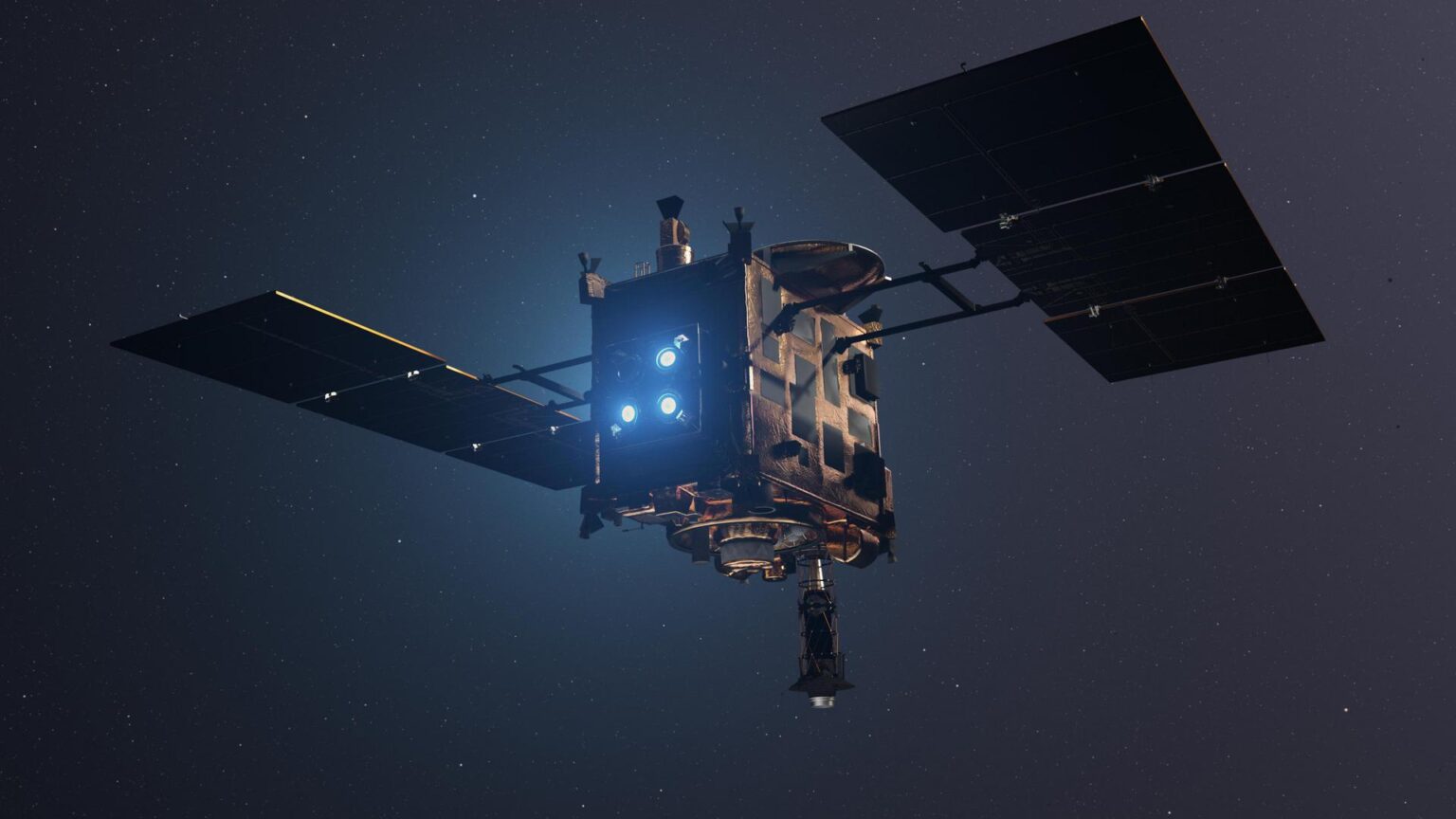
This unprecedented access to these “time capsules” was made possible by the Japan Aerospace Exploration Agency (JAXA) and its Hayabusa2 probe. In 2020, the spacecraft successfully returned a sealed capsule containing soil samples to Earth. To obtain truly “uncontaminated” material, Hayabusa2 did more than just collect dust from the surface. The spacecraft fired a special projectile to extract rock from deeper layers of the asteroid. This was critically important, as the surface of asteroids is constantly exposed to the destructive effects of solar radiation, extreme temperature fluctuations, and micrometeorites. The deeper layers, however, are securely protected, so the primary chemical compounds within them remain in their original state. Furthermore, the airtight packaging completely eliminates the risk of contamination of the samples by Earth’s atmosphere or our microorganisms.
Genetic alphabet in interstellar space
The discovery of all five nucleobases in extraterrestrial material is a true scientific sensation. Thorough laboratory analysis has confirmed the presence of purines (adenine and guanine) as well as pyrimidines (cytosine, thymine, and uracil).
DNA and RNA are complex macromolecules without which no living cell can function. They are responsible for storing, replicating, and transmitting genetic information in all forms of life known to us, from the simplest bacteria to humans. Adenine, guanine, cytosine, thymine, and uracil are the “letters” of the genetic code. Finding all five of these components together in a single extraterrestrial sample is like finding a complete set of typewriter keys in the desert, just waiting to write the story of biological evolution.
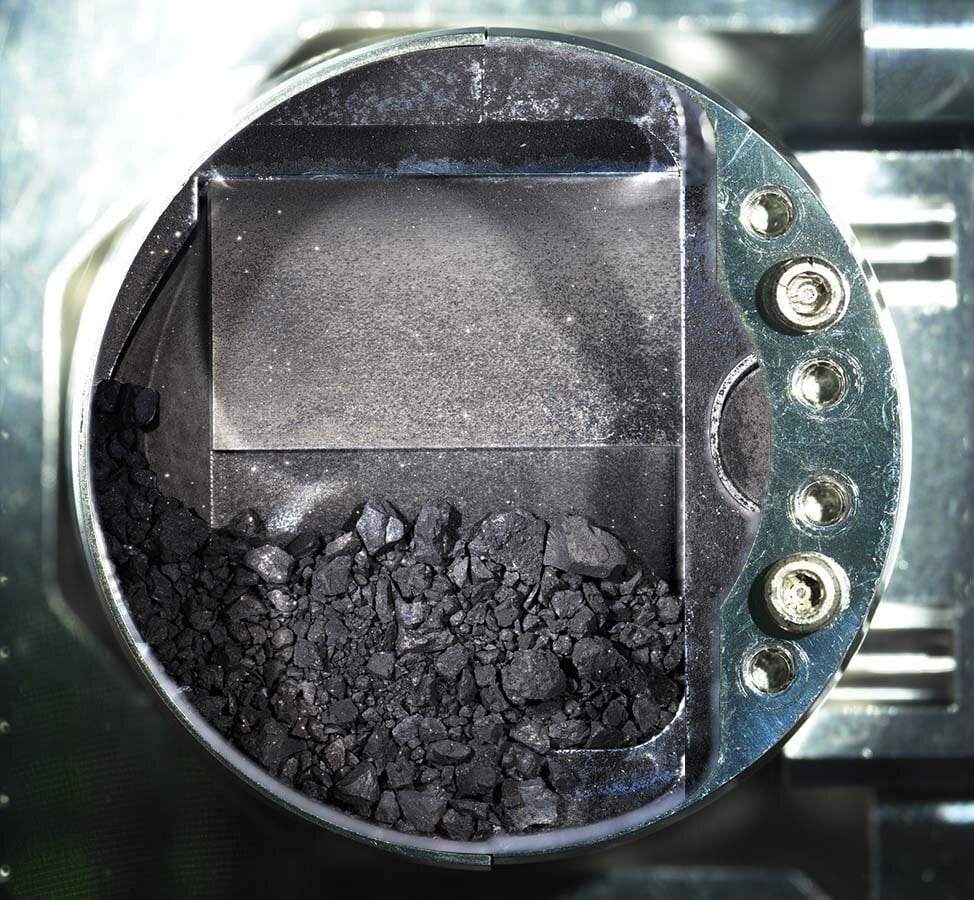
Researchers are paying particular attention to the specific balance between purines and pyrimidines in samples from Ryugu, which differs significantly from the composition of other known meteorites (such as the famous Murchison meteorite that fell in Australia).
The study’s authors note: “Samples from the asteroids Ryugu and Bennu, as well as the Orgueil meteorite, share similar mineralogy. They demonstrate that the ratio of purines to pyrimidines is negatively correlated with ammonia concentration.” This complex chemical relationship suggests that nucleotide bases formed through common chemical pathways that were directly dependent on the physicochemical conditions deep within their parent asteroids at the very dawn of the Solar System’s formation.
The presence of various nucleobases in meteorites and asteroids proves that they are quite common in our Solar System. This indisputably supports the hypothesis that carbon-rich asteroids acted as a kind of cosmic “couriers,” continuously bombarding the young Earth and enriching it with prebiotic chemical compounds.
“Bricks” don’t necessarily mean a finished house
Despite all the optimism sparked by this phenomenal discovery, scientists are cautioning the world against jumping to conclusions. The fact that the building blocks of life are widespread throughout the vastness of space does not in any way imply that the Universe is necessarily teeming with living creatures.
This situation can be compared to a children’s building set: just because there are pieces scattered around the room doesn’t mean they’ll automatically assemble themselves into a complex and beautiful castle. The molecules discovered on Ryugu are merely the necessary foundation—inert matter. Their presence merely proves that the basic chemical “ingredients” could have been delivered to our planet long before the first single-celled organisms appeared. But for the miracle of life itself to arise, a vast number of other factors must coincide: the presence of liquid water, a stable energy source, protection from harsh radiation, and millions of years of continuous chemical evolution.
This is precisely why the presence of nucleotides in space does not constitute direct evidence of extraterrestrial life. Scientists emphasize that, in order to confidently assert that we are not alone in the universe, much more comprehensive evidence will be needed than the discovery of isolated organic molecules. Nevertheless, the Hayabusa2 mission’s analysis of samples from the asteroid Ryugu will go down in history, as it opens up entirely new horizons for humanity in understanding exactly how life on Earth might have begun.
Earlier, we discussed the top 5 false claims of extraterrestrial life in the history of science.
According to dailygalaxy.com

