

Over the past decade, more than 200,000 volunteers around the world have been examining images of the sky in search of barely visible objects. The results exceeded expectations: the number of known brown dwarfs in the vicinity of the Sun has now doubled.
What are brown dwarfs?
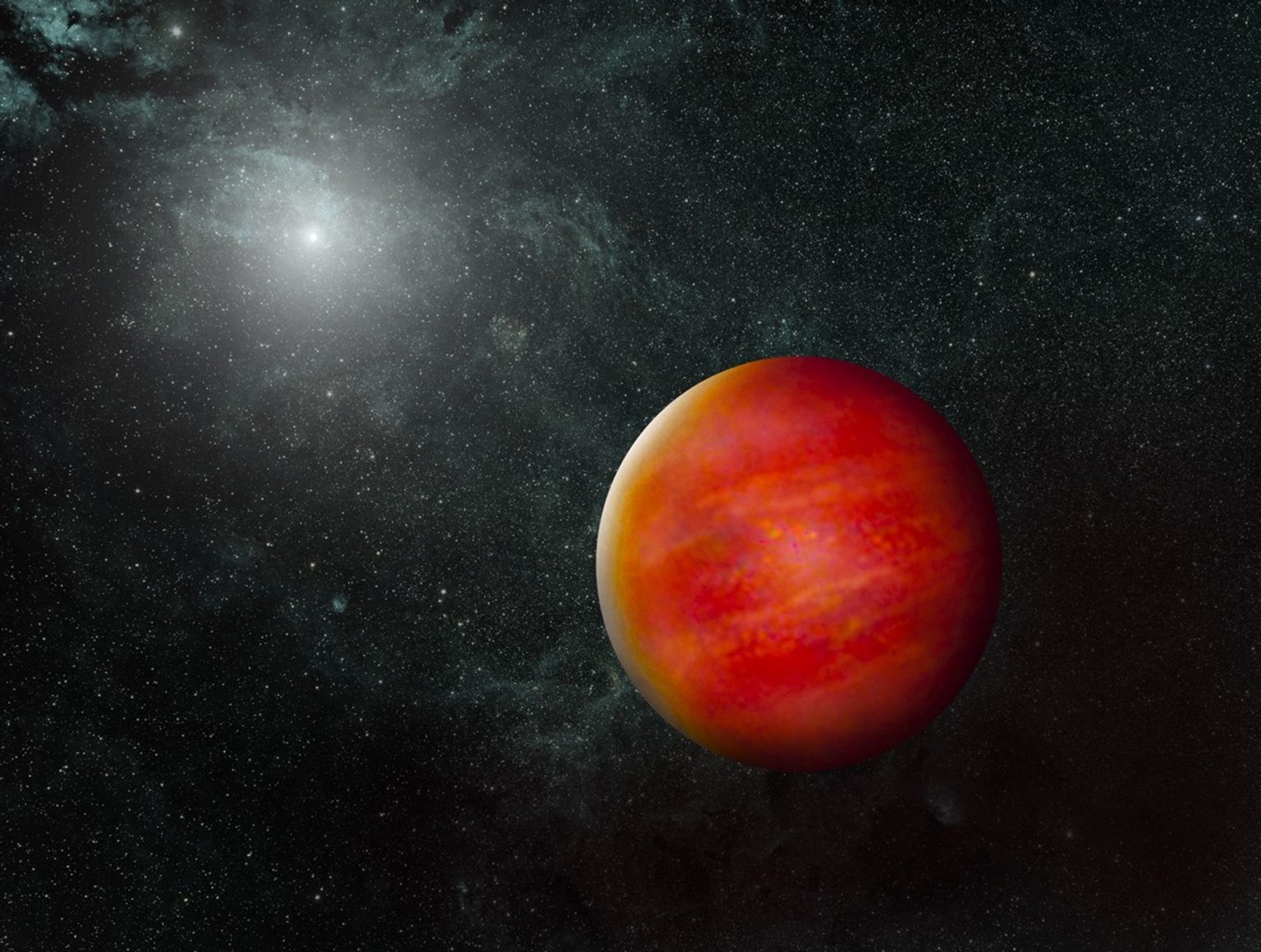
Scientists have long known that there is an intermediate category of objects between stars and planets. Brown dwarfs are similar in size to Jupiter but are significantly more massive than it; however, they are not massive enough to trigger nuclear fusion and become full-fledged stars.
They emit almost no light in the visible spectrum, making them extremely difficult to detect. Astronomers estimate that for every three or four stars near the Sun, there is one such object.
How to search
The volunteers worked as part of the Backyard Worlds: Planet 9 citizen science project, funded by NASA. The task was as follows: on the Zooniverse platform, participants reviewed images from the WISE (Wide-field Infrared Survey Explorer) infrared telescope and the NEOWISE (Near-Earth Object Wide-field Infrared Survey Explorer) mission, comparing images taken several years apart.
If the object shifted from frame to frame, this was a sign that it was relatively close. Some volunteers even used their own tools for analyzing the data.
More than 3,000 new objects
The results were published in The Astronomical Journal under the leadership of astronomer Adam Schneider of the U.S. Naval Observatory. Of the 75 authors of this paper, 61 are volunteers. Two others started out as volunteers and later chose to pursue careers in astronomy.
Over the past ten years, the project has added more than 3,000 new brown dwarfs to the existing catalog—effectively doubling the total number of known objects of this type.
What did the team discover?
These new discoveries have already yielded concrete results. Among them are a previously unknown class of extreme T-subdwarfs, ultra-cold objects, and a brown dwarf that appears to have its own aurora. The expanded catalog also helped us study the distribution of mass in our galaxy and create a three-dimensional map of the objects closest to the Sun.
The project is still ongoing: there are over two billion sources in the WISE and NEOWISE databases that are still waiting to be examined. You can join the search at backyardworlds.org.
According to nasa.gov

