

For the first time in history, astronomers have detected silane in the atmosphere of an ancient brown dwarf. This molecule plays an important role in cloud formation in the atmospheres of gas giants, but for decades it had not been detected on planets such as Jupiter and Saturn.
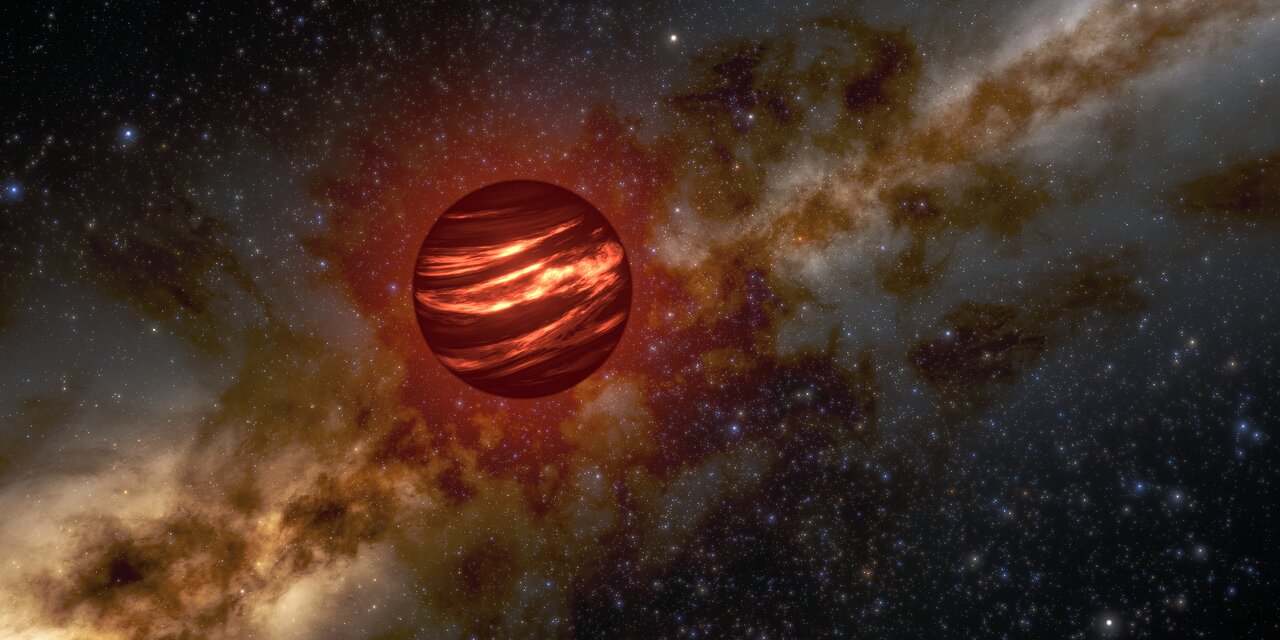
Brown dwarfs occupy an intermediate position between gas giants and stars. Some thermonuclear reactions may occur in their depths, but their mass is insufficient for hydrogen combustion, as occurs in the Sun. Because of this, they are often called failed stars.
One of the most unusual objects of this class is WISE 1534−1043, also known by the informal nickname The Accident. It is located 50 light-years from Earth and is estimated to be 10–12 billion years old. In other words, WISE 1534−1043 formed at a time when the Universe consisted mainly of hydrogen and helium, with only a few other elements, including silicon.
Due to its unusual properties, WISE 1534−1043 long escaped the attention of scientists. The dwarf planet was only discovered in 2020 as part of the Backyard Worlds: Planet 9 citizen science project. Its strange light profile intrigued astronomers, so they turned to two powerful observatories to peer into its atmosphere and better understand its nature and composition. We are talking about the Gemini South ground-based telescope and the James Webb Space Telescope (JWST) located in space.
The observations came as a surprise. Conclusive evidence of the presence of the chemical compound silane — silicon bonded to four hydrogen atoms — has been found in the atmosphere of a brown dwarf. Scientists have long predicted that this molecule exists in gas giants and plays an important role in the formation of clouds in their atmospheres. However, despite decades of searching, it has not been detected in the atmospheres of the gas giants in our Solar System, nor in the thousands of atmospheres of brown dwarfs and exoplanets. WISE 1534−1043 is the first object where silane has been found.
The presence of silane in the atmosphere of WISE 1534−1043 suggests that in very old bodies, silicon can combine with hydrogen to form a light molecule that can reach the upper layers of a gas giant’s atmosphere. But in objects formed later, such as Jupiter and Saturn, silicon combines with more available oxygen to form heavier molecules that sink deep below the surface layers of the atmosphere, where telescopes can no longer detect them.
The discovery of silane is important because it confirms astronomers’ understanding of how clouds form on gas giants and provides important information about how initial environmental conditions can affect the composition of a planet’s atmosphere. In addition, they show how the world that formed at the dawn of the Universe could be radically different from the world that formed during the era of our Solar System.
Earlier, we reported on how astronomers found a disc made of hydrocarbons around a brown dwarf.
According to NOIRLab

