

There is a 90% probability that we will witness a black hole explosion in the next decade. This is the conclusion reached by physicists at the University of Massachusetts Amherst.
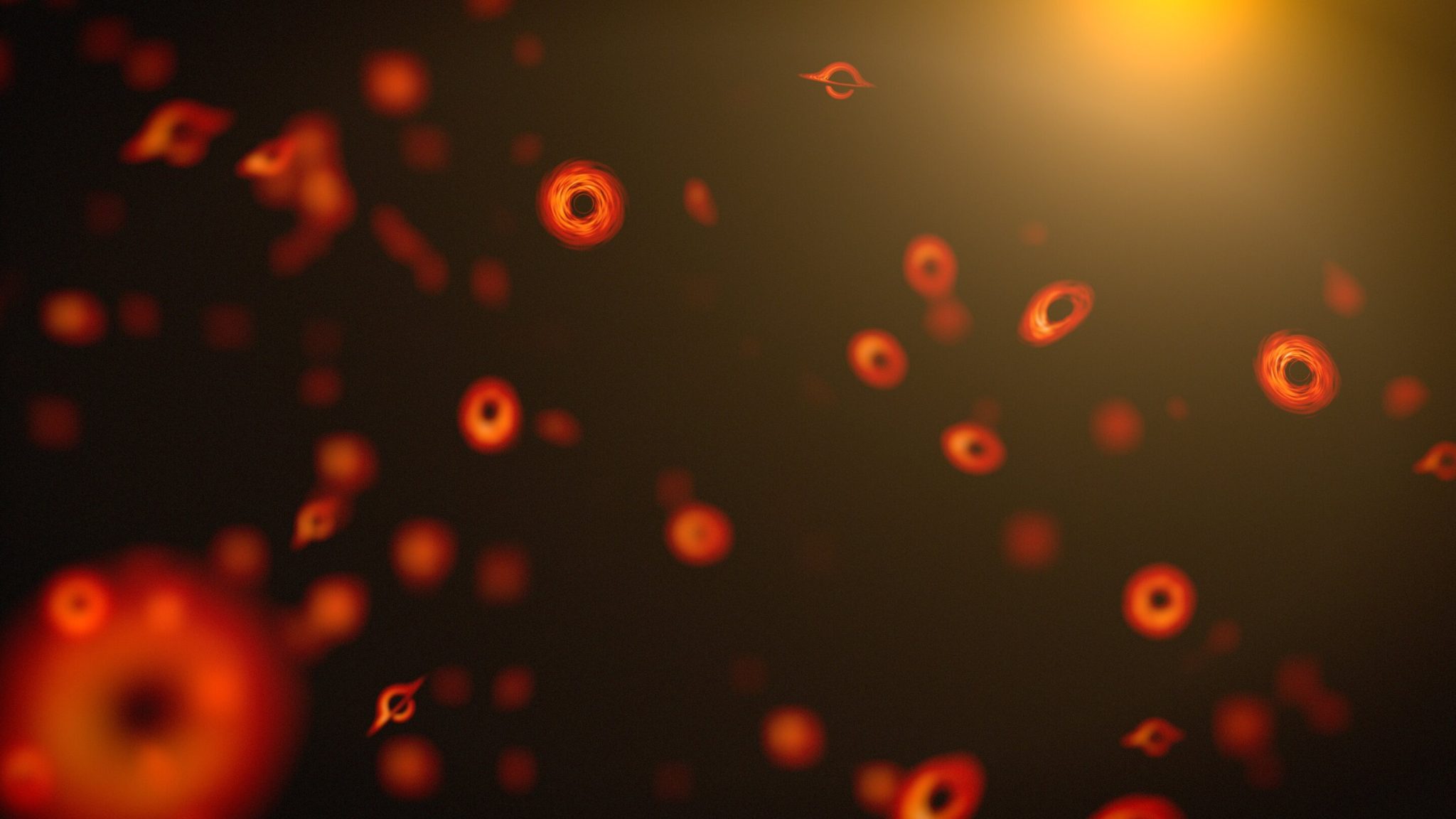
When we talk about black holes, we usually mean either stellar-mass objects formed as a result of the collapse of large stars or supermassive black holes hidden in the cores of most galaxies.
However, as Stephen Hawking pointed out back in 1970, there must be another type of black hole. These are known as primordial black holes, which were formed as a result of the collapse of superdense matter in the first moments of the universe’s existence. They are much lighter than stellar-mass black holes.
In addition, Hawking also showed that black holes have a temperature and can theoretically emit particles known as Hawking radiation. The lighter the black hole, the hotter it should be and the more particles it will emit. This process will accelerate until it leads to an explosion.
However, until recently, it was believed that explosions of primordial black holes occur very rarely (on average, once every hundred thousand years), so our chances of seeing such an event are extremely slim. But the results of a recent study have cast doubt on this picture. After analyzing all available experimental data, researchers at the University of Massachusetts have concluded that the probability of us seeing a black hole explosion within the next decade is greater than 90%.
Modern telescopes are capable of detecting such an explosion. It would provide convincing evidence not only of the existence of primordial black holes, but also give scientists a definitive catalog of all existing subatomic particles – both those that have already been observed (electrons, quarks, and Higgs bosons) and those that remain hypothetical, such as dark matter particles. This catalog would finally answer one of humanity’s most ancient questions: where did everything come from?
Earlier, we reported on the results of another study showing that black holes may be responsible for the accelerating expansion of the universe.
Provided by Phys.org

