

Astronomers from Stockholm University have announced the discovery of a protoplanetary disk with an unusual chemical composition. It challenges long-held assumptions about the chemical composition of planetary formation sites.
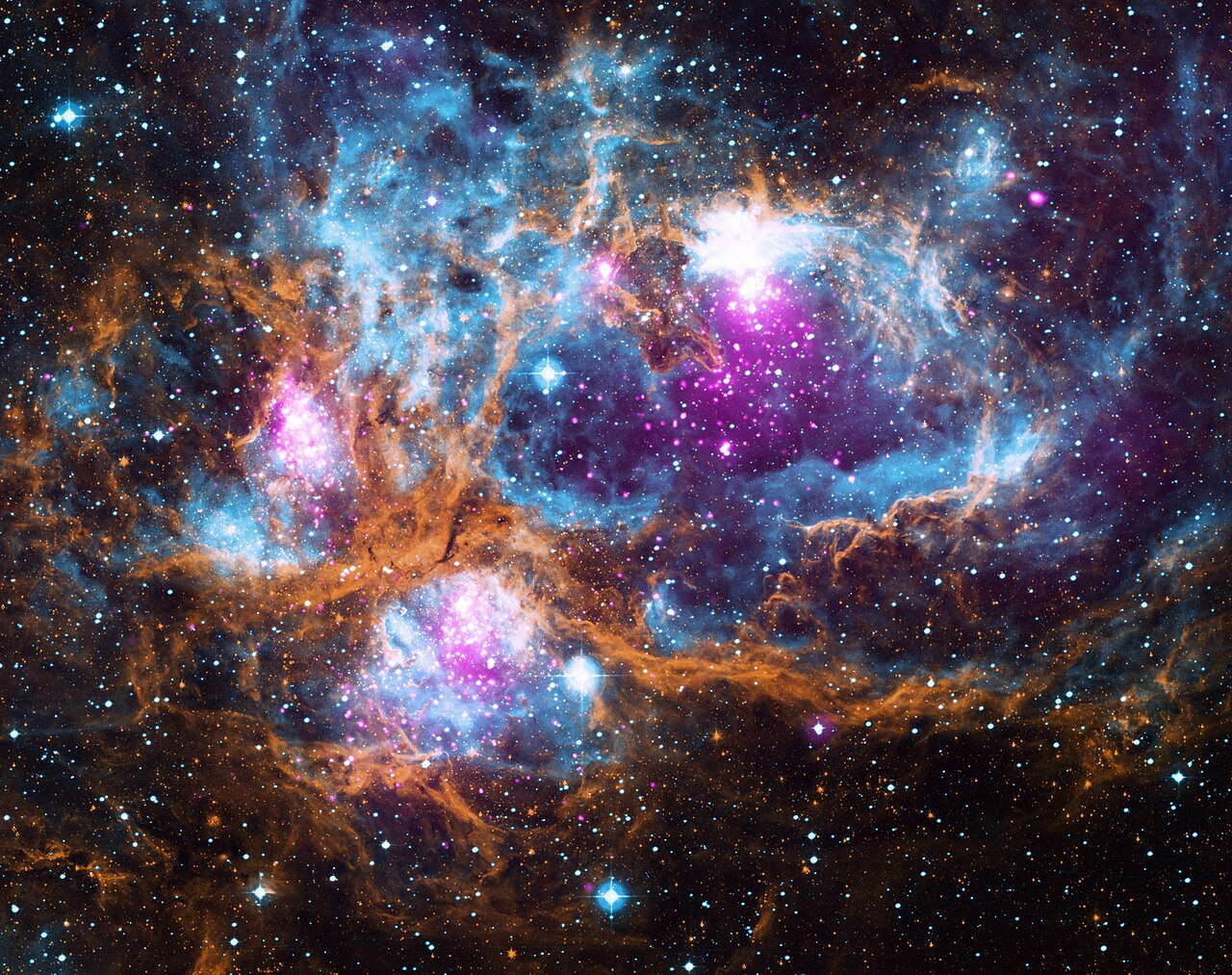
The discovery was made using the James Webb Space Telescope (JWST). While studying the star-forming region NGC 6357, located 5,500 light-years from Earth, it detected a protoplanetary disk dominated by carbon dioxide in its inner regions. This makes it strikingly different from most other known protoplanetary disks, in which water vapor predominates in the inner regions.
A newly formed star is initially deeply immersed in the gas cloud from which it originated and creates a disk around itself, where planets can form. In traditional models of planetary formation, water-rich pebbles drift from the cold outer part of the disk to warmer inner regions, where the increase in temperature causes the ice to sublimate.
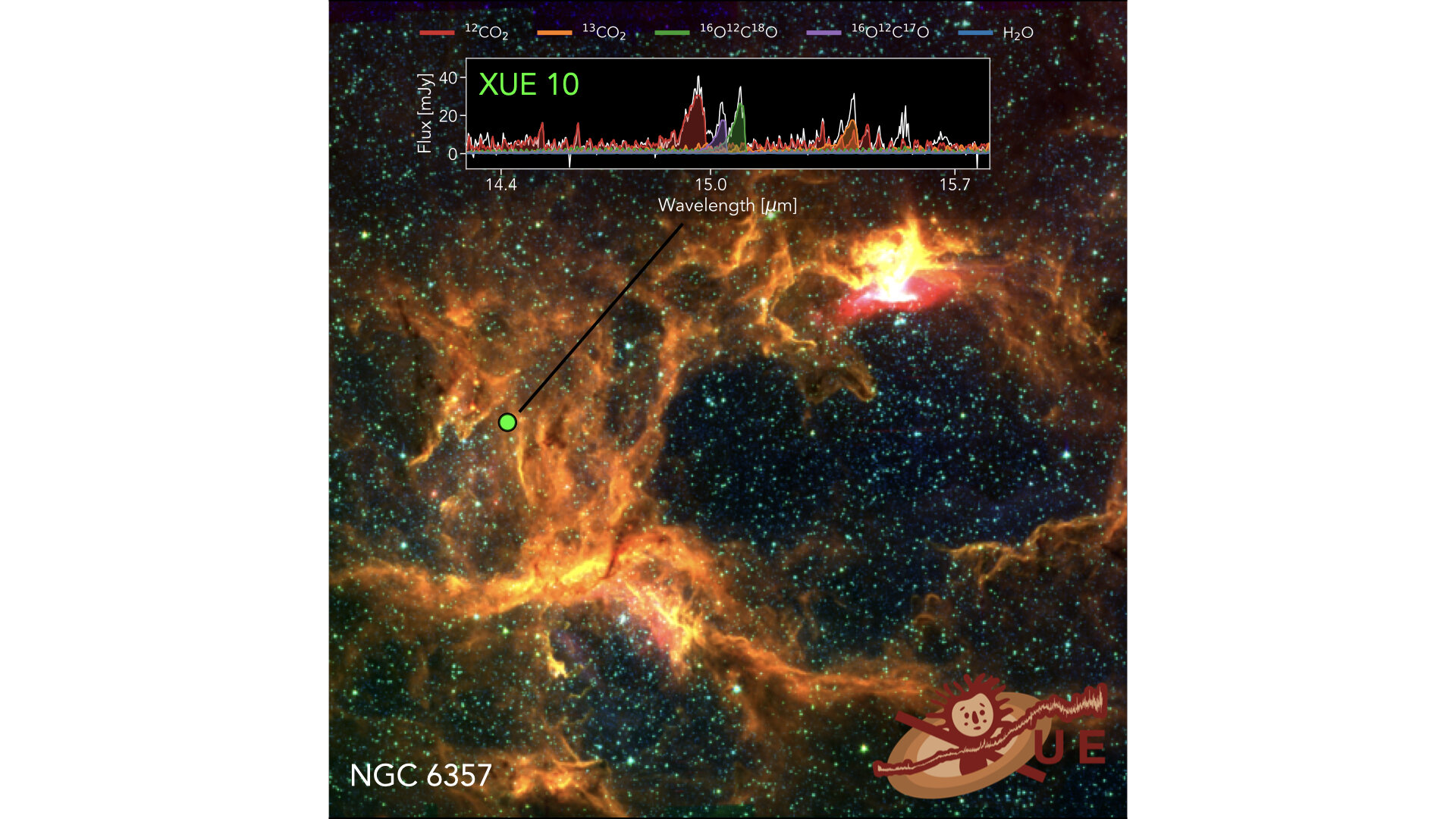
This process usually leads to the appearance of strong water vapor signatures in the inner regions of the protoplanetary disk. However, in the case of the JWST disk studied, water is so rare that it is almost impossible to detect.
The discovery calls modern models into question, as the high level of carbon dioxide compared to water cannot be easily explained by standard disc evolution processes. This suggests the possibility that intense ultraviolet radiation — either from the parent star or from nearby massive stars — has altered its chemical composition. Since most stars and probably planets form in such regions, understanding these effects is important for realizing the diversity of planetary atmospheres and their potential for life.
Researchers also discovered rare isotopic variants of carbon dioxide enriched with either carbon-13 or oxygen-17 and oxygen-18 isotopes. They may provide important clues to solving long-standing questions about unusual isotopic signatures found in meteorites and comets — relics from the time when our Solar System was formed.
Earlier, we discussed how alcohol around a young star could explain the formation of life on Earth.
According to Phys.org

