

Tuesday, February 17, brought us the first major astronomical event of the year. A partial solar eclipse unfolded over the icy shell of Antarctica and the turbulent waters of the Southern Ocean — the first in 2026. Since our Earth’s moon is currently at the far end of its elliptical orbit, its apparent size was not sufficient to completely cover the sun’s glare. Instead of complete darkness, observers saw the Moon only partially cover the Sun, forming a veritable ring of fire on its horizon.
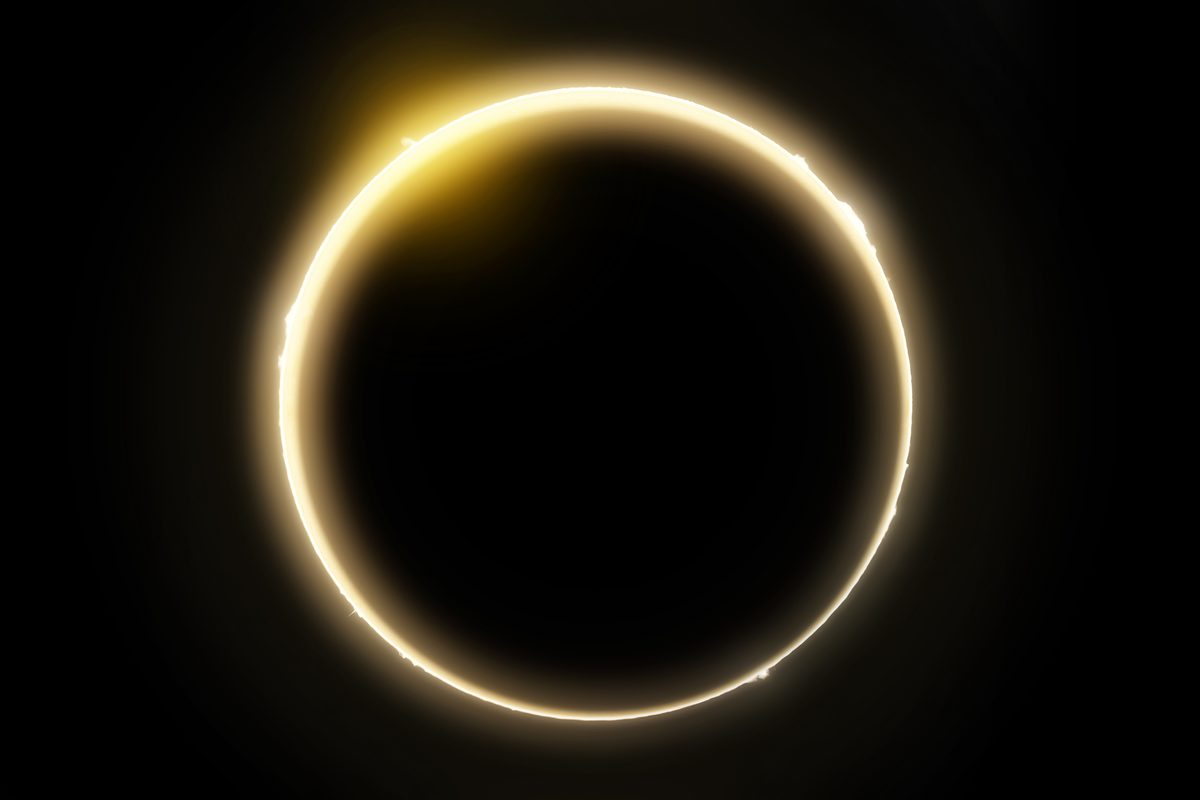
The geography of this astronomical event proved to be a real challenge for eclipse enthusiasts — the front row seats went mainly to Antarctic penguins and the few employees of scientific bases on the planet’s coldest continent. The shadow from the eclipse slightly affected the French Southern Territories, as well as the edge of the African continent: in South Africa and Namibia, the sun briefly took the form of a fiery slice. The Ukrainian sky remained outside the direct path of the eclipse shadow, and domestic experts recorded the culmination of the phenomenon at exactly 14:13 Kyiv time — at that moment, the lunar disk was perfectly aligned with the center of the Sun. The total duration of the eclipse was 3 minutes and 51 seconds.
The annular eclipse was also one of the coldest: scientists recorded a sharp drop in temperature in the shadow zone, which was particularly noticeable in Antarctic conditions. Data recorded by weather stations in Antarctica, particularly in the Wilkes Land region, where the maximum phase occurred, showed a drop in temperature of 4–7 °C below normal.
Astrophysicists emphasize that such events allow for more accurate calibration of instruments used to study the solar ionosphere. This is a kind of dress rehearsal for the event that awaits us this summer — a total solar eclipse will occur on August 12 and pass across Europe.

