

During the Artemis II mission, scheduled to launch in April, four astronauts will take a step that humanity has not dared to take for decades: they will leave the protective magnetic field of Earth. On this journey, the hull of the Orion spacecraft will be their only protection against the Sun’s deadly fury.
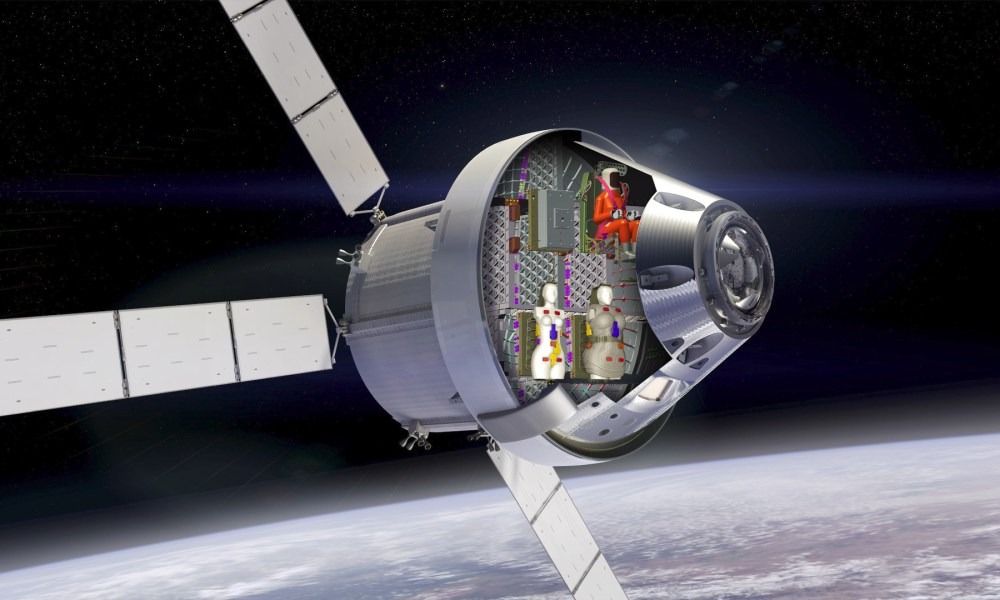
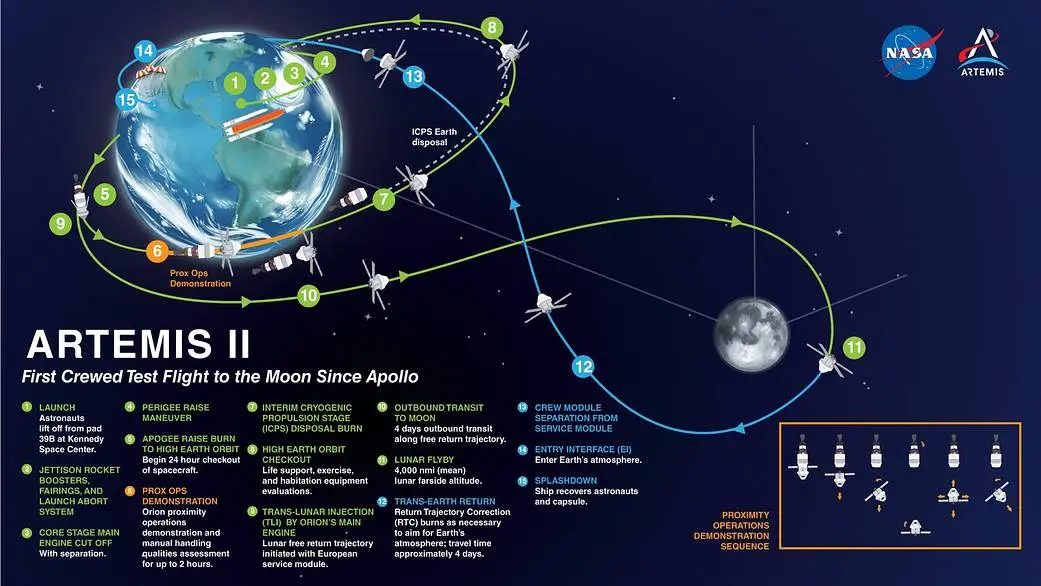
During the ten-day mission, NASA and NOAA specialists will be working around the clock. Their mission is to convert space weather data into real-time solutions that can save the crew’s lives.
Billions of hydrogen bombs in one instant
Space weather isn’t about clouds or rain. These are massive explosions known as solar flares, whose power can exceed that of a billion hydrogen bombs. Along with these, the Sun ejects coronal mass ejections—colossal clouds of particles hundreds of times larger than our planet.
The greatest danger comes from the solar wind, which consists of energetic particles. With their tremendous speed, they are capable of piercing the spacecraft’s fuselage and striking the crew. High levels of radiation exposure pose not only a risk of cancer in the future, but also a threat to astronauts’ cognitive abilities during the flight itself.
The All-Seeing Eye: From satellites to Mars rovers
To avoid missing the “solar flare,” NASA is using a whole fleet of spacecraft. A network of probes, such as SDO and SOHO, is strategically positioned throughout the Solar System to continuously monitor our star.
Interestingly, even the Perseverance rover, while on Mars, serves as a space guardian. Thanks to its location, it can see the side of the Sun that is currently hidden from Earth. Mastcam-Z cameras allow scientists to spot large sunspots two weeks before they face our planet, giving them valuable time to prepare.
The “radiation bath” effect
High-energy particles do not travel in a straight line—they move in spirals along the Sun’s magnetic field lines, scattering chaotically. Astrophysicists compare this process to filling a bathtub: the radiation level inside Orion will rise gradually, not all at once.
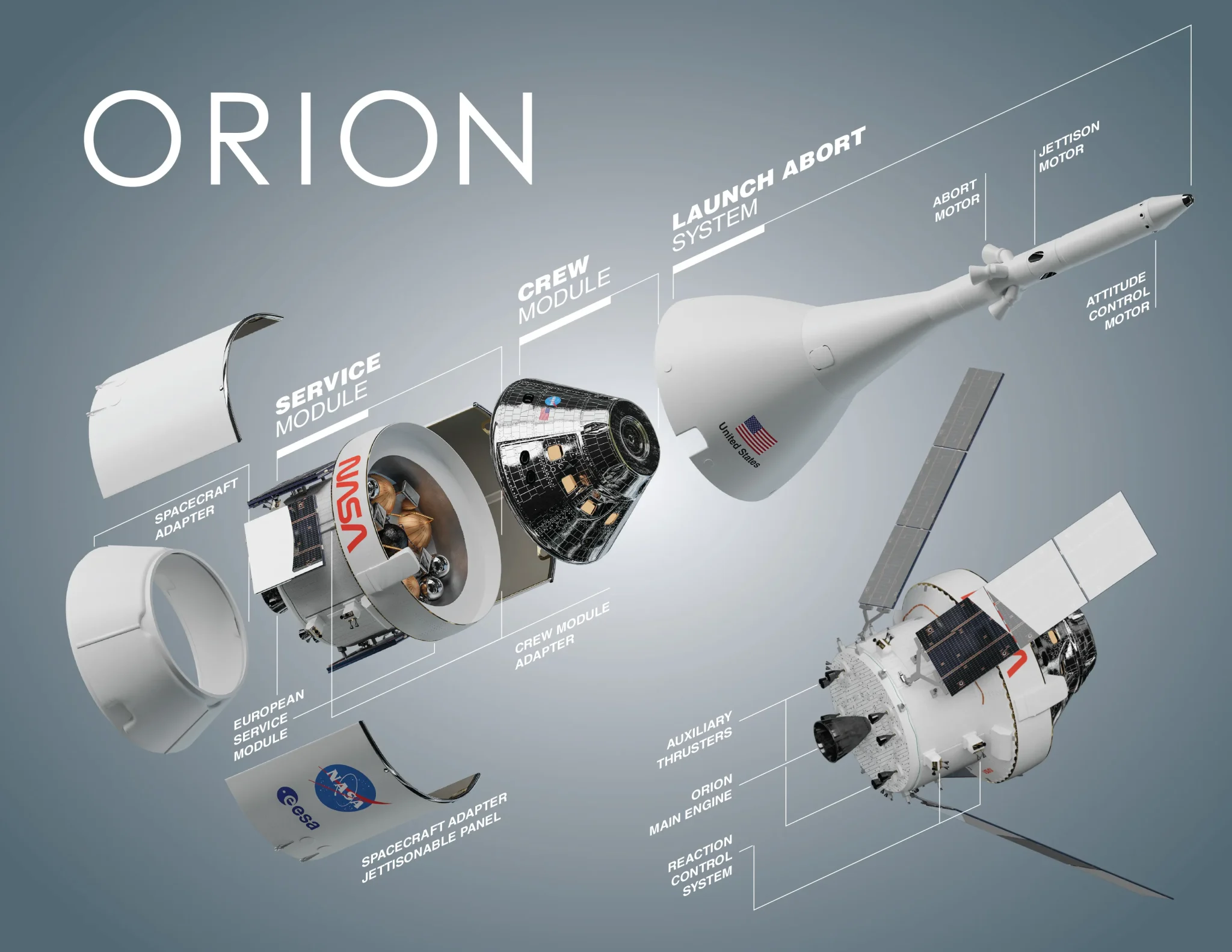
A HERA sensor system has been installed to monitor conditions inside the cabin, and each astronaut has a personal dosimeter. If the instruments detect a dangerous increase in radiation levels, an audible alarm will sound on board—this is a signal to take action.
When radiation levels exceed the critical threshold, the crew will begin to follow the “shelter” protocol. Protection in space is provided by mass: the more matter there is between a person and the radiation, the fewer particles will pass through them.
The astronauts are trained to quickly reconfigure the cabin. They retrieve food supplies, equipment, and tools from storage compartments and secure them along the cabin walls. This improvised “armor” creates an additional barrier that absorbs particles. Testing this procedure is one of the primary objectives of the Artemis II mission.
Risks and Reality
Even without solar storms, the crew faces challenges: passing through the Van Allen radiation belts and constant exposure to galactic cosmic rays. The total radiation dose over the 10-day flight is expected to be equivalent to a month-long stay on the ISS—about 5% of an astronaut’s lifetime radiation limit. Any solar activity will only add to this figure.
Collaboration between the teams in Greenbelt and Houston ensures that no solar flare goes unnoticed and that the Orion crew has a clear plan of action for a safe return home.
We previously reported on the importance of the lunar elevator’s functionality for the survival of the Artemis astronauts.
According to NASA

