

The history of space photography is filled with thousands of striking images, but none of them can match the impact of a photograph taken on Christmas Eve 1968. At that time, the crew of the Apollo 8 mission became the first group of people to leave Earth’s orbit and head toward another celestial body. During the fourth orbit around the Moon, astronaut Bill Anders looked out the window and saw a sight that was not described in any of the mission logs: the glowing blue sphere of Earth was slowly rising above the barren, cratered horizon of the Moon.
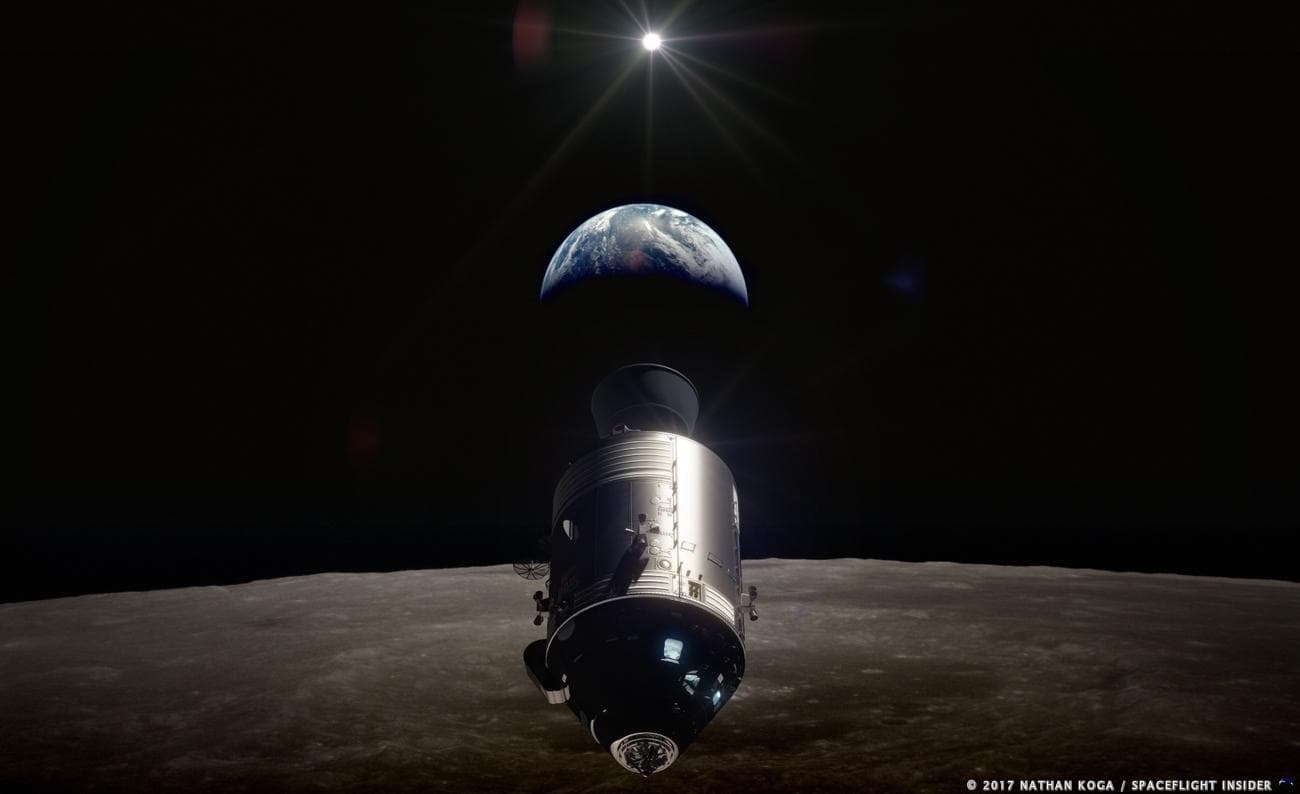
“Oh my god, look at that picture over there!” exclaimed Anders, instantly forgetting about the strict experimental schedule. His commander, Frank Borman, tried jokingly to stop his colleague, reminding him that this wasn’t part of the plan, but the magic of the moment won out. Anders grabbed a Hasselblad camera with a 250-millimeter telephoto lens, quickly swapped out the black-and-white film for color, and took a photograph that would later be called “Earthrise.”
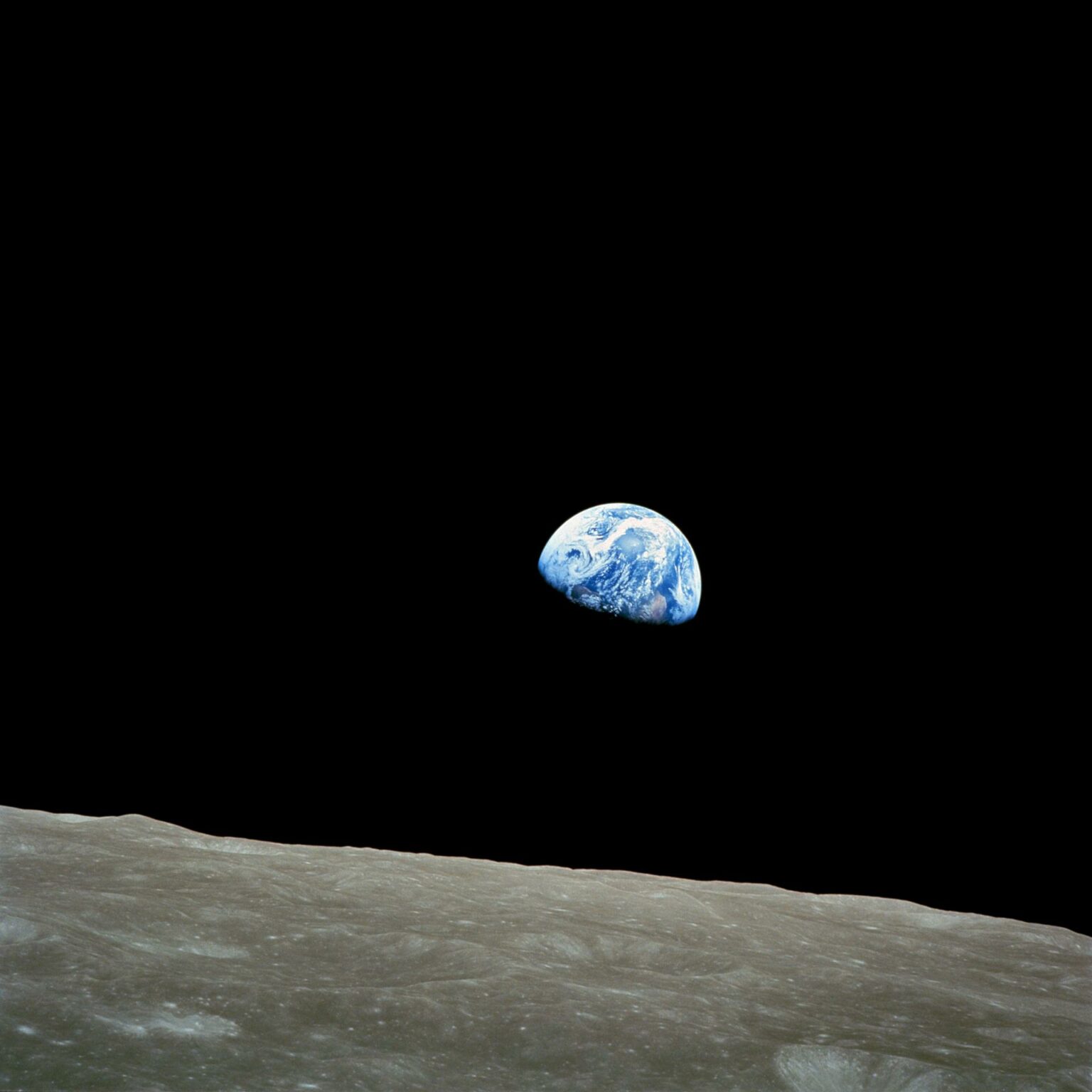
This photograph became an icon of the environmental movement and anti-war protests, vividly demonstrating to all of humanity just how fragile our home is in the endless darkness of space.
Artemis II: New optics for a new era
History is about to repeat itself. On Monday, April 6, the Artemis II crew—Reid Wiseman, Victor Glover, Christina Koch, and Jeremy Hansen—will attempt to recreate this legendary image. However, this time, “Earthrise” will not be a coincidence. A team of NASA visualization specialists led by Ernie Wright calculated every second and every camera angle in advance to achieve the perfect result.
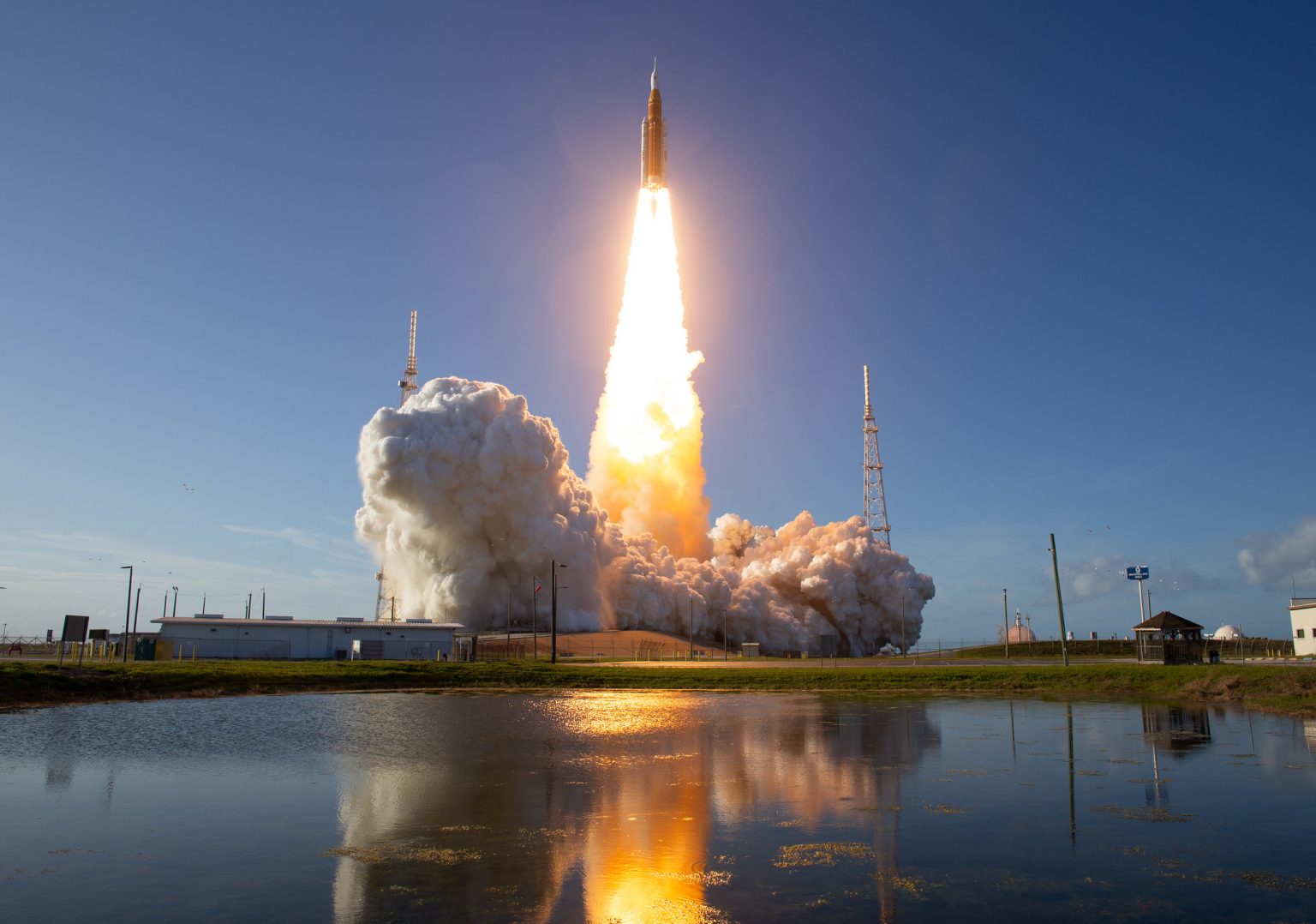
Unlike their predecessors, who used analog medium-format cameras, today’s astronauts are equipped with Nikon D5 digital SLR cameras. This gives them much greater control over exposure and white balance settings in extreme high-contrast lighting conditions. In addition, the Orion spacecraft, named Integrity, is equipped with dozens of high-resolution external cameras, which will capture the moment in 4K and 8K, providing a fully immersive experience for billions of viewers on Earth.
Frame Geometry: The “East” and “West” of the Earth
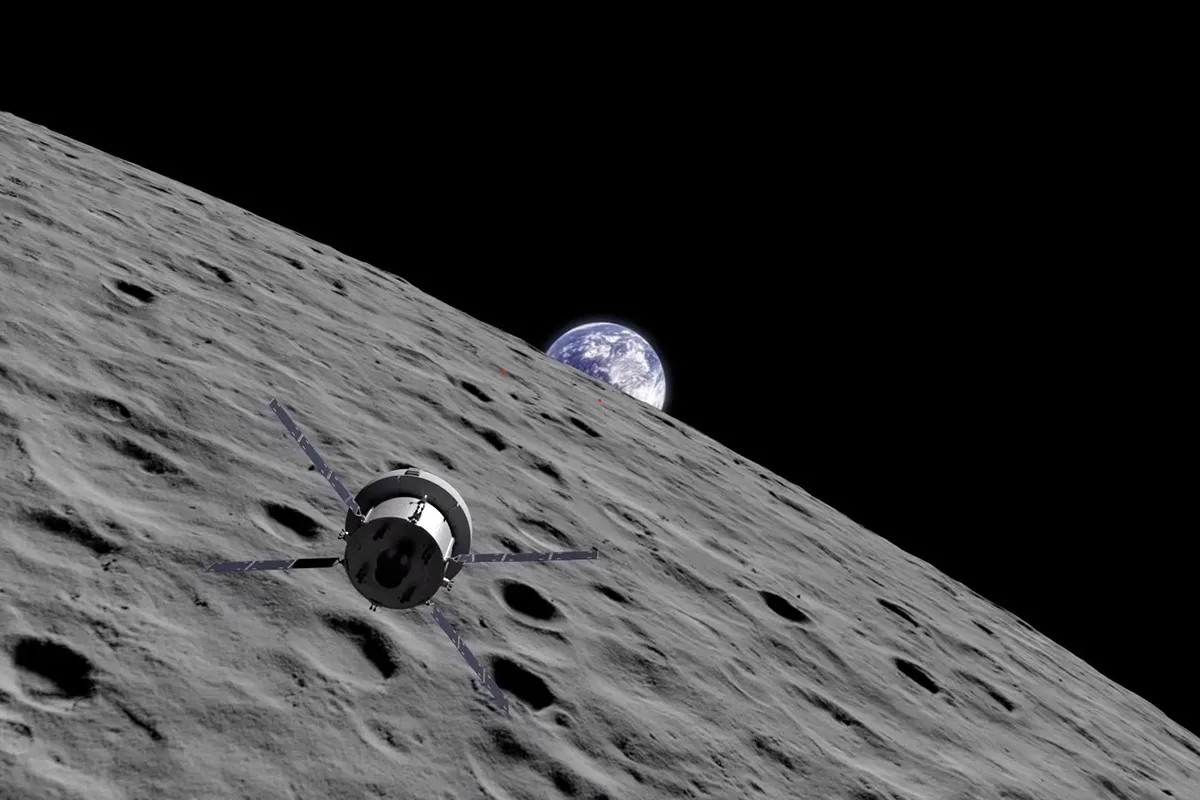
The flight path of Artemis II differs significantly from that of the Apollo missions. While the Apollo 8 spacecraft orbited at a low altitude of just 100 kilometers above the surface, Orion will fly much higher—at an altitude ranging from 6,430 to 9,650 kilometers. As a result, the Moon in the frame will look not like an endless plain stretching out beneath your feet, but like an object the size of a basketball at arm’s length.
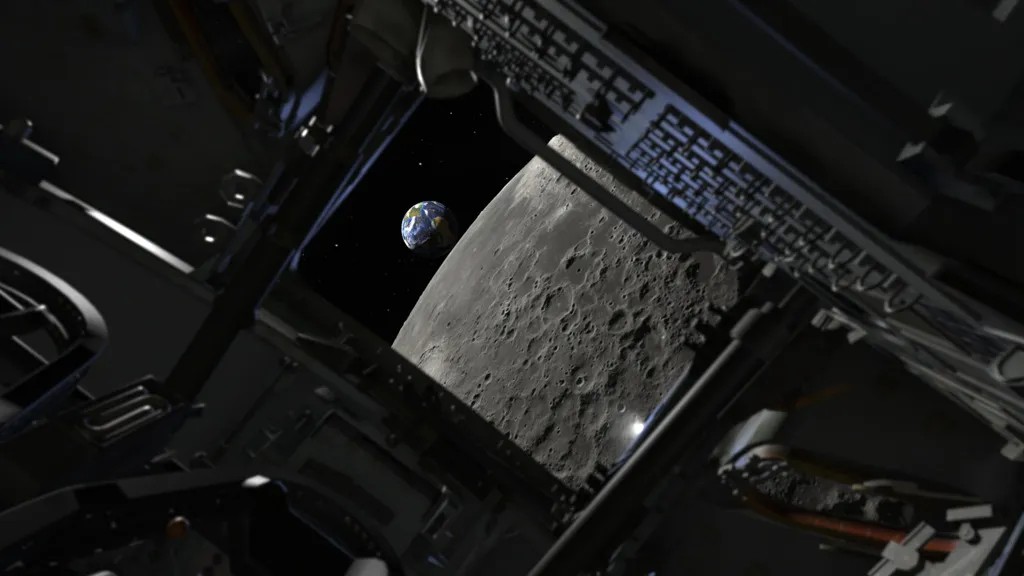
The astronauts plan to capture not only the moment the planet rises, but also the “Earthset”—the moment Earth sets below the lunar horizon. This will occur just before the spacecraft enters the far side of the Moon, losing contact with Earth for 45 minutes. The crew will have only a narrow window of a few minutes to adjust the focus and capture the correct phase of Earth. Our planet is expected to appear as a thin crescent or a half-disk, depending on the exact time of its passage over the terminator line.
Aesthetics of the far side
One of the most interesting technical aspects of the new photograph will be the lighting. During the Apollo 8 mission, the Sun was high in the sky, which made the Moon’s surface appear somewhat flat in the photographs. For Artemis II, the conditions will be different: the far side of the Moon will be in a phase of partial illumination. This will create long, dramatic shadows stretching across gigantic craters and mountain ranges.
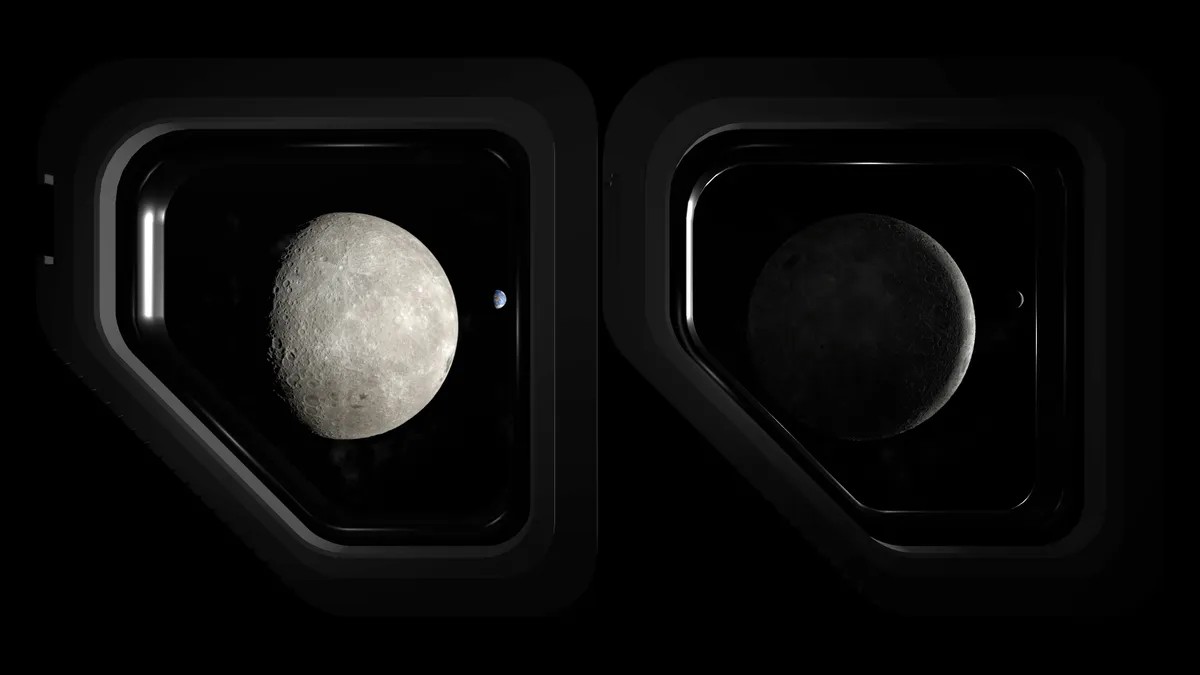
According to a NASA statement released on April 2, this oblique lighting will help highlight the depth and texture of the lunar surface, revealing details that are usually lost in full light. The crew underwent special geological training to be able to distinguish ancient lava flows and crater slopes even in low light. Thanks to the high sensitivity of modern sensors, astronauts will be able to capture the “ashy glow”—the faint light of the Moon reflected off our Earth—which will give the image incredible depth.
Symbolism 2026: Can photography unite us once again?
The 1968 photograph was taken at the height of the Vietnam War and social upheaval in the United States. It served as a “cold shower” for humanity, reminding us that we are all passengers on a single small ship adrift in an ocean of emptiness. Today’s world is once again torn apart by conflicts, environmental crises, and political tensions. NASA hopes that a fresh perspective of Earth from aboard Orion will serve as a psychological trigger—the so-called Overview Effect—which makes astronauts feel a deep sense of responsibility for the planet.
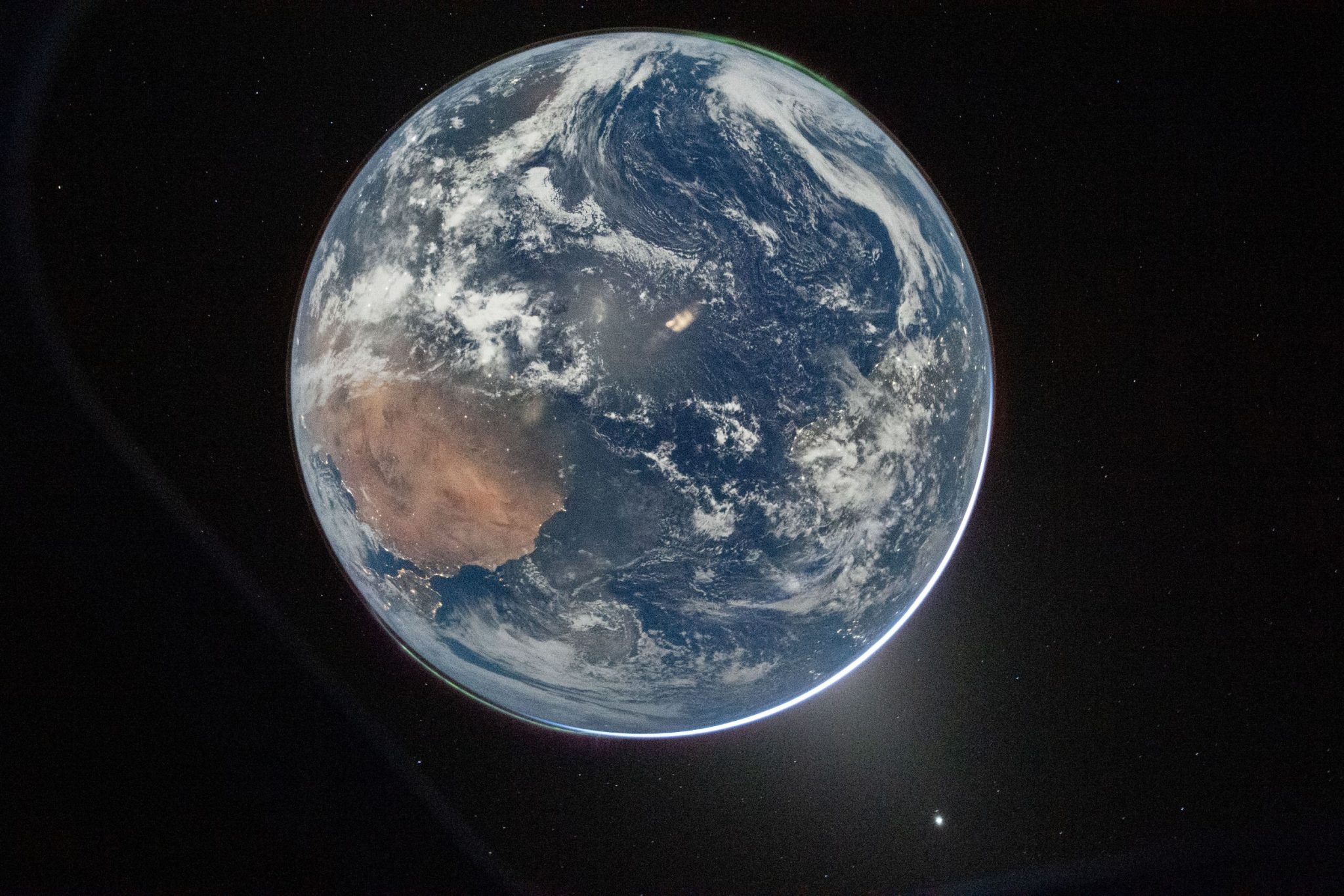
The new photograph, “Earthrise,” is not just a photography project. It is an attempt to restore humanity’s sense of a shared destiny. On Monday, when Reid Wiseman and his team point their cameras at the windows, they won’t see national borders or conflict zones, but only the thin blue veil of the atmosphere that protects all life. We can only hope that the clarity of 2026 will help us see something that Bill Anders’s film already revealed: we are one, and we have no other home.
We previously reported on how the U.S. Air Force’s most secret aircraft monitored the launch of the Artemis II mission.
According to space.com

