

NASA has begun assembling a new heavy-lift rocket for the Artemis III mission—the next crewed flight to the Moon. At the same time, the Orion spacecraft returned to the Kennedy Space Center after recently sending humans on a crewed flight to the Moon for the first time in more than 50 years.
Rocket arrives from Louisiana
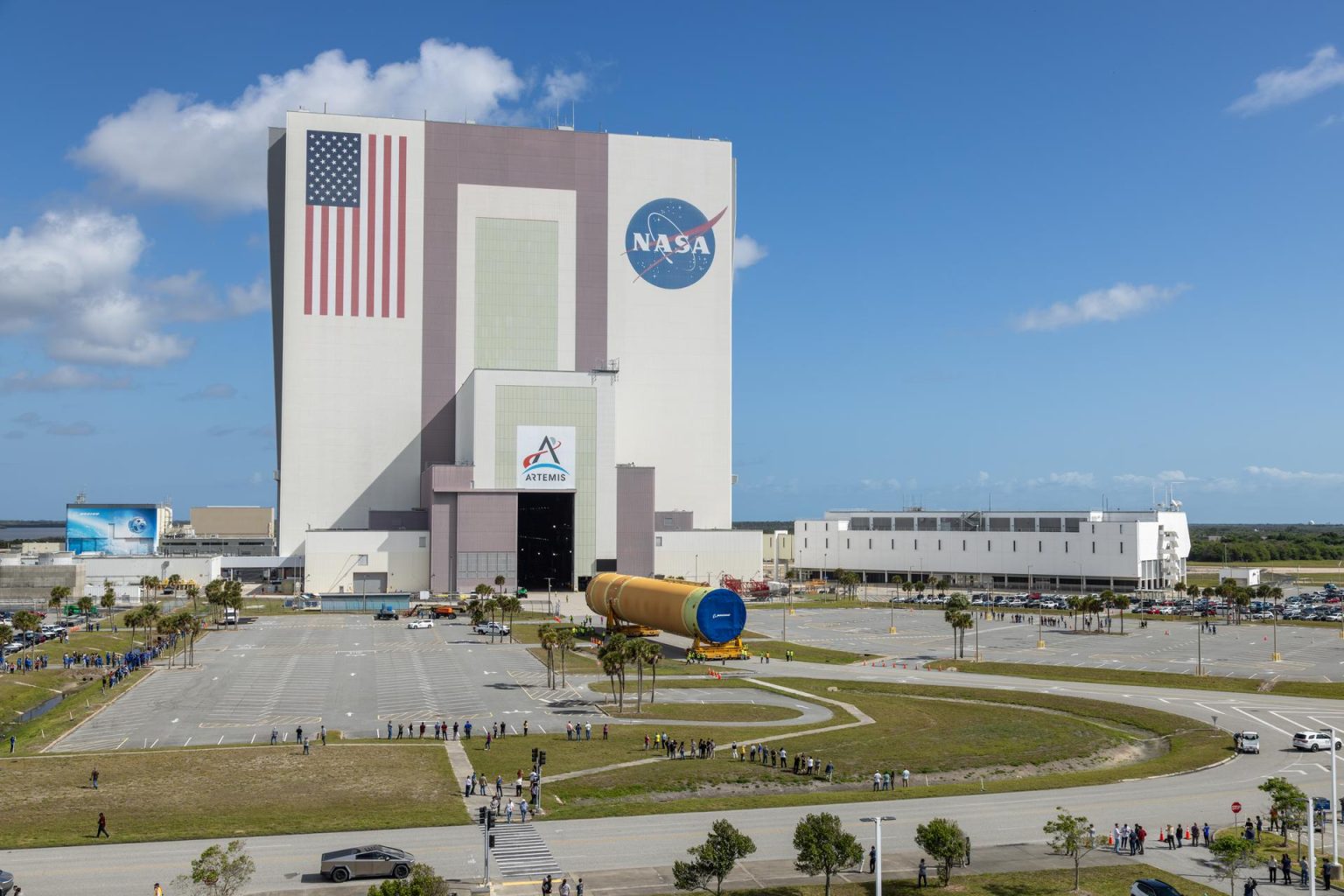
In late April 2026, four-fifths of the SLS core stage arrived at the Kennedy Space Center aboard the Pegasus barge and were transported to the Vehicle Assembly Building (VAB). There, they will be joined to the tail section with the engines, which was delivered back in August 2025.
Once assembled, the stage will stand approximately 65 meters tall and will house two tanks containing liquid hydrogen and oxygen, as well as onboard computers (avionics). For previous missions, the stage was fully assembled at the factory in Louisiana—this time, final assembly is taking place in Florida for the first time.
Boosters traveled through eight states
The first batch of solid-fuel booster segments arrived on April 13—they were manufactured by Northrop Grumman in Utah and transported by rail across eight states in special transporters. These two boosters will provide more than 75% of the total thrust during launch.
After inspection, each segment will be moved to the assembly hall, where the sections will be assembled into 17-story structures and connected to the central stage. Together, the entire system generates a thrust of approximately 4,000 tons.
Orion returned from the Moon and immediately got to work
At the other end of the spaceport, the Orion spacecraft that took part in the Artemis II mission landed: it had orbited the Moon and returned the crew to Earth—NASA astronauts Reid Wiseman, Victor Glover, Christina Koch, and Canadian Space Agency (CSA) astronaut Jeremy Hansen.
Now the technicians will remove the equipment, collect data on system performance, dismantle the heat shield for detailed analysis, and drain the remaining fuel.
Artemis III is already in the final assembly phase
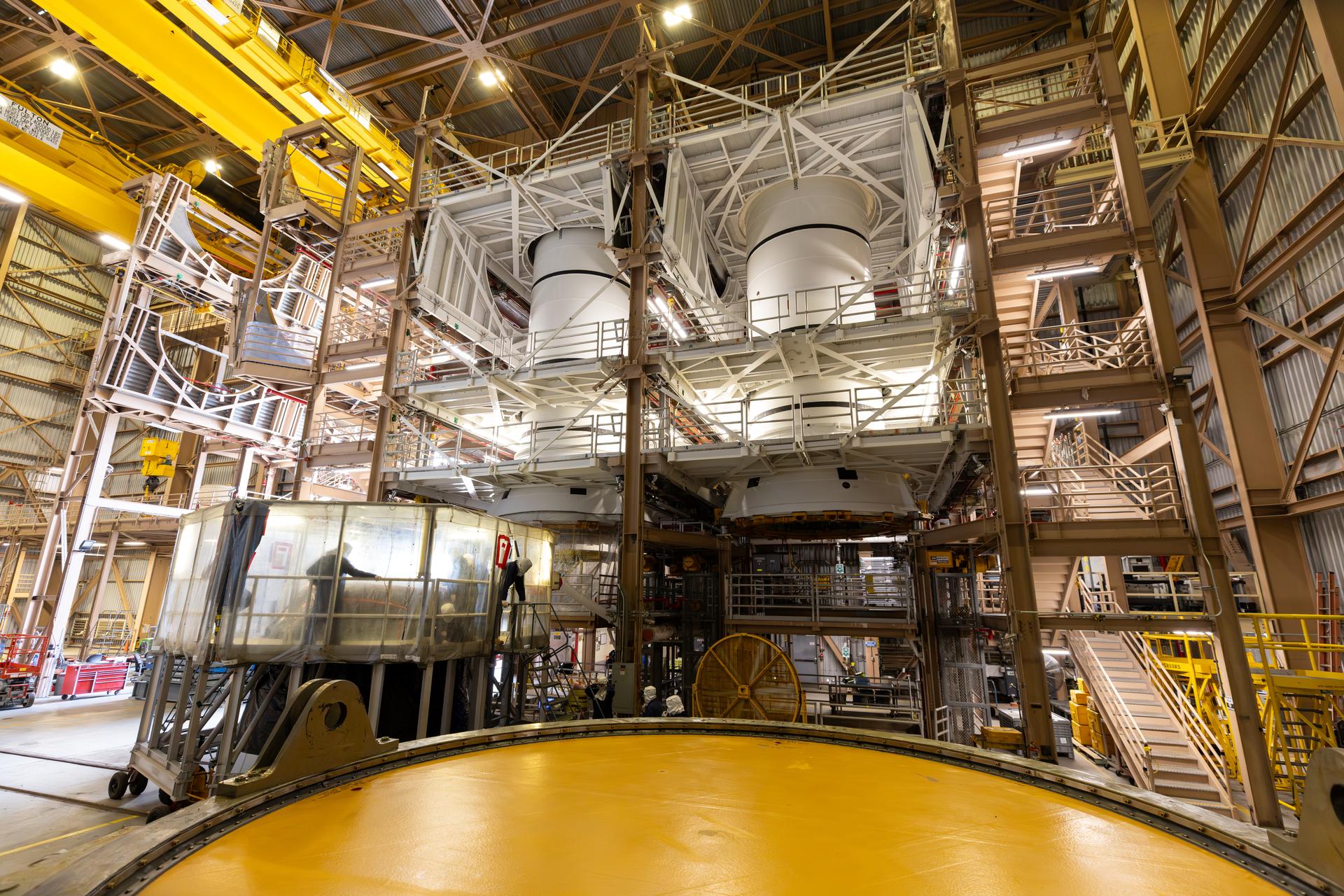
While the Artemis II spacecraft is being analyzed, teams are simultaneously completing final functional testing of the Orion command module for Artemis III. All 186 Avcoat heat-shielding panels have been installed, inspected, and tested. The service module has undergone thermal cycling tests and a deployment check of its four solar panels.
The launch of Artemis III is scheduled for next year: first, the crew will practice docking with a commercial landing module in Earth orbit—this will pave the way for astronauts to land on the Moon during the Artemis IV mission in 2028.
According to nasa.gov

