

For many years, the exact landing site of the Soviet Luna 9 probe remained unknown. However, scientists have recently developed a new machine vision algorithm based on artificial intelligence. It has the potential to find it in images taken by devices operating in the orbit of our moon.
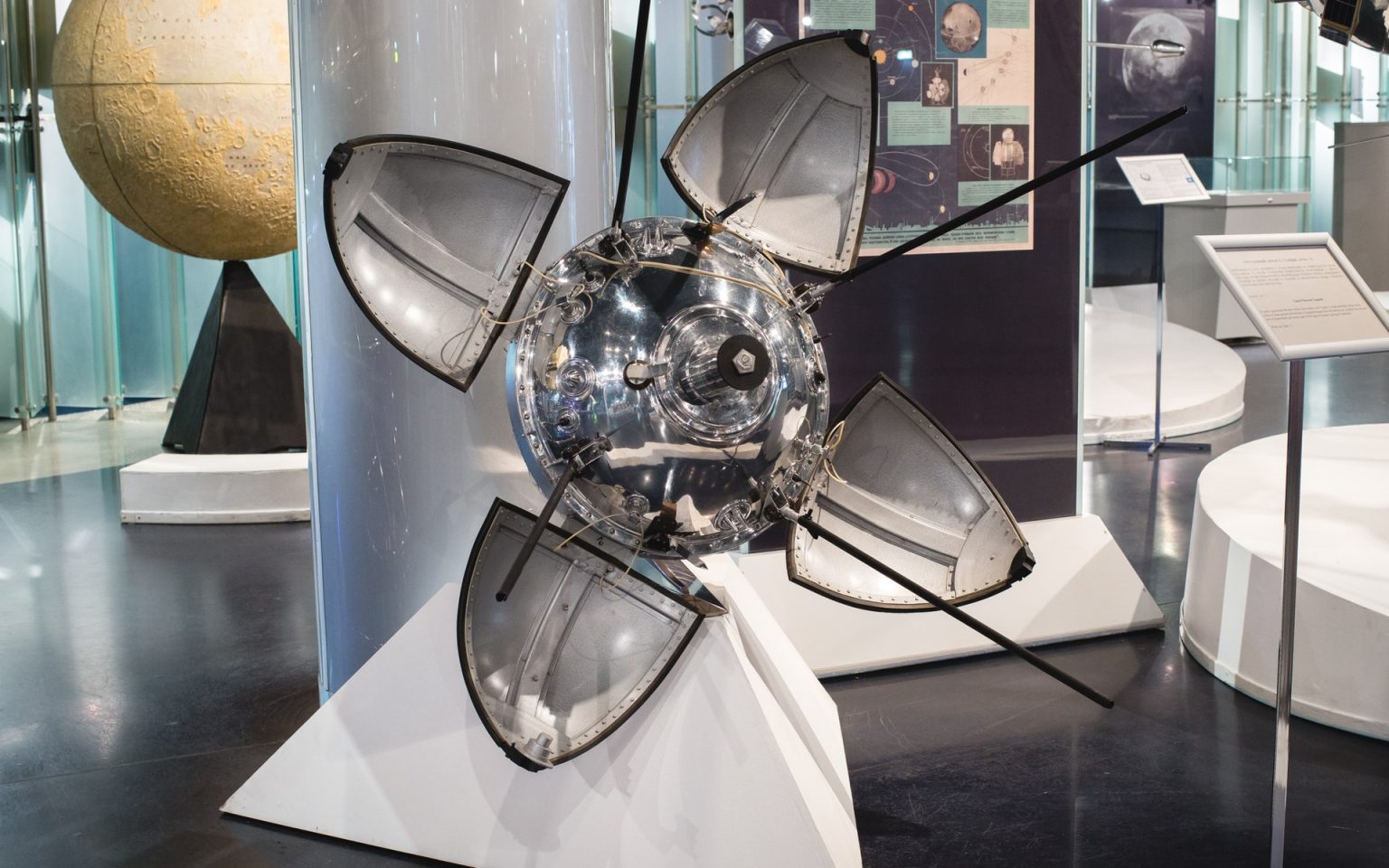
Luna 9
Using an improved machine learning algorithm, researchers from the UK and Japan have identified several promising locations where the long-lost landing site of the Soviet spacecraft Luna 9 is likely to be found. The team, led by Lewis Pinault from University College London, hopes that the predictions of their model will soon be verified by new observations from the Indian spacecraft Chandrayaan-2.
In 1966, the Soviet Luna 9 mission became the first man-made object to successfully land on the surface of the Moon and transmit photographs from another celestial body. Compared to modern missions, the landing was dramatic: shortly before the main spacecraft collided with the surface of the Moon, it released a spherical landing capsule 58 cm wide and weighing approximately 100 kg from its upper part, and then flew away to a safe distance.
Equipped with inflatable shock absorbers, the capsule bounced several times before coming to a stop, stabilizing itself with the help of four petal-shaped panels. Although Luna 9 only operated for three days, it transmitted a wealth of valuable data back to Earth, helping to instill confidence in manned space exploration, which enabled humanity to take its first steps on the Moon just three years later.
A ten-year-old mystery of the Moon
However, this historic achievement also marked the beginning of one of the longest-running mysteries in the history of space exploration. After landing, the coordinates of the Luna 9 landing site were published in the Soviet newspaper Pravda. A decade later, when NASA’s Lunar Reconnaissance Orbiter Camera (LROC) began sending back high-quality images of the Moon in 2009, astronomers hoped that this data would finally help locate the spacecraft.
However, the level of uncertainty in the original calculations made several decades ago meant that the actual landing site could have been tens of kilometers away from the published coordinates. As a result, the Luna 9 capsule was never definitively identified. In their new study, Pinault and his colleagues Ian Crawford and Hajime Yano revisited this problem using modern machine learning techniques.
Configuration and search using artificial intelligence
Researchers have developed a lightweight computer vision algorithm trained to recognize key characteristics of Apollo landing sites in LROC images. The system, called YOLO-ETA (short for “You-Only-Look-Once-Extraterrestrial Artifact”), was adapted to search for subtle surface features associated with artificial landing modules.
When tested on previously unseen images, including images from the later Soviet Luna 16 probe that landed in 1970, the model demonstrated high effectiveness, correctly identifying known landing sites with a high probability.
By applying YOLO-ETA to a 5×5 km area around the previous coordinates of Luna 9 obtained by the Pravda newspaper, the team discovered several promising candidates for research. These locations show signs consistent with soil disturbances caused by artificial landing modules during their descent to the Moon.
Researchers now expect that YOLO-ETA will soon be available for testing. When India’s Chandrayaan-2 orbiter flies over this region in March 2026, it will create a map of the lunar surface with unprecedented detail. If one of the candidate locations discovered by the algorithm is confirmed, astronomers will finally be able to locate a spacecraft that is of enormous significance in the history of human space exploration, putting the end to the 60-year mystery.
According to phys.org

