

The Indian spacecraft Chandrayaan-2 took high-resolution photographs of the Athena spacecraft’s landing site. The images provided important information about the causes of its crash.
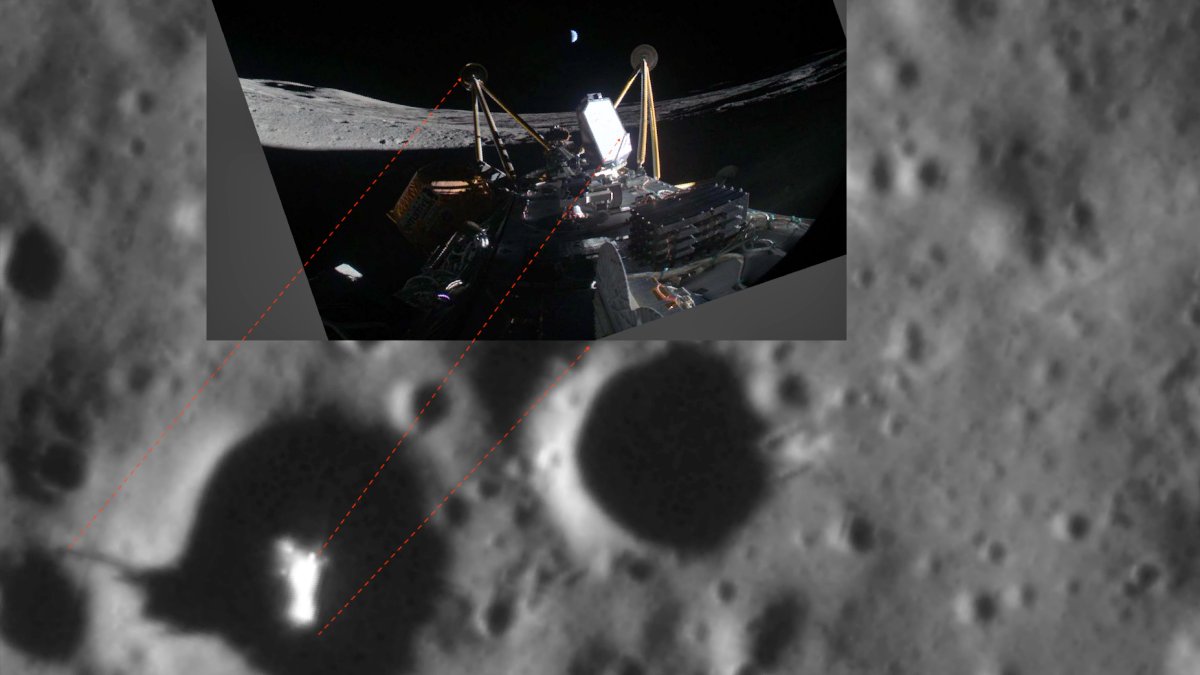
Chandrayaan-2 has been operating in orbit around the Moon since 2019. It is equipped with a Orbiter High Resolution Camera (OHRC) capable of taking images of the lunar surface with a resolution of up to 25 cm/pixel. This exceeds the resolution of the cameras on the famous LRO spacecraft.
Recently, Chandrayaan-2 once again demonstrated its capabilities by photographing the landing site of the Athena lander, built by Intuitive Machines. It landed in the southern polar region of the Moon on March 6, 2025.
Unfortunately, Athena fell on its side during landing. As a result, the spacecraft’s solar panels did not receive enough energy to recharge the batteries. This reduced Athena’s operating time to 12 hours instead of the planned two weeks.
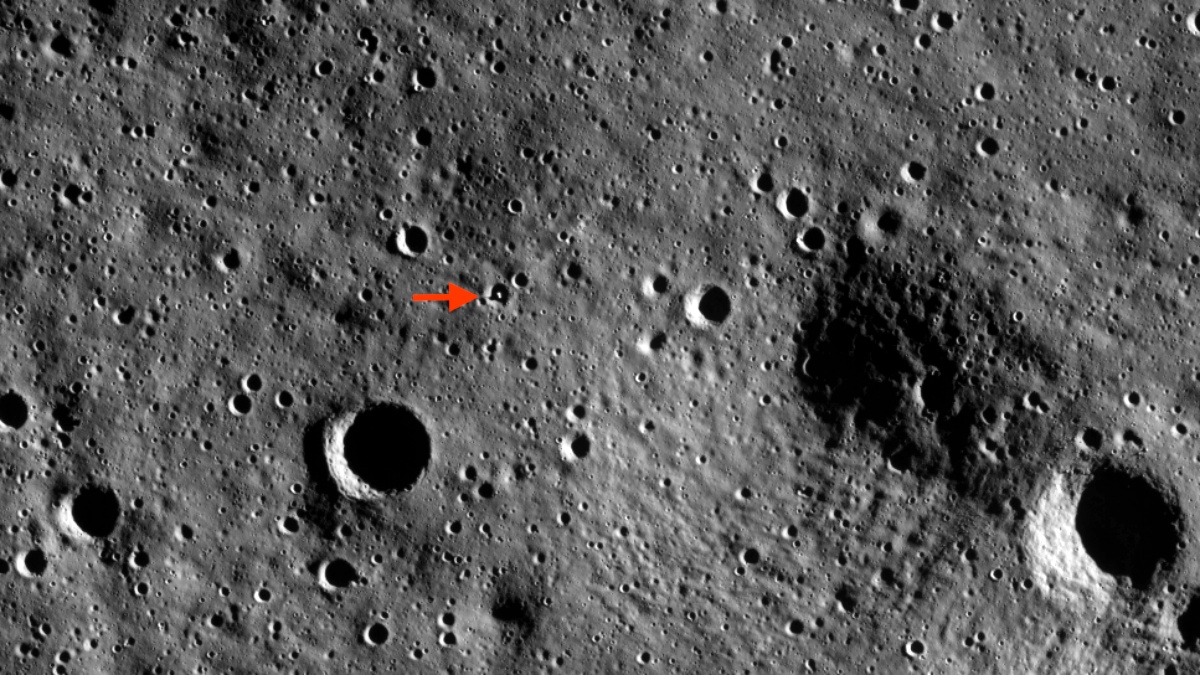
Chandrayaan-2 photographed Athena the day after it crashed. The photo clearly shows that the aircraft fell into a shallow crater located 250 meters from the estimated landing point, which doomed it to destruction. The images also show a series of distinct drag marks in the lunar regolith extending away from the spacecraft’s hull.
These furrows are visual evidence of a low-angle side impact: Athena did not land softly, but slid or dragged after initial contact with the lunar surface. This confirms the assessments of experts, with which both NASA and Intuitive Machines agree, that the landing module lost accurate altitude data during descent, probably due to persistent problems with the laser altimeter and difficulties with navigation in conditions of sharp polar shadows.
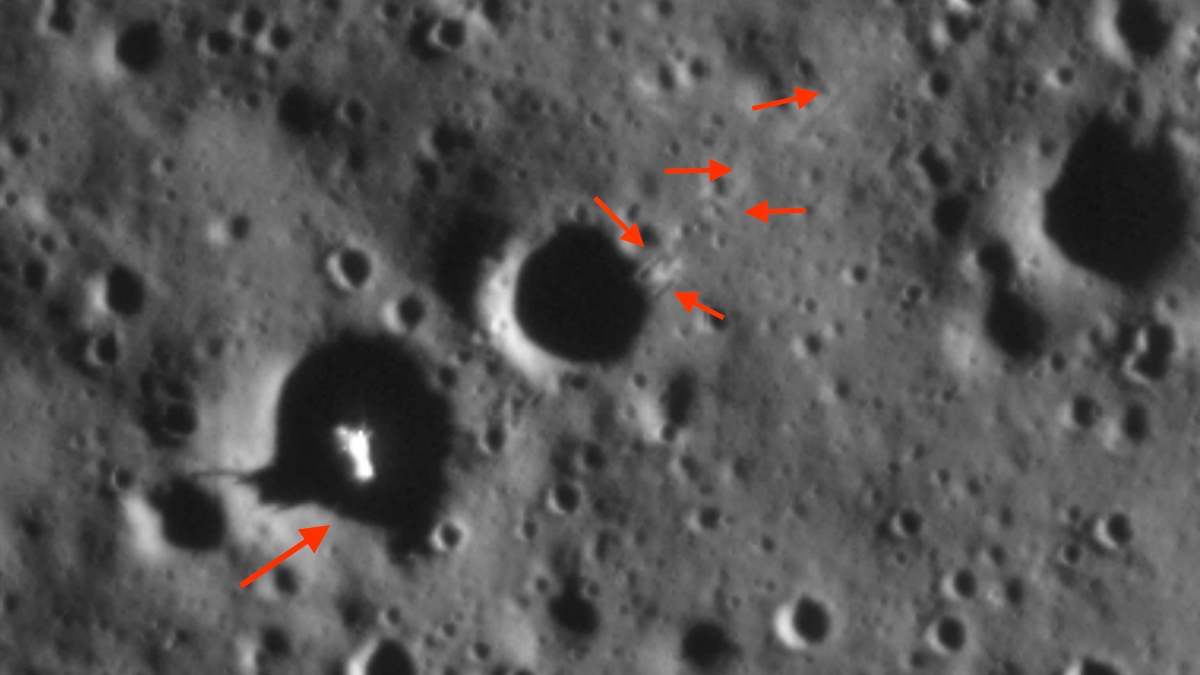
What makes the Chandrayaan-2 images exceptional is not only their clarity, due to the resolution of OHRC, but also the fact that the Indian Space Research Organization (ISRO) has not yet officially released them. The images were published by independent Indian researcher Chandra Tungathurthi, who found them in the Chandrayaan-2 data archives. This once again demonstrates the growing role of civilian scientists in space research.
It should be noted that Chandrayaan-2 also photographed the crash site of the Japanese probe Resilience.
According to Indiatoday

