
Scientists have long suggested that complex organic molecules could have arrived on Earth in ready-made form at the very beginning of its existence. Recently, this idea has received strong support thanks to the discovery of amino acids in samples brought to our planet from the asteroid Bennu.
Discovery
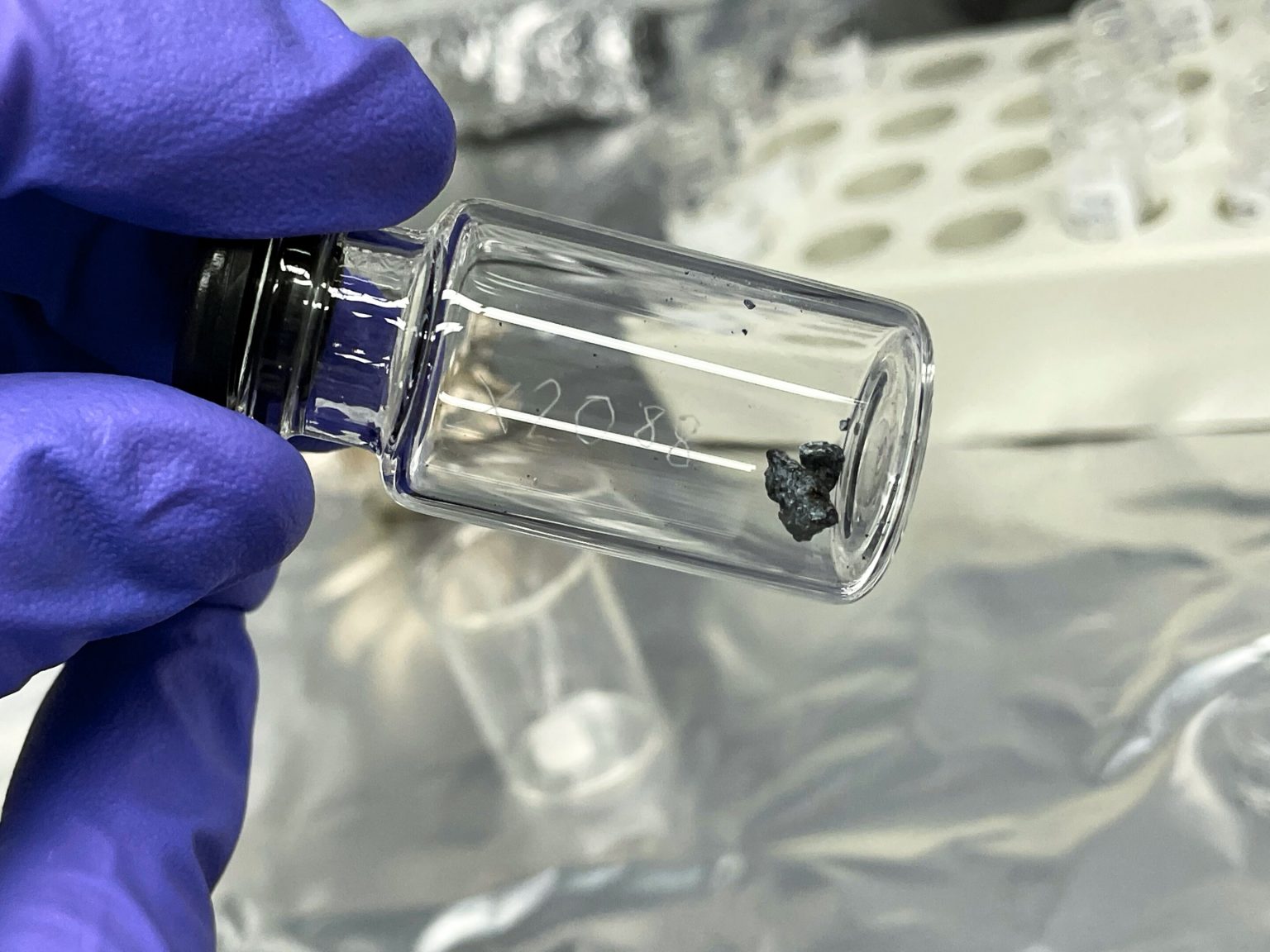
At the end of November, the journal Proceedings of the National Academy of Sciences published a study in which scientists confirmed the presence of 14 amino acids involved in protein synthesis and five nucleic acids that form RNA and DNA in samples from the asteroid Bennu.
On the one hand, this discovery cannot be called completely unexpected. It has been known for many years that space is full of organic substances, and over time, researchers have discovered increasingly complex ones. Even amino acids, the “building blocks” of proteins, have been found before on various meteorites.
On the other hand, this discovery is very important and, to some extent, sensational. Because it is indeed an almost complete set of everything necessary for Earth’s biochemistry to function, at least at a primitive level. And this is very important for solving the question of where life on Earth came from.
Life on Earth
The last question is both simple and complex. No one doubts that the entire path from ribonucleic acids to humans was traversed through biological evolution. But what came before that remains a mystery. In principle, the main stages of abiogenesis are already understood, but there are still many gaps in our understanding.
And the most important question is: do all these stages have to take place on Earth? If some of them could have occurred in space in the protoplanetary disk, this would help to resolve some questions about the time it took for life to go through the earliest stages of evolution.
And the asteroid Bennu is evidence in favor of the cosmic origin of life. It contains water, and research shows that even these conditions are sufficient for the synthesis of amino acids. And now it is clear that these assumptions were correct.
Provided by: phys.org

