

A new study based on measuring the polarization of reflected light shows that different types of asteroids may have a thin layer of the mineral troilite. This may indicate that they were once parts of the same object.
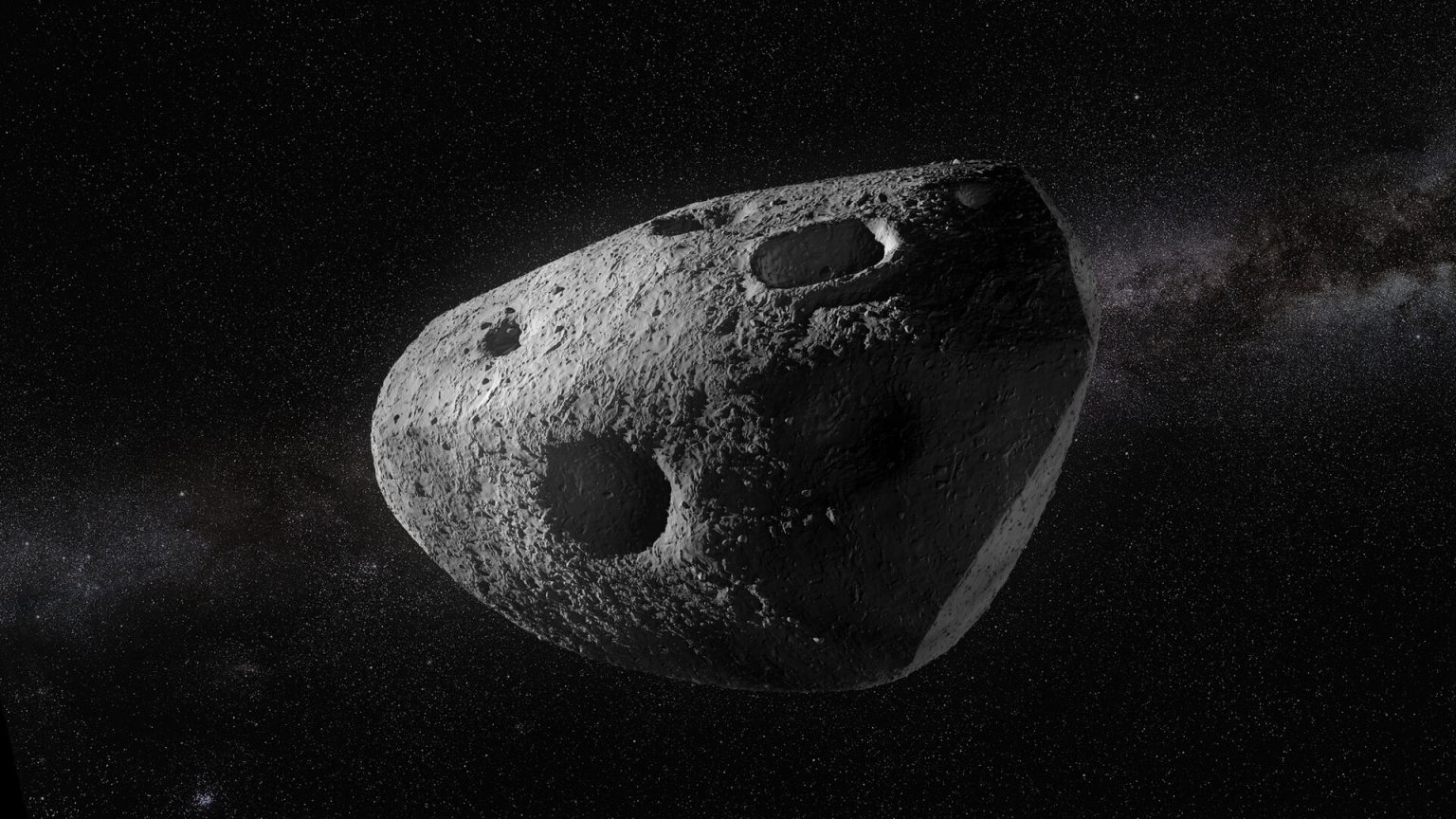
Rare mineral on asteroids
Joe Masiero from the Infrared Processing and Analysis Center at the California Institute of Technology and his team of colleagues recently published a study in The Planetary Science Journal that could potentially revolutionize our understanding of the evolution of the Solar System. Although at first glance it seems rather insignificant.
We are talking about layers of a new mineral called troilite. It is a compound of iron and sulfur, and it exists on Earth, although it is not commonly found. Now, using the WIRC+Pol instrument at the California Institute of Technology’s Palomar Observatory, it has been found on asteroids in the form of a thin layer of dust.
The potential sensation lies in the fact that all these asteroids, as conventional spectroscopic studies show, belong to different classes. Some of them are metallic, while others are silicate. They differ greatly not only in chemical composition, but also in brightness and density.
Joint formation
The WIRC+Pol device analyzes the polarization of reflected light, i.e., how oscillations occur in these electromagnetic waves in a single plane. This value changes along with the phase of the asteroid, i.e., which part of its illuminated surface was reflected back to us. This was used to discover a thin layer that had previously gone unnoticed.
In fact, the layer of troilite, which is found on both silicate and metallic asteroids, can be interpreted in different ways. However, the authors of the study reasonably believe that this is evidence that different types of asteroids could have been formed as a result of the destruction of the same body.
Of course, this does not mean that such a body should have been the only one. There should have been many such objects, and gravitational stratification occurred inside each of them: denser materials sank deeper, while lighter ones remained closer to the surface. Subsequently, during the fragmentation process, they formed bodies of different types.
The only problem is that modern ideas about the evolution of the Solar System rule out such a scenario. With planetesimals, the primary bodies from which asteroids were supposed to break off, this could not have happened. This research may be more important than it seems at first glance.
According to phys.org

