

Veteran astronaut Stephen Robinson is hard to surprise. In his 36 years at NASA, he has four Space Shuttle flights and three spacewalks under his belt. But the presentation of the Proteus Space startup in the summer of 2024 prompted only one comment from him: “Impossible!” The director of the Space Research Center at the University of California, Davis (UCD), did not believe that the satellite could be launched just 13 months after the project was approved.
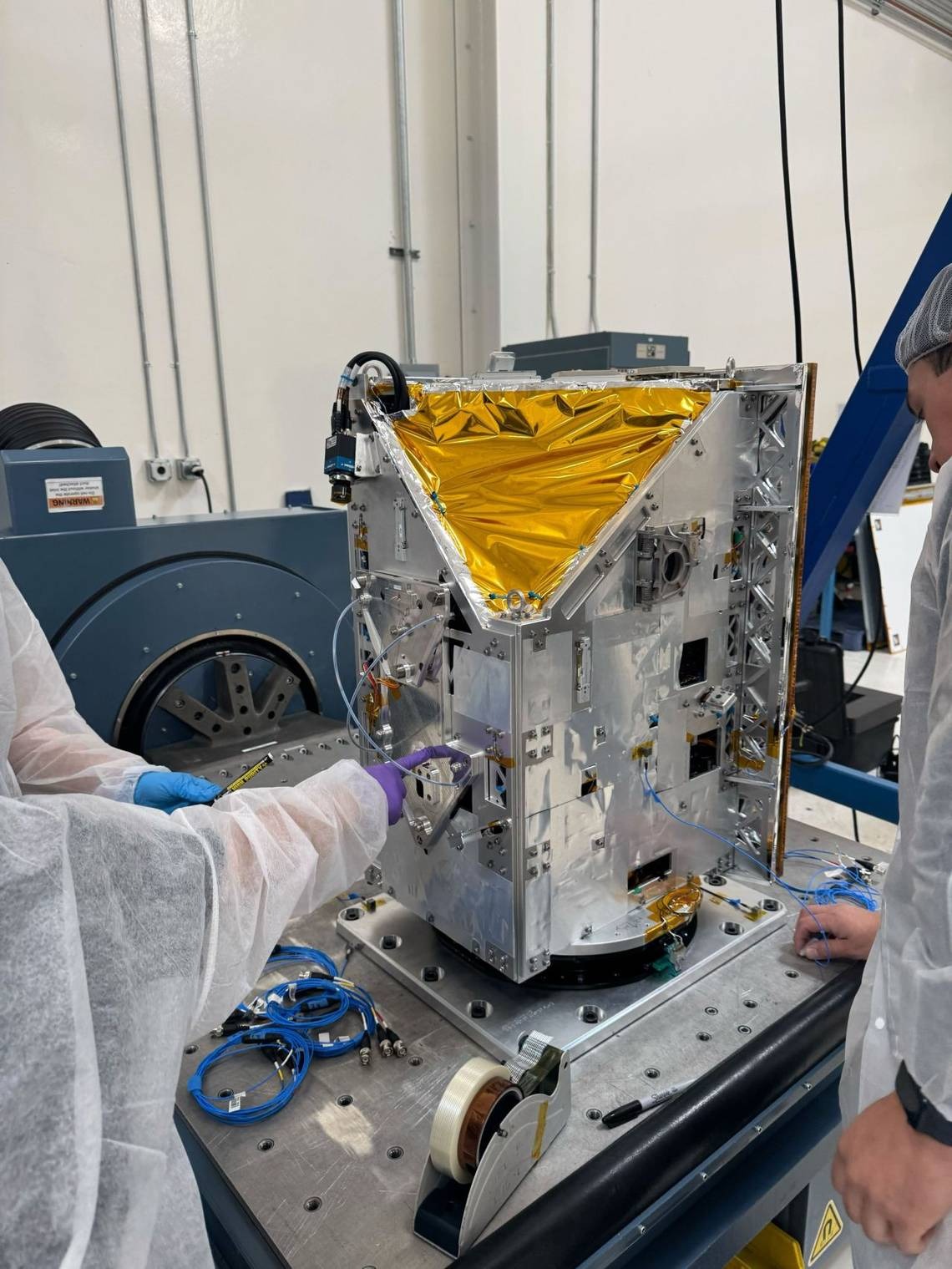
“I’ve never seen anyone do something like that so quickly,” Robinson admitted. However, on July 2, 2025, Proteus announced that the satellite was ready in a record 8 months. The launch is scheduled for October 2025 from Vandenberg Air Force Base. Robinson, the project’s principal investigator at UCD, believes in its success despite the risks: “It’s a wonderful experience to create something fundamentally new.”
Self-diagnosis and autonomous improvement
Proteus, a Los Angeles startup, built the entire satellite. But the “brain” of the mission was the payload from UCD. Robinson compares it to a package in a truck. His team’s development is a system that models the satellite’s power supply and predicts its future state. Such self-diagnosis is critically important for long-distance space travel, where signals take a long time to reach and crises have to be responded to instantly. The innovation lies in the fact that this analysis, thanks to trained artificial intelligence models, takes place directly on board, rather than on Earth. The system will compare forecasts with reality, learn, and improve.
Space level of complexity
Proteus was founded to reduce the time required to build satellites and adapt them to specific payloads.
“Why not design a new satellite from scratch for a new payload?” — this is how the company’s CEO David Kervin describes its philosophy.
A revolution in artificial intelligence-based software. It takes into account cost, dimensions, reliability, and instantly generates thousands of layout options. “It’s like planning a house, but on a space level of complexity,” says Robinson. AI analyzes 2,300 configurations in just 10 minutes. Previously, this required months and years of analysis and calculations.
“This approach reduces construction and launch times and mitigates risks by combining AI knowledge bases with human expertise,” explains Robinson, who is also an advisor to Proteus.
UCD is proud to be part of this new era of rapid small satellite development. In October, the team will head to Vandenberg to see their “package” and revolutionary platform launch into space.
We previously reported on how robots and artificial intelligence would replace humans in space.
According to phys.org

