

Thanks to the Subaru telescope located in Hawaii, astronomers have discovered a massive planet and a brown dwarf orbiting distant stars. The latter is an ideal target for the new Roman Space Telescope, which NASA will launch next year.
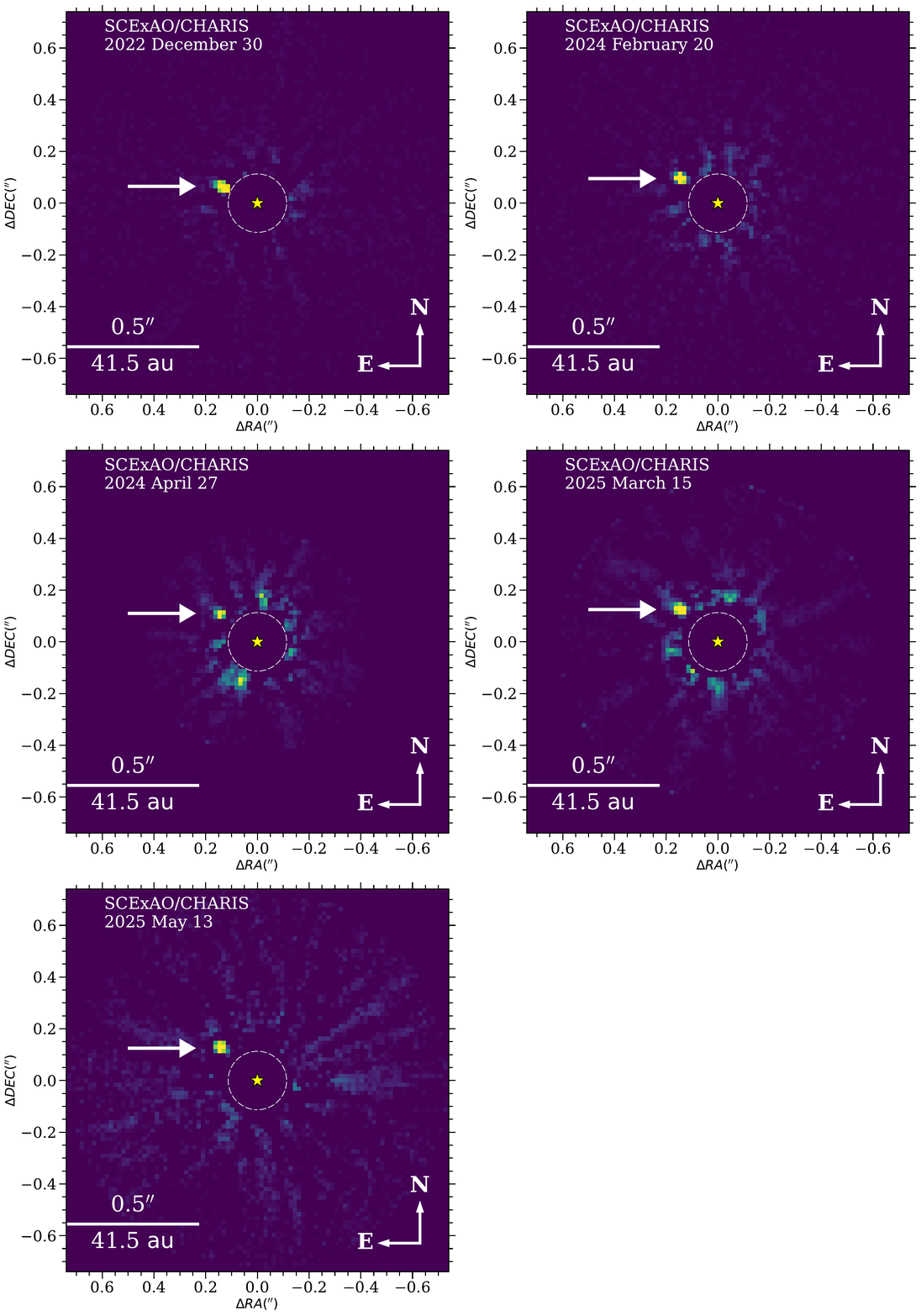
Only about 1% of stars have massive planets and brown dwarfs that can be photographed directly with modern telescopes. Even in young planetary systems, where these objects are still powerful sources of infrared radiation, they are still much dimmer than their host stars and are easily lost in their glow. The key question for astronomers was where to look for these objects.
This is where the OASIS (Observing Accelerators with SCExAO Imaging Survey) program comes in, combining space measurements with advanced imaging technologies to search for hidden worlds. OASIS uses measurements from two ESA missions (Hipparcos and Gaia) to identify stars that are affected by the gravity of invisible companions. Astronomers then target these promising objects with the SCExAO instrument installed on Subaru, whose exceptional accuracy allows them to obtain direct images of them.
The program has already brought its first results in the form of the exoplanet HIP 54515 b and the brown dwarf HIP 71618 B. HIP 54515 b orbits a star located 271 light-years from Earth in the constellation Leo. Its mass is almost 18 times that of Jupiter, and its orbit is approximately the same distance as Neptune’s from the Sun. But from Earth, the star and planet appear very close together: about the same size as a baseball seen from a distance of 100 km. Nevertheless, SCExAO managed to obtain extremely clear images that allowed the planet to be seen.
As for HIP 71618 B, it is located 169 light-years from Earth. The mass of this brown dwarf is 60 times greater than that of Jupiter. If it were about a third larger, constant thermonuclear reactions involving hydrogen would begin inside HIP 71618 B, and it would turn into a star.
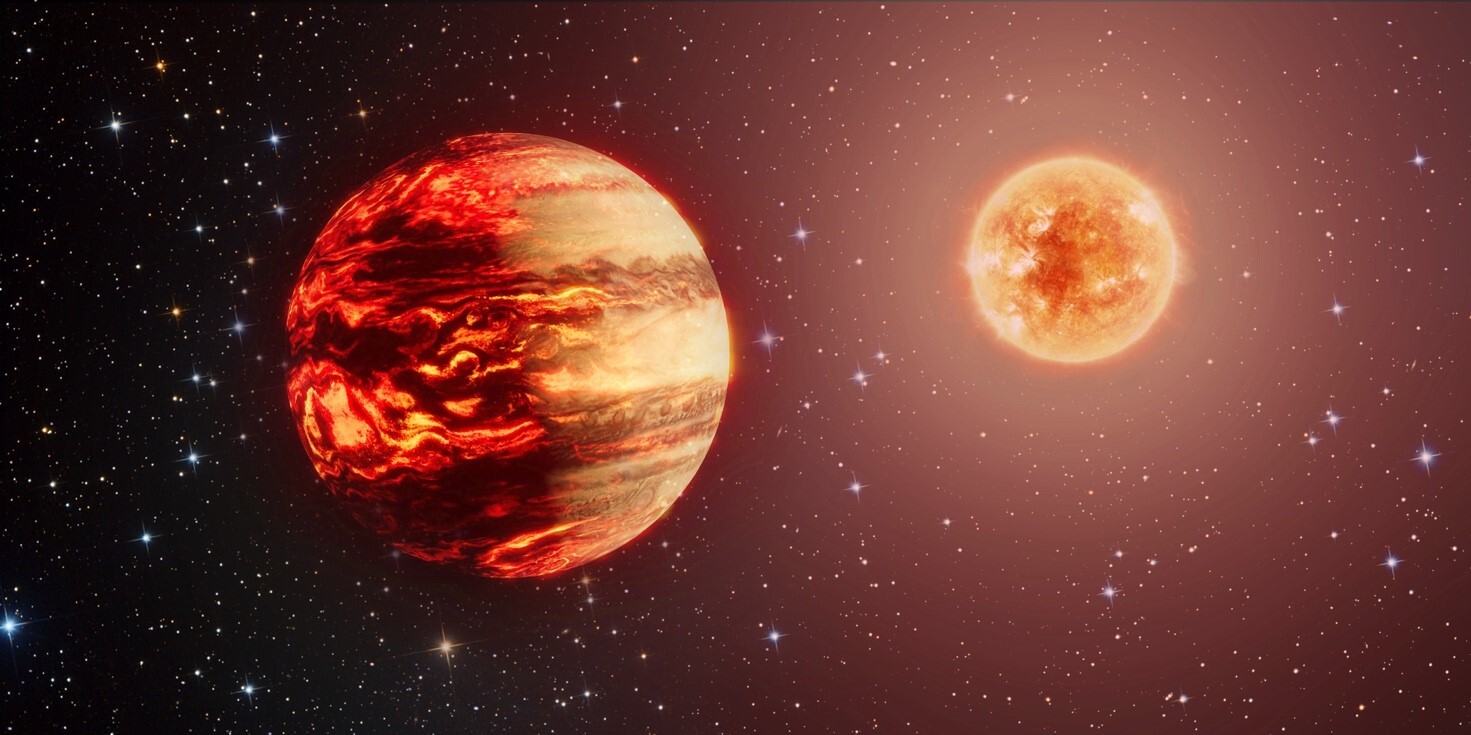
A key feature of HIP 71618 B is that its properties are ideal for observation with the new Roman Space Telescope. It will conduct a technology demonstration to test promising coronagraph systems that will enable astronomers to photograph Earth-like planets in the future. Such bodies are ten billion times dimmer than their stars and are currently inaccessible to modern telescopes.
Prior to this discovery, astronomers did not have a single confirmed object that met all the strict requirements for this demonstration. HIP 71618 B changed the situation by meeting all the requirements of a suitable target: its star is bright, and the brown dwarf is in the right place. At the Roman coronagraph’s operating wavelengths, it will be faint enough compared to its star to test new technologies that could revolutionize astronomy.
According to NAO

