December brings not only the longest nights, but also an unusually rich constellation overhead and (if you’re lucky) crisp, sparkling snow underfoot. Orion and Canis Major, Perseus and Auriga, Gemini, and their guest Jupiter. It is a sight you cannot take your eyes off. December will bring us one of the most powerful meteor showers – the Geminids. The giant planets, Jupiter and Saturn, will be particularly interesting targets for observers. And the interstellar comet 3I/ATLAS will pass at its closest distance to Earth.
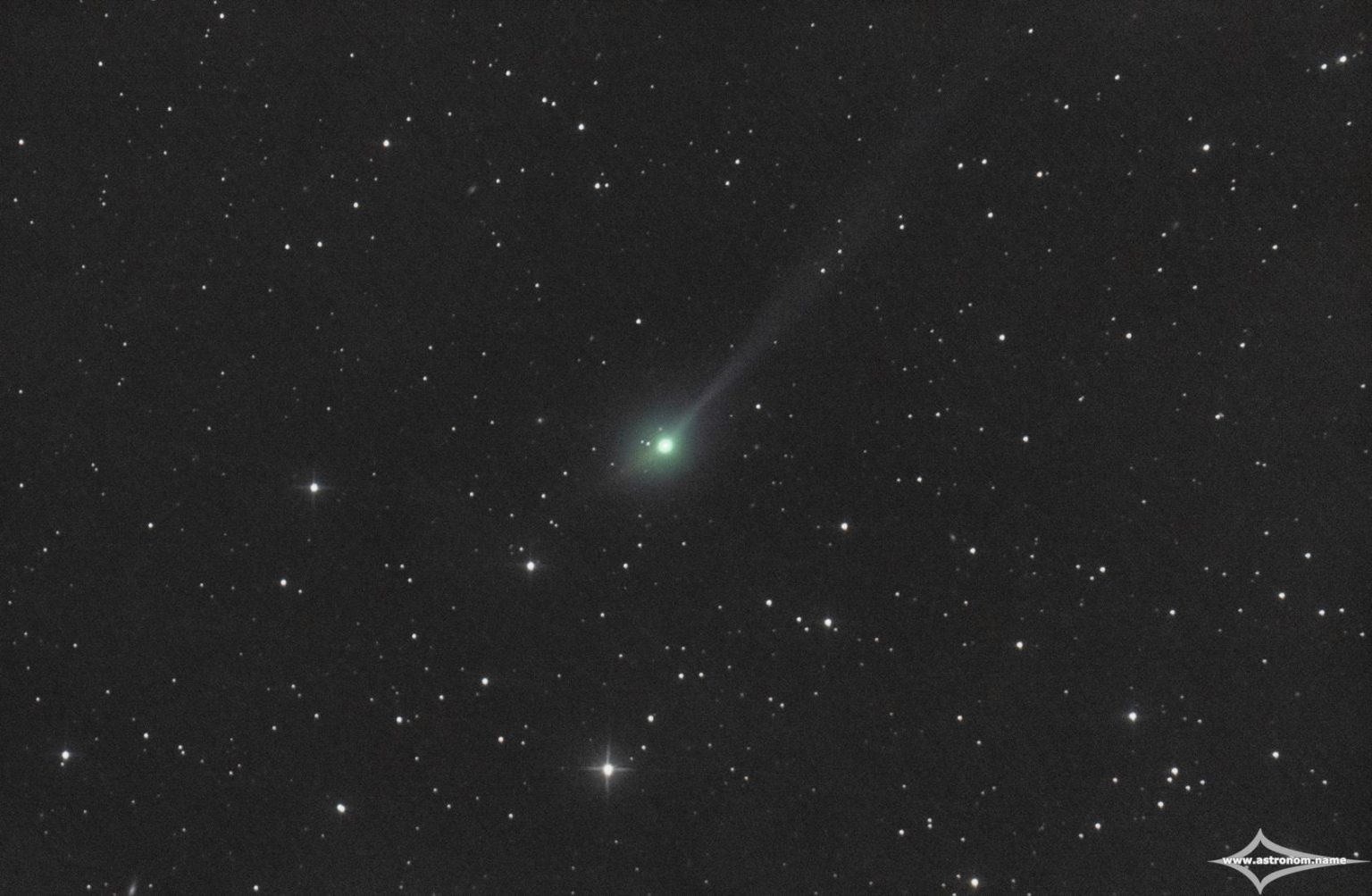
However, we do not recommend waiting until 3I/ATLAS approaches us, because at that moment it will be 343 million km away, which is more than twice the distance between the Earth and the Sun. As it moves away from our star, the comet is gradually losing its brightness. Therefore, if you have the appropriate equipment, try to catch the comet no later than the first days of December.
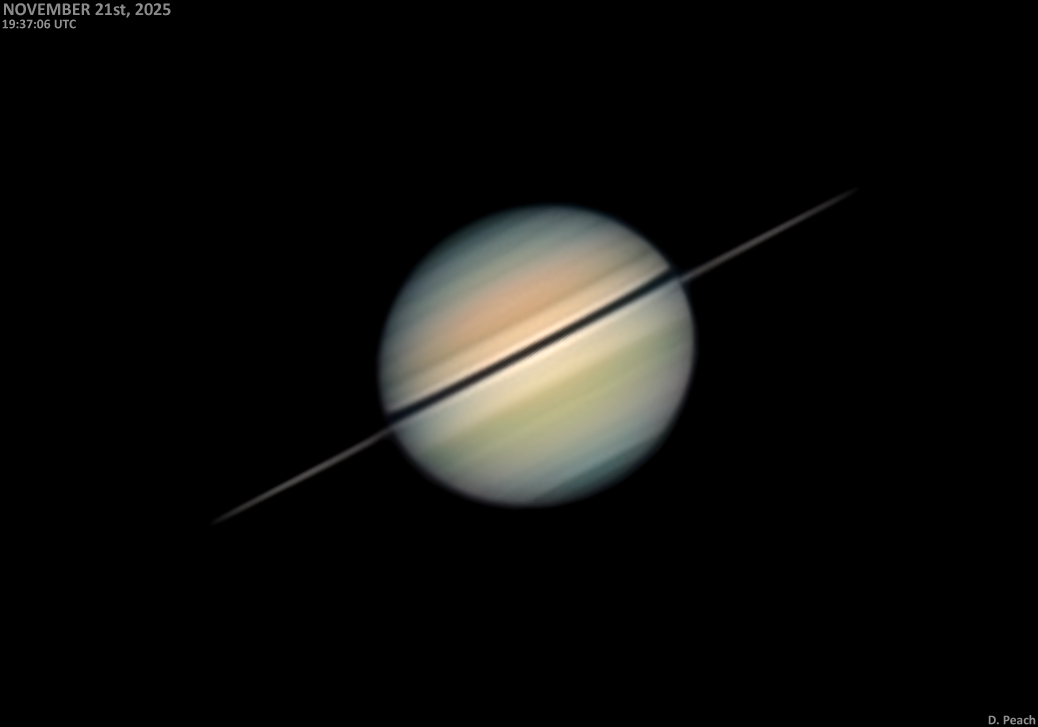
At the beginning of the month, Saturn’s rings will still be almost closed. To an observer on Earth, they will appear as a thin strip casting a black shadow on the planet’s disk. Saturn is visible in the evening sky this month. It continues its leisurely movement through the constellation Aquarius, gradually approaching the border with Pisces.
Jupiter is preparing to delight us with an opposition next month. But even now, its large angular size allows us to see many variable details on the planet’s disk through a telescope. Uranus is in Taurus, not far from the Pleiades cluster, and can be observed throughout the night. Neptune remains in the constellation Pisces and is only visible in the evening.
Venus is approaching the Sun and will become inaccessible to Earth observers in December; the same applies to Mars. However, we will have some compensation in the form of Mercury’s greatest western elongation – one of the best opportunities this year to observe the fast-moving planet at dawn. In addition, this month’s full moon will close out the 2025 series of supermoons.
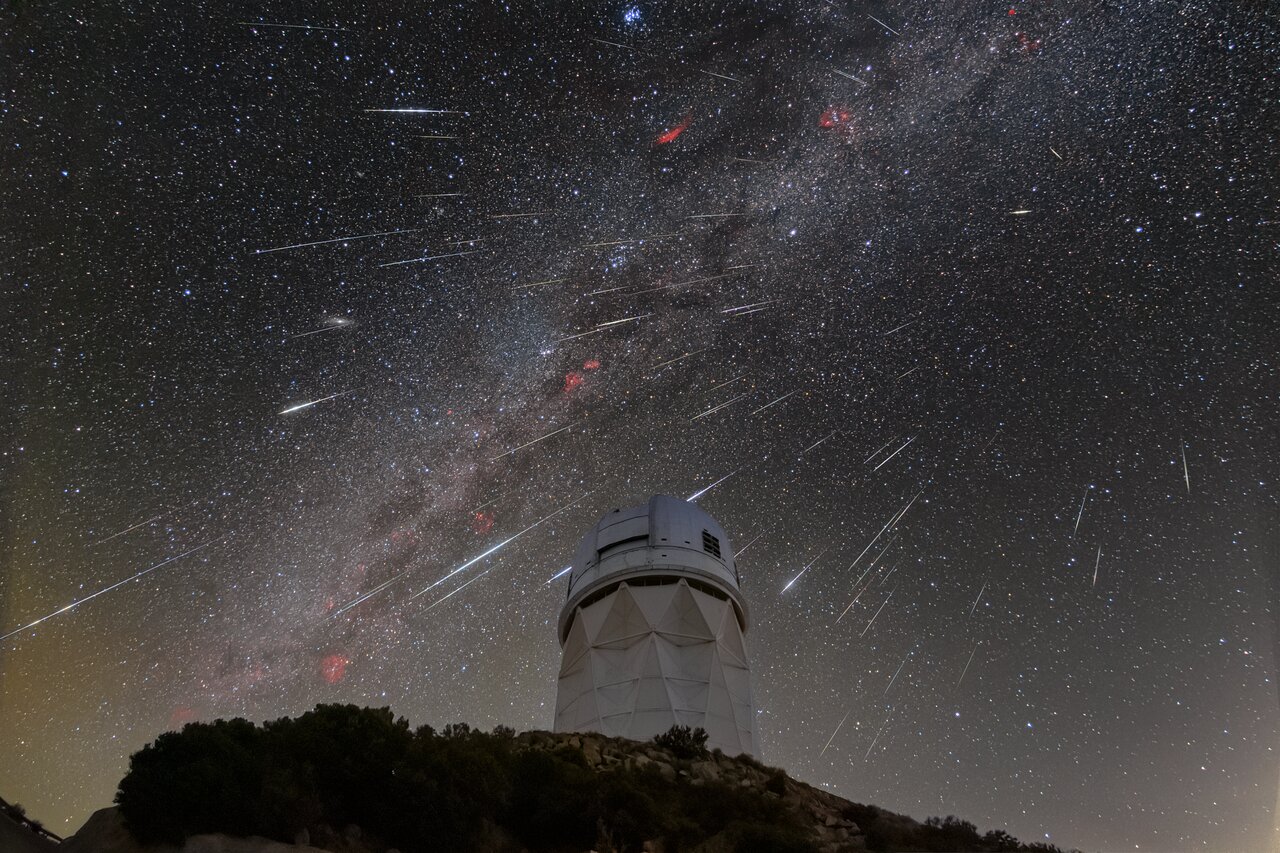
The main astronomical event in December will be one of the most spectacular meteor showers – the Geminids. This year, conditions for observing it are quite favorable, as during its peak on the 14th, the moon will be at 29% phase and will remain below the horizon during the first half of the night.
List of events
? ? ? December 4 – conjunction of the Moon (99%) with the Pleiades. It will be visible in the morning before sunrise, low on the western horizon. Western Ukraine and Europe will also be able to see the Moon cover the Pleiades, which will last approximately from 03:00 to 05:40 (UTC).
? ? ? December 5 – full moon, supermoon. The exact time of the full phase is 01:13 (December 4, 23:13 UTC).
? ? ? December 7 – conjunction of the Moon (89%) with Jupiter (-2.6m). The celestial bodies will be closest at 17:47 (15:47 UTC), when they will still be below the horizon for us. But throughout the night of December 7/8, they will remain fairly close.
? ? ? December 7 – Mercury (-0.5m) at greatest western elongation. It will be visible in the east before dawn.
? ? ? December 14 – peak of the Geminid meteor shower with its radiant in the constellation Gemini, ZHR = 150.
? ? ? December 19 – Interstellar comet 3I/ATLAS will be at its closest distance to Earth.
? ? ? December 20 – the new moon, with the exact time being 03:43 (01:43 UTC).
? ? ? December 21 – winter solstice, moment of occurrence – 17:04 (15:04 UTC).
? ? ? December 26 – conjunction of the Moon (39%) with Saturn (+1.2m), visible in the evening.
? ? ? December 31 – conjunction of the Moon (89%) with the Pleiades. Between 1:30 p.m. and 4:30 p.m. (11:30 a.m. and 2:30 p.m. UTC), an occultation will occur, but at that time, the sky in Ukraine will still be too bright.
A detailed overview of the most interesting events
December 7: Mercury’s greatest elongation
It is not easy to see the fastest planet in the Solar System. Remaining mostly quite bright, Mercury is almost always close to the Sun. But approximately 6-7 times a year, it is far enough from the Sun to become visible, just before dawn or shortly after sunset. The most distant such positions are called, respectively, the greatest (or maximum) western and eastern elongations. At these moments, Mercury is at a distance of 18°-28° from the Sun – this parameter varies due to the elongation of the planet’s orbit.
The days immediately before and after the date of maximum elongation are considered the most favorable for observing Mercury. However, this is not always the case. The planet moves close to the ecliptic plane, and the angle between it and the horizon in the morning and evening changes throughout the year. This means that at some maximum elongations, Mercury rises or sets almost simultaneously with the Sun.
December 7 will be a pretty good day for observing. Before dawn, Mercury will appear above the horizon approximately 2 hours and 7 minutes before the Sun; the angular distance between them will reach 20.7°, and the planet’s magnitude will be -0.5m.
The optimal viewing time depends on your geographical location, so it is best to use a virtual planetarium when planning. For Kyiv, this is between 06:40 and 06:55. The planet will be most visible when its altitude above the horizon is at least 6°-7°, while the Sun is no higher than 7°-8° below the horizon. When observing Mercury through a telescope, you can see its phase: on the morning of December 7, it will be 60% illuminated.
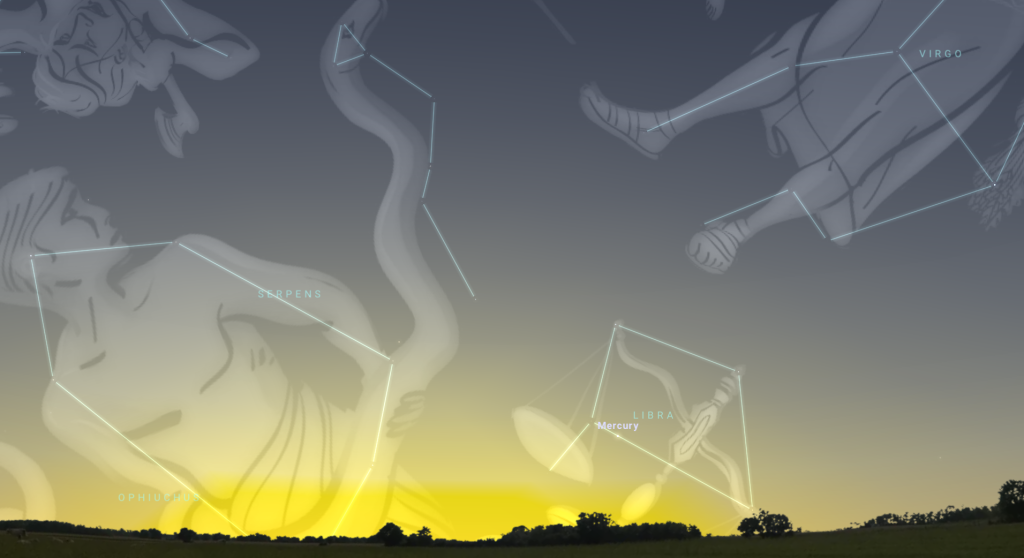
Source: Stellarium virtual planetarium
December 14: Geminid meteor shower
Mid-December will bring us one of the most powerful meteor showers of the year – the Geminids. This is an annual “starfall,” but unlike last year, when its peak coincided with the full moon, this time the moon will not interfere with enjoying the spectacle: it will rise only after 3 a.m., and its phase will be 21%.
Overall, the stream will be active from December 4 to 17, but it will peak on the night of December 13-14, with a predicted ZHR of 150. During the period of activity, the radiant (the imaginary point of origin of the meteors) of the Geminids drifts across the constellation Gemini and, at its peak, will be near the star Castor, one of the brightest in the constellation. However, it is not necessary to focus on the radiant itself, as the meteors will appear across the entire sky. If you plan to take pictures, the best solution would be to point your camera at an area of the sky at an angular distance of 20°-30° from the radiant.
The Geminid meteor shower is the slowest of all powerful meteor showers, entering the atmosphere at a speed of only 35 km/s. They are also interesting because, unlike most meteor showers, they are not associated with a comet, but with an active near-Earth asteroid (3200) Phaethon. The Geminids are mainly yellowish in color, and among them, there are often fireballs – very bright meteors. Most of the “shooting stars” will be visible between approximately 2 and 4 a.m.
When planning observations during the cold season, be sure to check the weather forecast, select an open area as far away from city lights as possible, and bring hot drinks, warm clothing, and a sleeping bag or blanket. A folding chair or deck chair will help ensure comfortable viewing.
December 20: New Moon – the perfect time to look into the depths of the universe
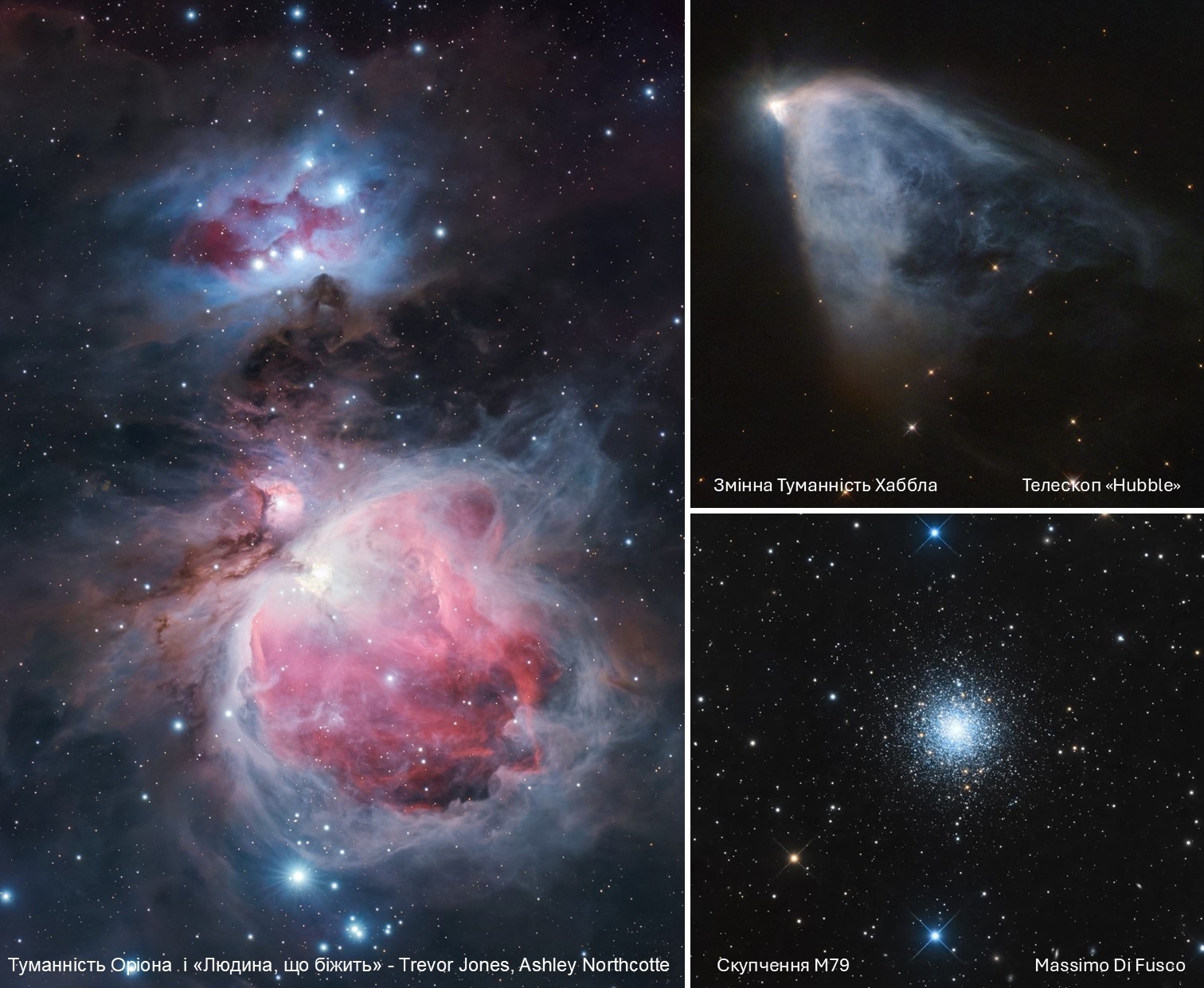
The absence of the moon in the sky allows us to see faint objects that are lost against the illuminated sky on other nights. Among all deep space objects, the undisputed king of the winter sky is the Orion Nebula, which is visible even to the naked eye in a dark sky. If you have a telescope, try experimenting: at low magnifications, the nebula will be visible in its entirety, and at higher magnifications, you will be able to see the central “trapezoid” – a remarkable quartet of stars at the very heart of the nebula. If you want more, try combining the eyepiece with a UHC filter, which will highlight its fibrous structure.
One of the most unusual winter objects is Hubble’s Variable Nebula, catalogued as NGC 2261. By photographing it at intervals of several weeks, you can see changes in its structure. The variable nature of NGC 2261 is associated with the variable star R Monocerotis, whose light is reflected by the nebula.
Various star clusters are also worthy of your attention. The simplest ones, of course, are the Pleiades and Hyades (Taurus), as well as the Beehive Cluster (Cancer), the Alpha Persei Cluster, and the Double Persei Cluster. For more experienced observers, fainter objects are suitable: M79 (in Lepus), M50 (Monocerotis), M41 (Canis Major); M38, M36, and M37 (Auriga); M35 (Gemini), and many others.
December 21: Winter solstice – the beginning of astronomical winter
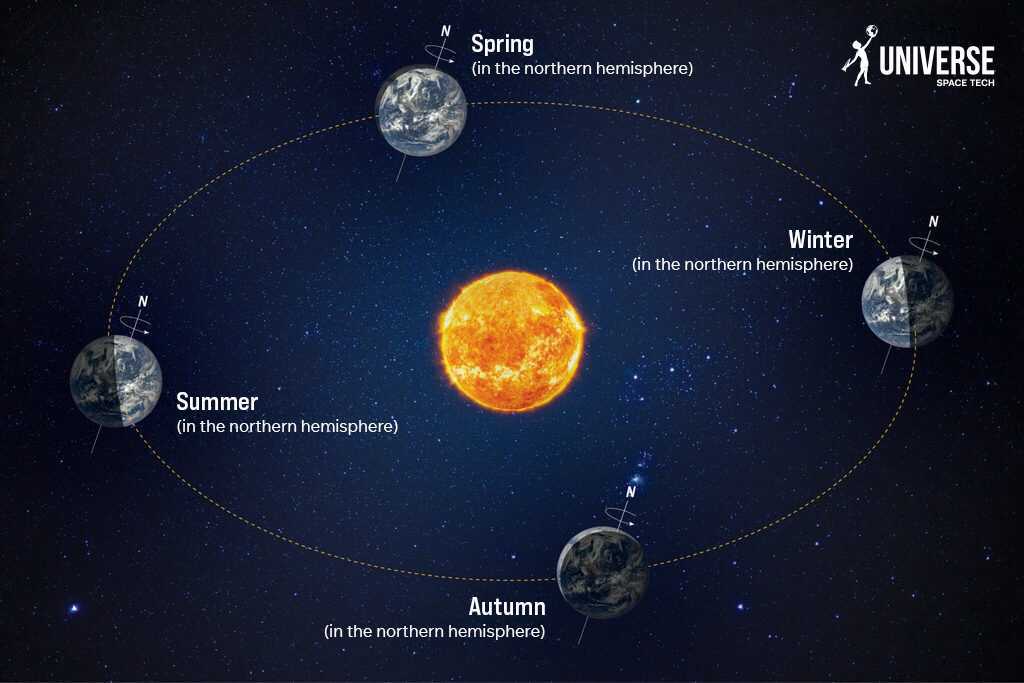
From an astronomical point of view, winter begins only with the winter solstice, not on December 1. This is the moment of the year when the Sun passes the southern point of the ecliptic, culminates at its lowest altitude, and the North Pole of the Earth is at its maximum distance from our star.
From an astronomical point of view, winter begins only with the winter solstice, not on December 1. This is the moment of the year when the Sun passes the southern point of the ecliptic, culminates at its lowest altitude, and the North Pole of the Earth is at its maximum distance from our star.
The winter solstice is also the middle of the polar night for the North Pole and the polar day for the South Pole. After this date, the northern hemisphere gradually begins to receive more light and heat from the Sun.
Not a big fan of winter? Then you will probably be amused to learn that, according to the astronomical definition, winter in the northern hemisphere is the shortest season, lasting only 89 days.