The autumn of 2025 has definitely turned out to be a comet season: amateur astronomers have focused on the two most remarkable “tailed” comets — C/2025 A6 (Lemmon) and C/2025 R2 (SWAN). The beginning of November will mark the peak brightness of Comet Lemmon, which can be seen in the evening sky shortly after sunset, even with the naked eye. And the second decade of the month will provide a potential opportunity for residents of the Northern Hemisphere to see the famous interstellar comet 3I/ATLAS through a telescope.
But comets aren’t the only interesting aspect of November. Just before sunrise, the brightest planet, Venus, peeks out from behind the horizon. Jupiter still dominates the pre-dawn sky. Remaining in the constellation Gemini, on November 11, the largest planet in the Solar System will begin its retrograde motion, which will last until March 11, 2026.
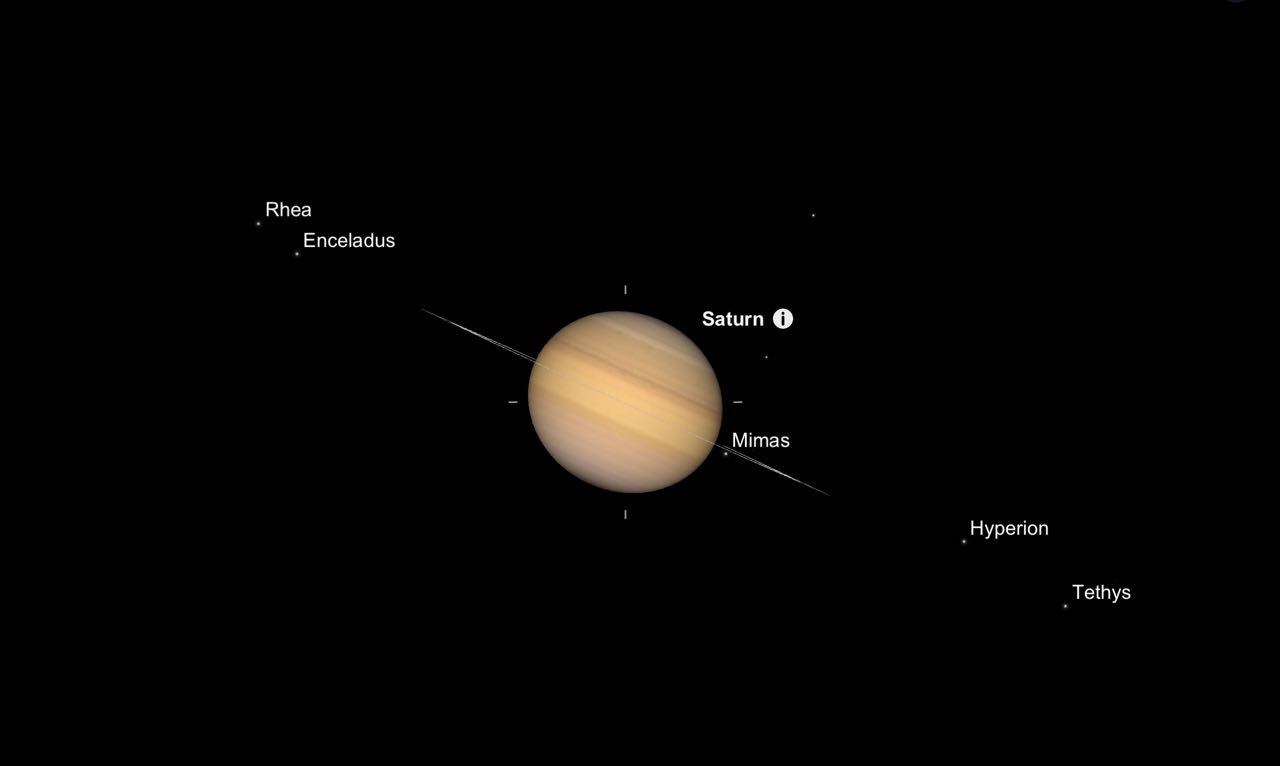
However, Saturn deserves the most attention of all the planets. Two phenomena associated with it will be visible in Ukraine and Europe: the planet’s rings will be visible almost edge-on (this phenomenon will also be visible in America), and at the same time, a rare series of Titan’s transits across Saturn’s disk will continue. On November 28, the planet will end its retrograde motion and begin its forward motion.
As for the other planets, Mercury will be in conjunction with the Sun on November 20, so it will not be visible this month. Mars is still very low above the horizon in the evening sky, making it impossible to observe. Uranus will be in opposition this month; it can be seen throughout the night near the Pleiades cluster in the constellation Taurus. Neptune remains in the constellation Pisces, not far from Saturn.
Five well-known meteor showers are active in November: the Southern Taurids (peak on November 5), the Northern Taurids (peak on November 12), Leonids (November 17), Alpha Monocerotids (November 21), and November Orionids (peak on November 28). All these showers are quite weak, so during visual observations, only a few “shooting stars” can be expected per night. The Alpha Monocerotids, with their radiant in the constellation Monoceros, sometimes produced real meteor storms, but this is not predicted for this year.
Event list
? ? ? November 2 — The Moon (88%) near Saturn (+0.8m) and Neptune (+7.7m). The conjunction with Saturn will occur at 08:39 UTC, when these objects will be below the horizon for us, and with Neptune at 14:31 UTC, when the Sun will be on the horizon. The best time to observe the event is on the evening of November 2.
? ? ? November 5 — Full moon, exact time 13:19 UTC. For Ukraine, the Moon will be below the horizon at this time, in the constellation Aries, so observations can be made on either November 4 or 5. This full moon will be a supermoon: the Moon will be only 356,980 km away and will have the largest angular size of the year.
? ? ? November 6 — the Moon covers the Pleiades (M45) (98%). The timing is not very favorable for us, as the event will begin while the objects are still below the horizon.
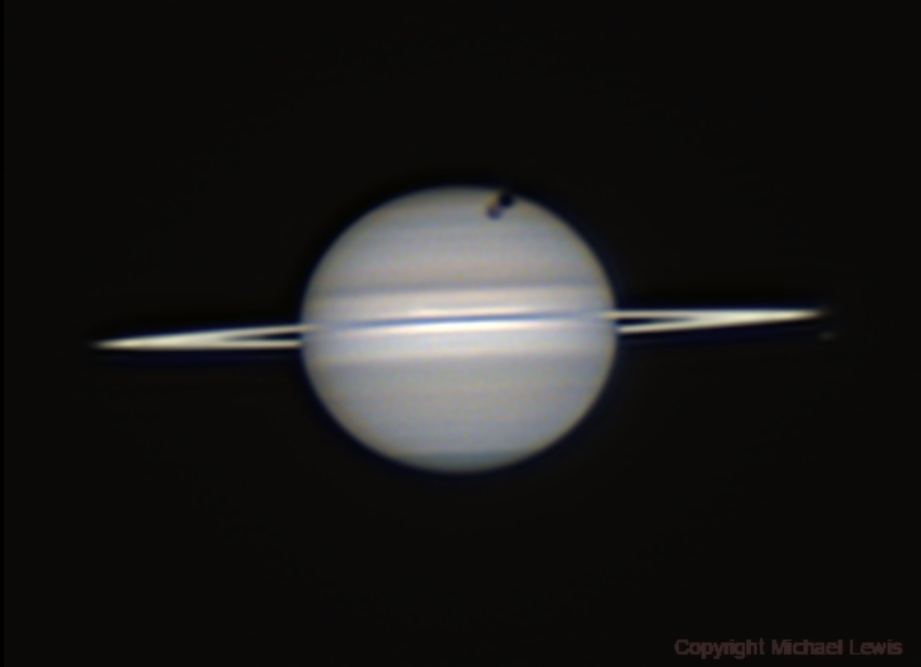
? ? ? November 6 — Titan transits Saturn’s disk.
? ? ? November 8 — Comet C/2025 A6 (Lemmon) passes perihelion.
? ? ? November 10 — conjunction of the Moon (73%) with Jupiter (-2.4m). The celestial bodies will be closest at 09:31 UTC, with an angular distance of 3°50′ between them. There are two possible observation times: either before dawn, when the distance between them will be slightly greater, or during the daytime, approximately between 9:00 and 9:30 a.m., when the objects will be closer together. This could be an excellent opportunity to practice locating Jupiter in the bright sky with a telescope.
? ? ? November 17 — peak of the Leonid meteor shower, radiant in the constellation Leo, ZHR = 15.
? ? ? November 20 — New moon, exact time 06:47 UTC.
? ? ? November 21 — Uranus (+5.6m) in opposition. The days closest to this date are the best time to observe the planet and see it with the naked eye, given a dark sky.
? ? ? November 22 — Titan transits Saturn’s disk.
? ? ? November 24 — Saturn’s rings will almost completely close, stretching into a thin strip.
? ? ? November 29 — The Moon (66%) will be in conjunction with Saturn (+0.9m), the shortest distance between the bodies will be 3°18′ at 16:12 UTC.
? ? ? November 30 — The Moon is in conjunction with Neptune. Since the bodies will be below the horizon at the moment of conjunction, the best time for observation is the night of November 29 to 30.
Detailed overview of the most interesting events
November 6 and 22: rare transits of Titan across Saturn’s disk
If you look at Saturn now, its rings look like a really thin strip, and it’s totally impossible to see the famous Cassini Division. But there’s a certain kind of compensation. When the rings are seen edge-on like this, every now and then one of the moons passes in front of the planet or casts a shadow on it.
In most cases, medium-sized amateur telescopes cannot see the shadow or the moon on the planet’s disk, but Saturn’s largest moon, Titan, is so huge that it can be seen. Against the background of the bright planet, the moon appears slightly darker, although not as black as its shadow.
The season of Titan transits across Saturn’s disk lasts for several months, and the interval between such seasons is approximately 13 years, so the next one will not begin until 2038. Between two adjacent transits in the series, there are almost 16 days — the period of Titan’s orbit around Saturn. November marks the beginning of a series of events that are most favorable for us.
The first will take place on November 6, starting at 20:37 UTC, and will still be ongoing when Saturn disappears below the horizon. Another transit in November will be on the 22nd, starting at 6:56 p.m. UTC, and will also end when the planet has already set below the horizon. Please keep in mind that the time indicated corresponds to the “first contact” when Titan will just be entering the disk. In addition, the beginning of the transit may be off by a couple of minutes.
November 8: perihelion of comet C/2025 A6 (Lemmon)
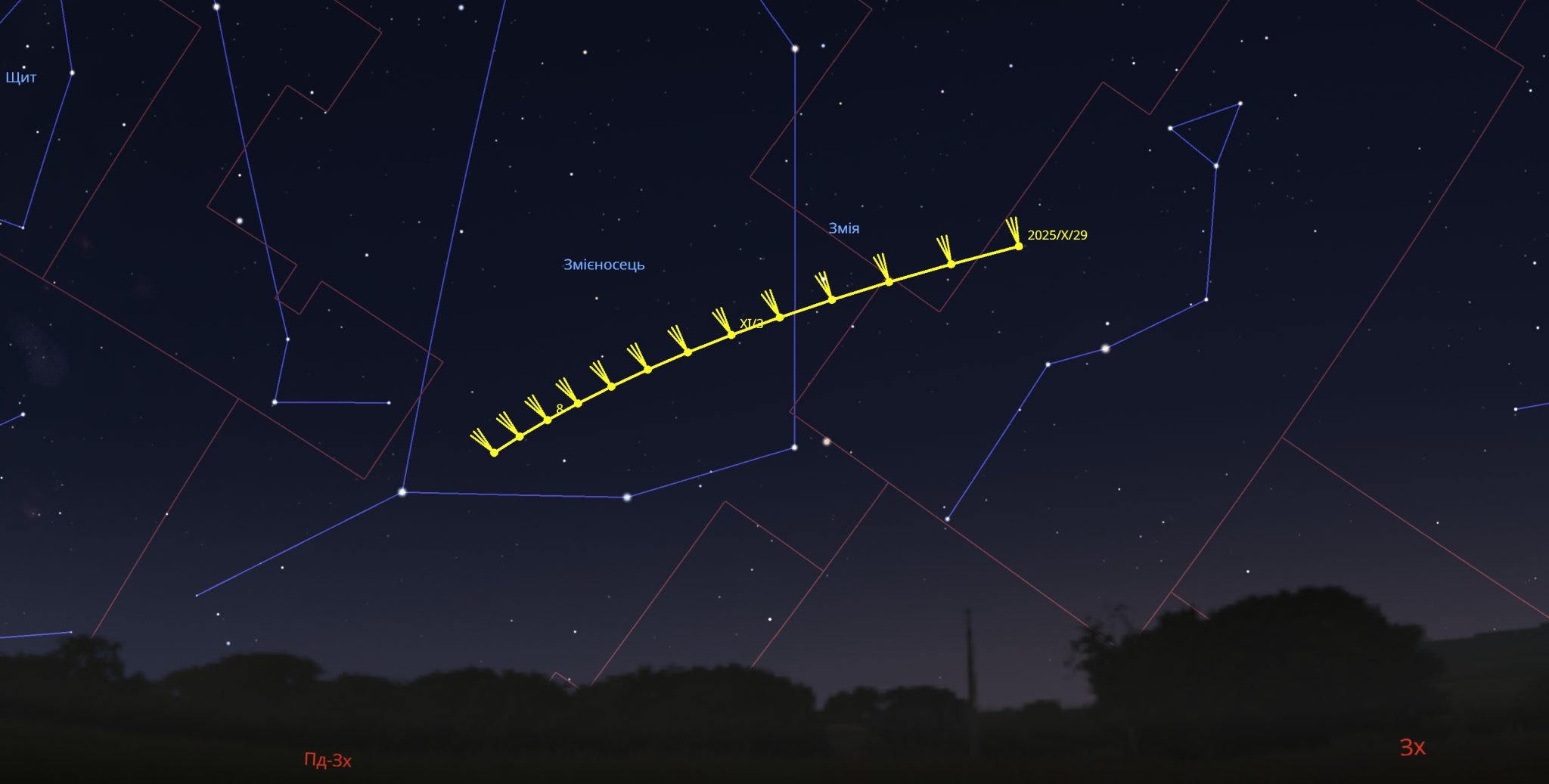
On November 8, comet C/2025 A6 (Lemmon) will pass through perihelion, approaching the Sun at a minimum distance of 79.5 million km (0.53 AU). This is considered a safe distance, and the nucleus is not expected to disintegrate. However, comets often become brighter after perihelion.
However, this does not mean that on November 8, the comet will actually reach its peak brightness for observers on Earth. The best time to observe C/2025 A6 (Lemmon) is considered to be the end of October and the first days of November. During this period, it should be at its brightest, given the relative positions of Earth, the comet, and the Sun. In addition, the “tailed” will be quite high above the horizon during this period. It has not moved far away from Earth (relative to its perihelion on October 21), although it has not passed its perihelion yet.
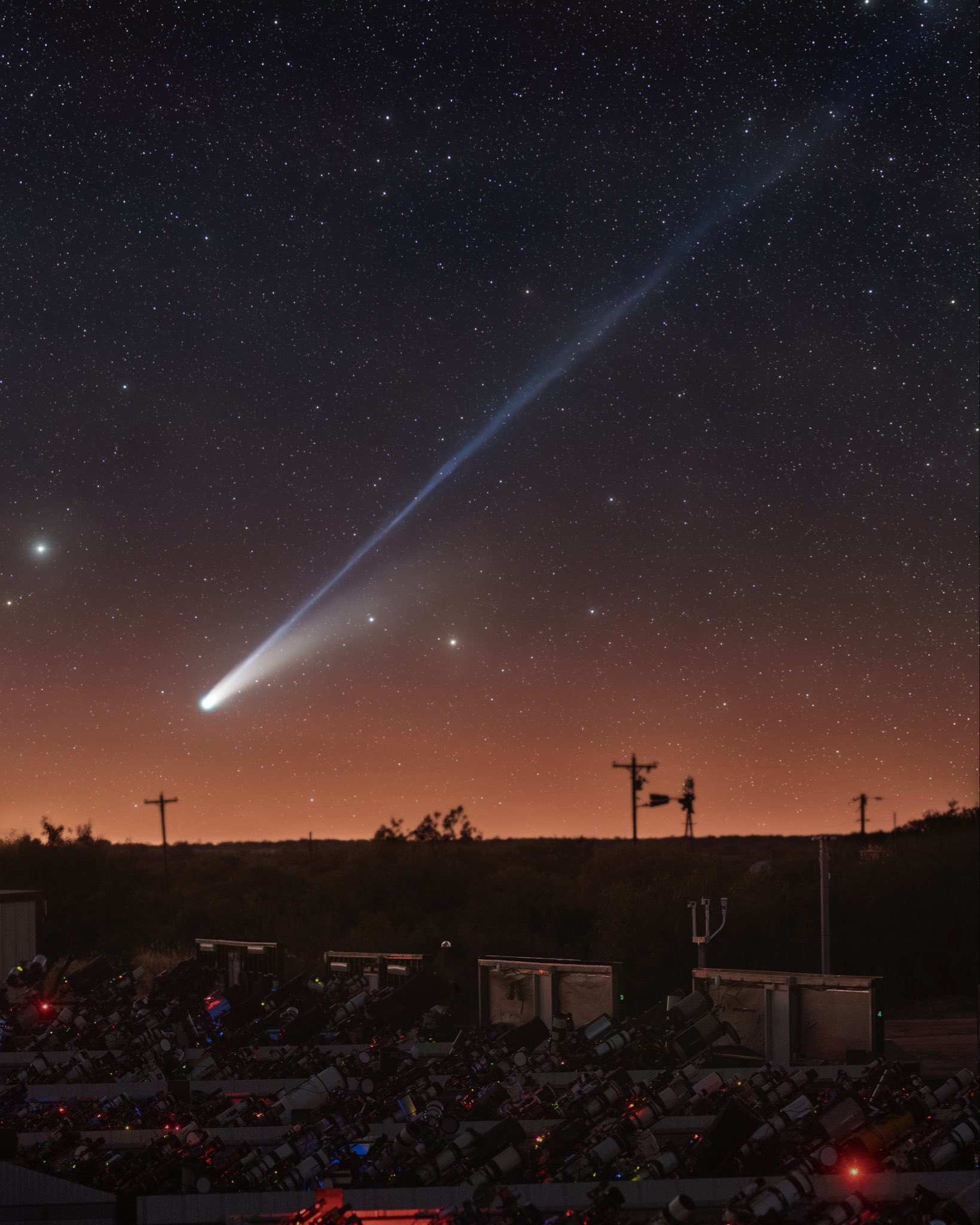
By the end of October, the brightness of C/2025 A6 has already exceeded +4m, surpassing even the most optimistic predictions. The comet is quite visible to the naked eye in suburban or rural skies, but it will not look as magnificent as in the photo — compositing many frames during processing helps to reveal the faint details of the long ion tail. If you are observing in the city, it is better to use binoculars or a low-magnification telescope.
November 17: peak activity of the Leonid meteor shower
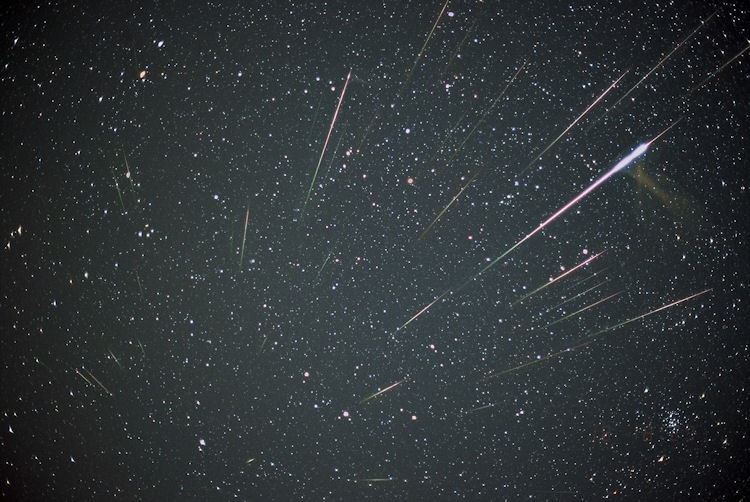
With the radiant in the constellation Leo rising in the second half of the night, the best time to observe the meteor shower is in the hours before dawn. The dust particles that will burn up in the Earth’s atmosphere at this time come from the comet Tempel-Tuttle (55P/Tempel-Tuttle), which approaches the Sun every 33.2 years.
In general, the Leonids are active from November 6 to 30, with the expected peak occurring at 18 UTC on the 17th, but its activity is difficult to predict as it varies greatly. Usually, this shower is not very intense, with its ZHR most often ranging between 10 and 15, meaning that only a few meteors per hour can actually be seen. However, the Leonids are known for their extremely spectacular bursts of activity in 1966 and 1999 — the following years after the comet passed its perihelion allowed thousands of meteors per hour to be observed.
Currently, Comet Tempel-Tuttle is far from the Sun, and its next approach is expected in 2031, when the comet will replenish the shower with fresh particles. According to current calculations, in 2025 we will cross swarms of particles that the comet released much earlier. On November 9 at ~22:00 UTC, Earth may encounter a dust trail from 1167; on November 15 at ~05:00 UTC, there may be a surge in activity due to the perihelion of 1633; and during the peak on the 17th, we will cross a swarm from 1699. However, it is worth noting that such predictions are not always accurate.
November 20: New Moon — a golden time for deep space observations
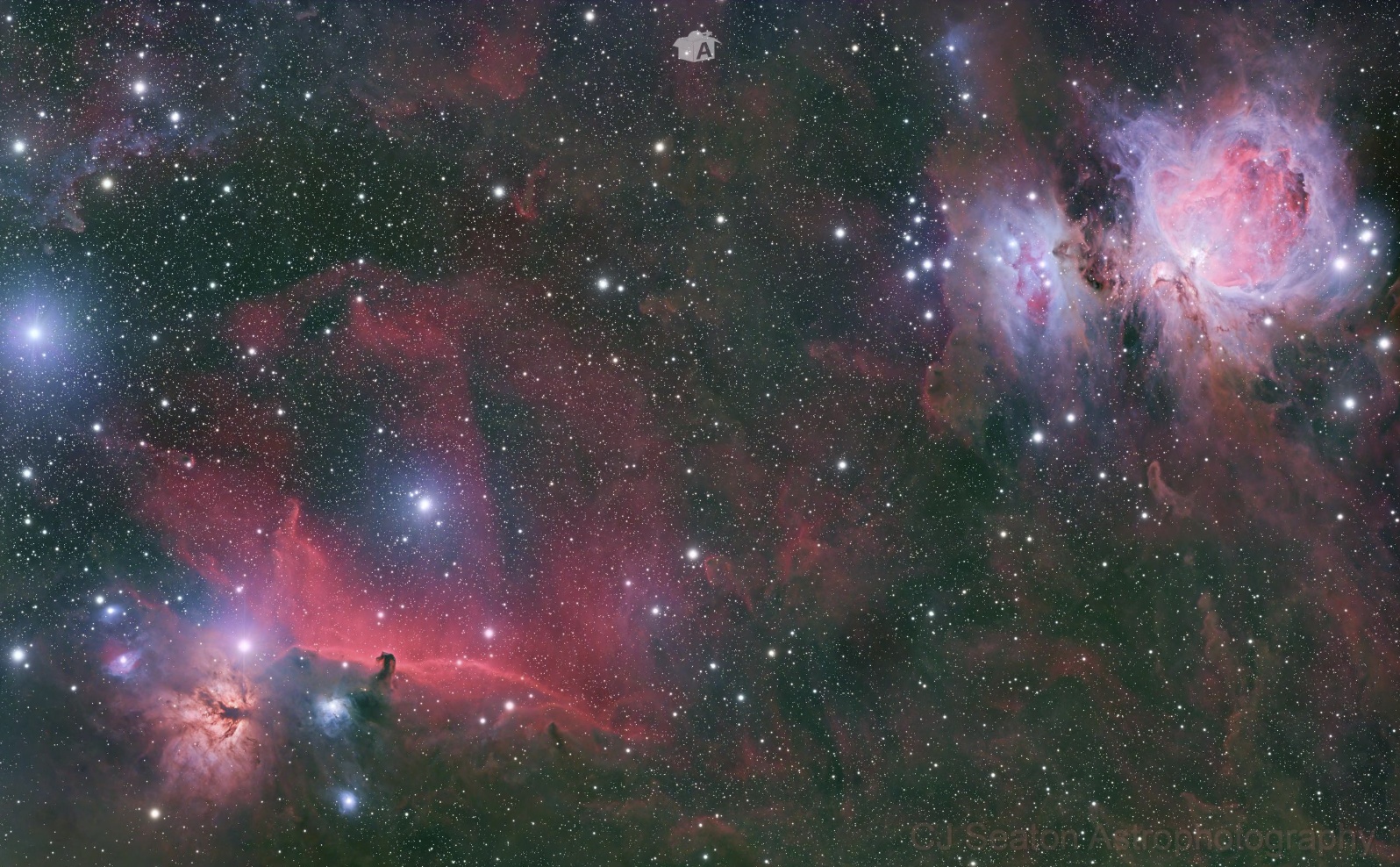
When the moon is absent, the stars are especially bright. The same applies to deep space objects: faint galaxies, nebulae, and star clusters are much easier to find in the dark sky.
For beginners, we recommend focusing first on the Orion Nebula, the binary star cluster in Perseus (NGC 869 and NGC 884), and the scattered clusters of the Hyades and Pleiades (Taurus constellation). The California Nebula, the Rosette Nebula (NGC 2237), the Horsehead Nebula, M78, and NGC 1333 (Perseus) are well suited for photography this season. Significantly more challenging targets will be the Crab Nebula (M1), the Little Dumbbell Nebula (M76), and the Eskimo Nebula (NGC 2392). NGC 2261 (Hubble’s Variable Nebula) could be a particularly interesting target, both for visual observation and photography.
November 24: the day Saturn will be “naked”
Although Saturn is known for its incredibly developed ring system, there are periods when it is oriented edge-on to us. And since the rings are very thin (mostly up to tens of meters), it is almost impossible to see them at this time. Such a period occurred at the end of March 2025, when Earth crossed the plane of the rings in its orbit. However, Saturn was too close to the Sun at that time, making observation impossible.
However, we will have a second chance in November. Because the Earth and Saturn do not rotate in the same plane, the apparent angle of the rings fluctuates slightly throughout the year, changing within a few degrees. On November 24, the angle between the plane of the rings and the line of sight will be only 0.38°, meaning that they will be visible almost edge-on.
The rings will probably not disappear completely, but only a barely noticeable thin strip will remain. The next such configuration is expected in 13 years — in October 2038, Saturn’s rings will “disappear” again.