

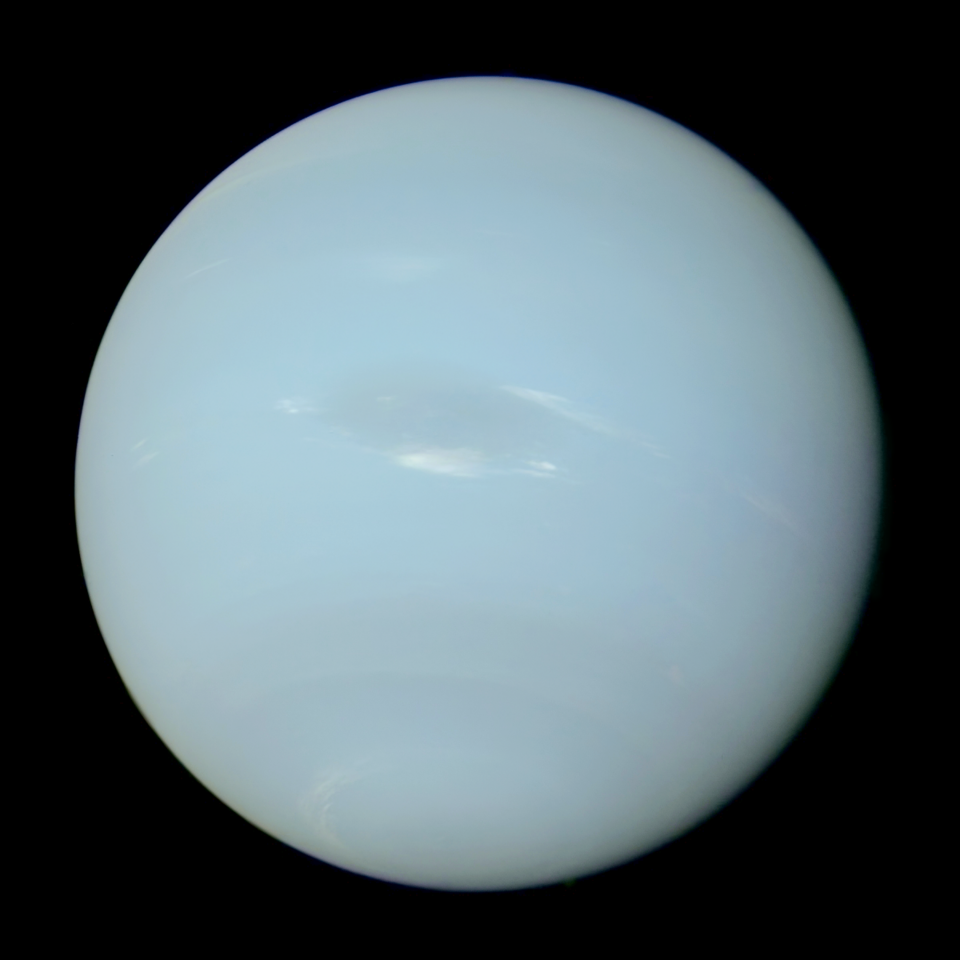
Nils Westerboer’s science fiction novel Athos 2643 is a detective story set in the future, in a monastery on Neptune’s fictional moon Athos. However, the main intrigue revolves not around space or Christianity, but around artificial intelligence. The Ukrainian book was recently published by Lobster Publishing and can be purchased on the publisher’s official website.
Contemporary science fiction
Athos 2643 by Nils Westerboer can confidently be called fresh science fiction. The novel was published in German in 2022, and in 2025, Lobster Publishing printed it in Ukrainian.
The events in it take place in the distant future, and the numbers 2643 indicate the year. Humanity has colonized the Solar System, mastered the genetic modification of living organisms, and created truly powerful artificial intelligence, which plays one of the key roles in the novel.
The novel is truly interesting, but initially it can be a real challenge for the reader. The fact is that many things, whose names seem quite understandable at first glance, begin to cause distrust after just a few paragraphs.
Main characters
Take, for example, the main character – the inquisitor Ruud Kartgeiser. From a man whose occupation is described by this word, you would expect a certain steadfastness in his faith, which is most likely Christian. However, when we first see him at the station orbiting Neptune, he is sitting naked in a hotel room while his AI assistant ties him to a pipe.
Yes, he has a personal AI named Zach, and she is only formally a tool that makes his life easier. In fact, she has her own will, sometimes stronger than Ruud’s, her own judgments, often takes the initiative in conversations with other characters, and in general, the reader perceives the events in the novel mainly through her eyes.
At first, it seems that Ruud Kartgeiser himself is a whiny, dependent, and dull appendage to his artificial intelligence. But then he demonstrates determination, composure, and independence, his story unfolds more fully, and it becomes clear that the whole point is that we are seeing a character who has suffered severe trauma in the past and has recently experienced personal problems. He gives vent to all of this when he is alone with the AI.
Source: phys.org
As for his profession, the word “inquisition” is translated from Latin as “investigation.” In other words, Ruud is simply an investigator, a typical detective story protagonist acting on behalf of an organization with certain powers. However, he does not deal with matters of religious belief, but rather with problematic artificial intelligence.
Athos 2643
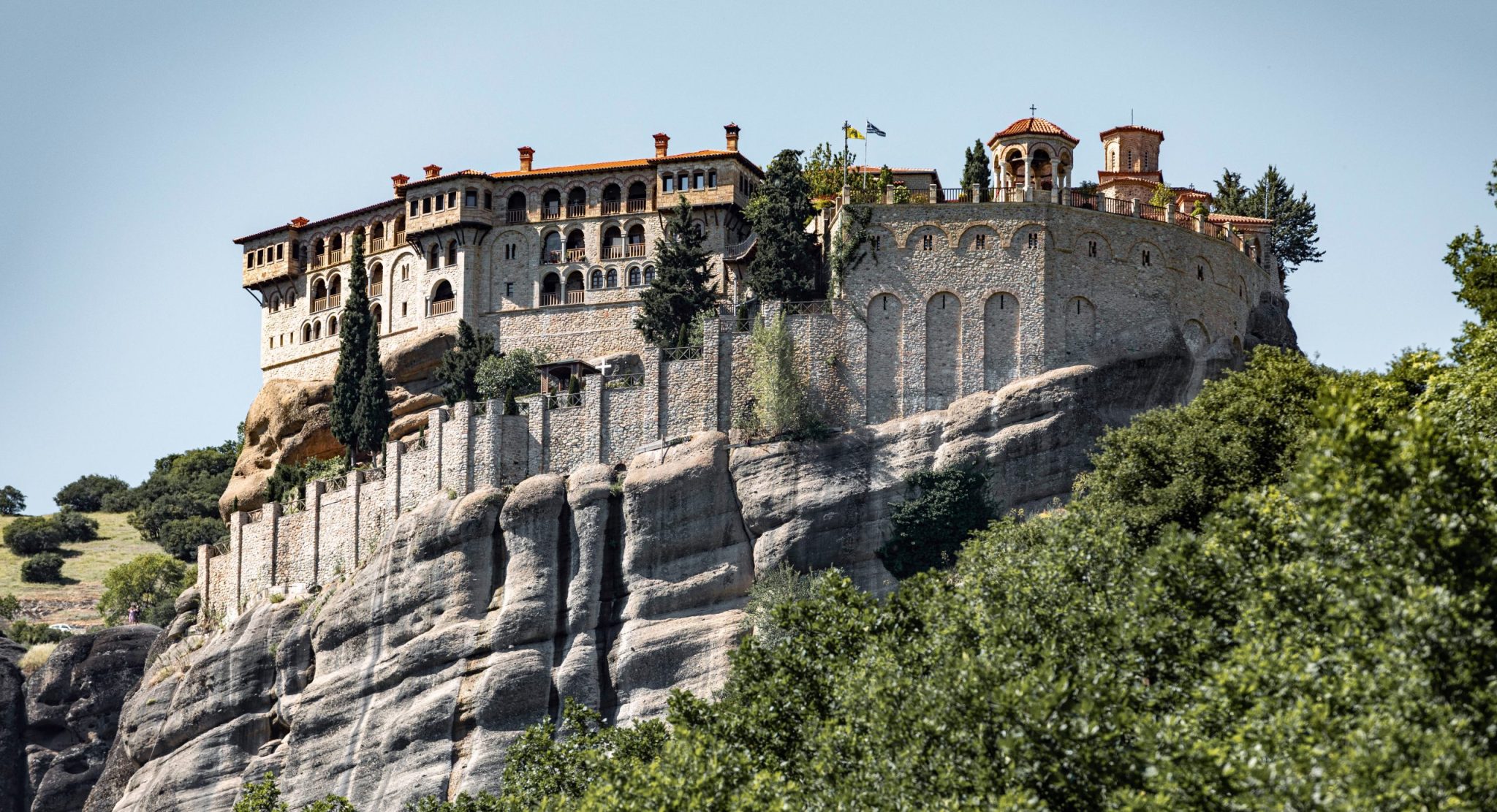
It is precisely Ruud’s deceptive status that immediately catches your attention when you start reading the novel. Its title refers to Mount Athos in Greece, located on the peninsula of the same name. It is home to more than a dozen Orthodox monasteries, and in fact, the entire island is a territory where medieval religious rules still apply.
In Westerboer’s novel, this is the name of Neptune’s small satellite, only a few kilometers in diameter, on which there is a monastery of Orthodox hermits, where a very suspicious fatal accident occurred. Incidentally, the satellite itself is fictional, but it is described quite realistically, and it is indeed impossible to rule out that in the future, when the distant eighth planet is better explored, something similar will not be found near it.
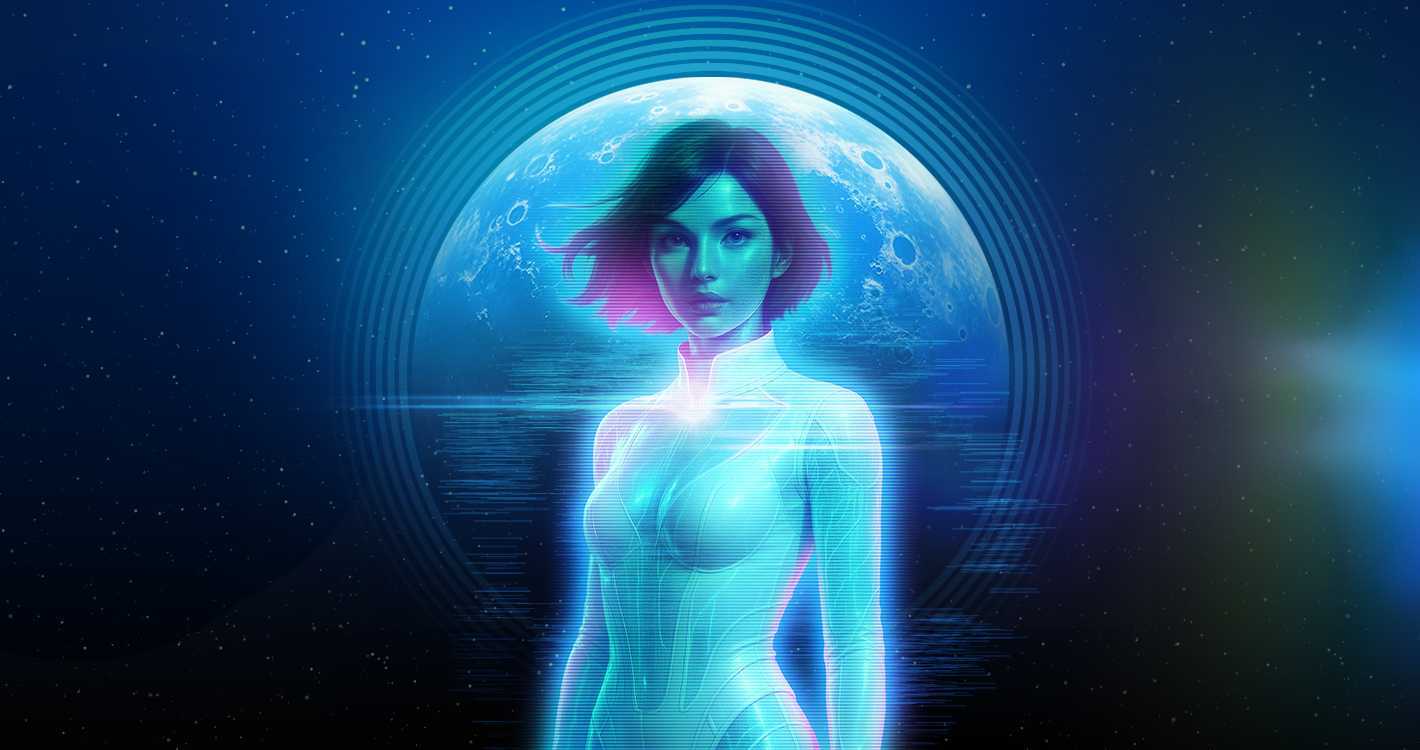
But that’s not the important thing. The question that arises from the very first pages is: what is a representative of the Inquisition, usually associated with the Roman Catholic Church, doing in an Orthodox monastery? And why is he accompanied by his assistant, who is constantly present in the form of a hologram of a young, attractive woman, often dressed very lightly?
It seems that Westerboer tried to use the theme of Christianity, but never even understood its basics.
The monks on Mount Athos rarely discuss God, the soul, or faith with devout Christians. However, when it turns out that one of them is a woman, another hermit, very much in the spirit of the LGBT movement, asks, “Who decides who is a man and who is a woman?”
Against this backdrop, the presence of a farm producing halal meat on the satellite monastery is not so surprising. In Westerboer’s novel, Neptune’s system is inhabited mainly by Turks. So why should Orthodox hermits not produce food according to the instructions of the Prophet Muhammad?
Compared to Westerboer’s vision of a future world of advanced biotechnology, the appearance of the farm itself is more reminiscent of a depiction of hell.
But the most interesting thing is that later on, there is a very simple and rational explanation for everything. For this reason alone, it is really worth reading Athos 2643 to the end. After all, it is a detective story in which the reader, together with the main characters, not only searches for the possible murderer, but also tries to understand what is really going on around them. Westerboer also manages to present some key insights into the world in simple language, only after the 300th page, and after finishing the book, you somehow do not want to criticize him for it.
The most important technology
The world of Athos 2643 is shaped by technologies that have not yet been invented. Some of them seem, shall we say, overly bold and dubious. For example, when the author describes engines capable of accelerating a spacecraft to a speed of over a thousand kilometers per second in just a few dozen minutes, the question arises not so much about the physical process itself (which, at least in theory, has already been described), but rather about how the people on board can withstand such overloads.
There is an even bigger problem with Zach’s hologram emitter. Because it is only called a hologram in name, that is, a play of light and shadow. In reality, it has a density that allows it to wear a dress made of very light but real fabric. And the device that creates all this not only does not fry everything between it and the hologram, but can also fit in your pocket.
And the way gravity is created on Athos. The author did well not to forget that on such a small body, it is very weak. But using special particles that need to be injected with anesthesia every few days instead of the magnetic boots familiar to science fiction is a rather unsuccessful idea, even without the bloody demonstration present in the book.
But the most important technology shaping this future is artificial intelligence, which is now not only on par with human intelligence but surpasses it. AI is not only found in the main character; it is everywhere, controlling all complex processes. So now even a dishwasher can show its personality.
Such AI exists on Mount Athos, and it does indeed cause problems. The novel begins with the story of a woman who, over several years, drove her husband to his death by using her knowledge of his weaknesses against him, while pretending to care for him. It is difficult to say whether modern lawyers would consider such actions a crime, but in the world of Athos 2643, they are.
After all, artificial intelligence is very good at studying the reactions of the people it interacts with and is quite good at predicting their behavior. This means that it is quite capable of manipulating people and leading them into situations where their death will appear natural or the result of an accident.
And this problem may indeed be real. We are accustomed to considering our actions to be the result of a mysterious process called our soul. However, in practice, they can be subjected to statistical analysis. Under normal conditions, it would be difficult to take advantage of this due to the large number of random processes and interactions that need to be taken into account. However, on an asteroid riddled with mines, where only six hermits live, it is much easier.
This is precisely what Ruud will have to deal with. Fortunately, he is very good at “talking” to artificial intelligences because he knows their weaknesses and is very attentive to how they play with words. How all this is connected to the murders in the cave monastery can be found out by reading the book to the end. You will discover that artificial intelligence is not even the key technology of this world, and that the characters have been missing the main miracle and mystery from the very beginning. But that’s why he is a detective, to find the answers himself.

