

Imagine how the velvet of the night sky is suddenly pierced by living lights. Giant emerald, crimson, and purple canvases unfold above your head, slowly beginning their unhurried dance. This is Aurora, or the aurora – one of nature’s most amazing spectacles.
Where does this beauty come from? Where can it be found? And is it possible to see the northern lights in Ukraine? Let’s find out!
How the aurora happens: the amazing physics of the northern lights

In short, the aurora results from the Sun “bombarding” the planet’s atmosphere. Our star constantly emits charged particles (solar wind). The Earth is protected by a magnetic field, but this protection is weaker at the poles. There, the solar wind “breaks through” and collides with gases in the atmosphere (oxygen, nitrogen) at an altitude of 100-400 km. This collision creates the aurora in the sky.
But the colors it “plays” with in the sky depend directly on the altitude and type of gas. Green – the most common color – is excited oxygen at an altitude of 100-200 km. Red appears when the solar wind “hits” oxygen much higher up (200-400 km). Blue and purple are the work of nitrogen, which reacts at lower altitudes (around 100 km).
It is a true wonder of nature. Although the process seems complicated, the result is one of the most beautiful sights on Earth. Each flash is unique because the solar wind is never the same. This is how all the aurorae on our planet are born.
Where can you see the aurora?
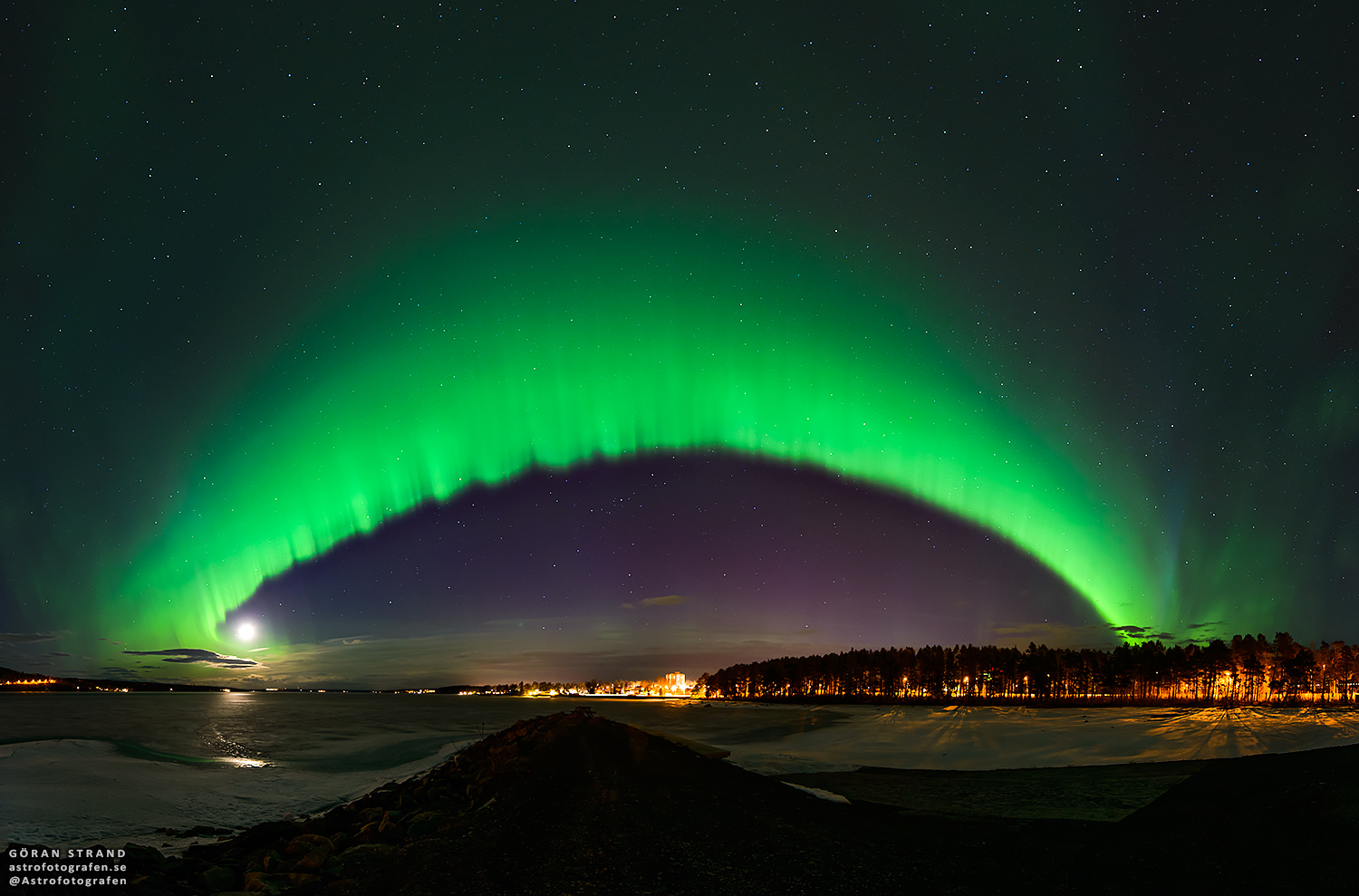
Image Credit & Copyright: Göran Strand
Well, we have covered the theory. Where should we go? First, it is worth clarifying that since the planet has two poles, there are actually two aurorae. The one in the Northern Hemisphere is called Aurora Borealis (northern lights). Its “mirror image” at the South Pole is Aurora Australis (southern lights). Of course, we are “hunting” for the northern lights.
Head for the “auroral oval” – the ring around the magnetic pole (approximately 65-72 degrees latitude). Inside this ring, the aurora is an almost daily occurrence.
The best hunting grounds (for the northern lights):
- Norway (Tromsø, Lofoten Islands)
- Sweden (Abisko National Park)
- Finland (all of Lapland)
- Iceland (entire country)
- North America (Alaska, northern territories of Canada)
Season: from late September to late March. The main thing is to remember three basic rules: Darkness (as far away from cities as possible), Patience, and a Warm Jacket.
Aurora in Ukraine: a phantom or a new reality?
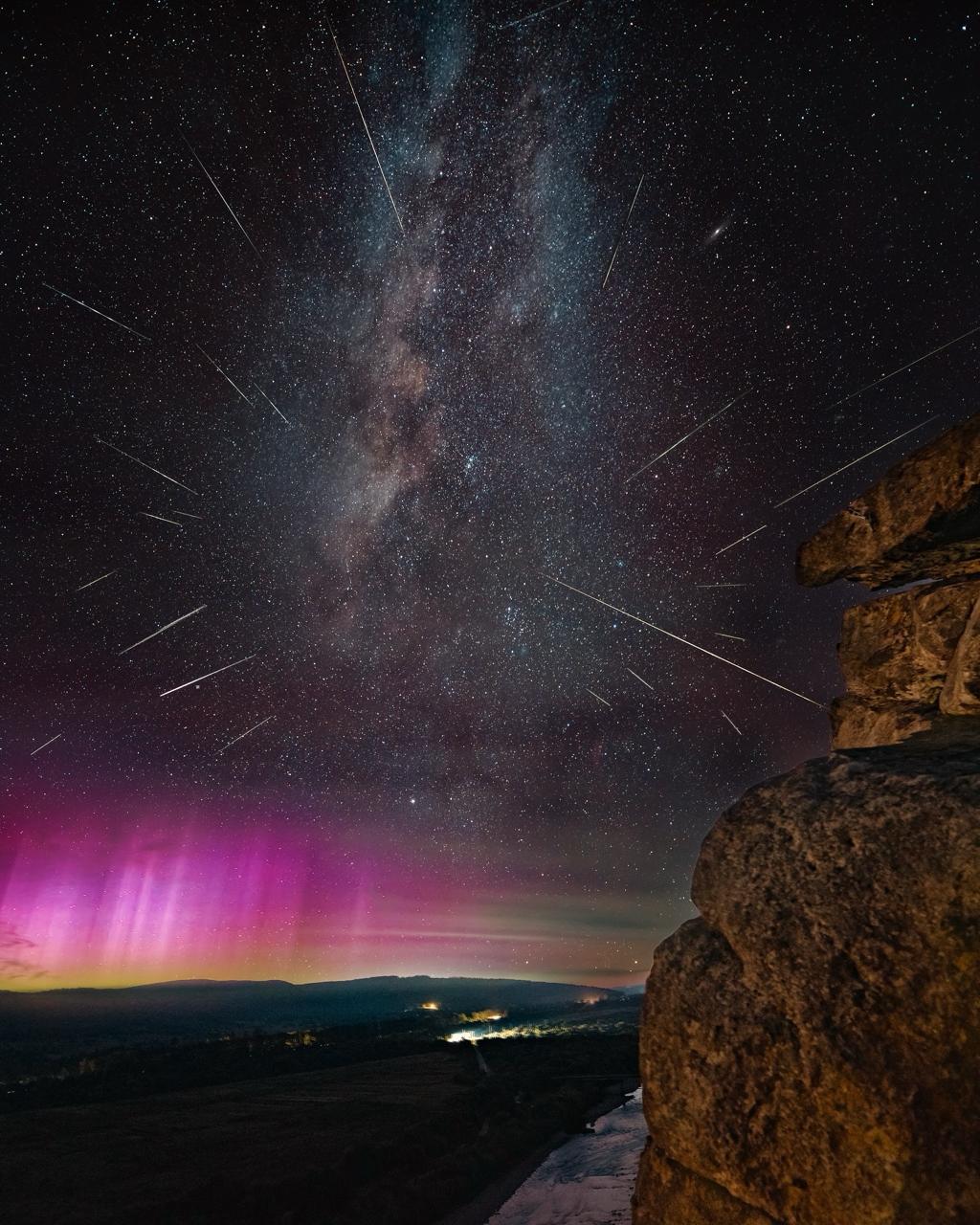
If you look purely at geography, seeing the northern lights in Ukraine is a fantasy. Our country is located between 44° and 52° north latitude, while the “home” of the polar lights, the auroral oval, is much higher. So, theoretically, our chances are zero.
But in recent years, the Sun has intervened. We are currently experiencing another solar maximum, and our star is very active. When a powerful flare causes a geomagnetic storm, the auroral oval “stretches” closer to the equator. Therefore, in 2023–2025, it became quite possible to see the aurora in Ukraine. There is plenty of photographic evidence from the Kyiv, Poltava, and even Odesa regions!

Of course, this is not a classic sight. We see mostly red colors – the tops of the glow. This is what the northern lights look like in Ukraine. To catch them, you need a strong storm (Kp index 7+), darkness outside the city, and a clear horizon.
Aurora: interesting facts
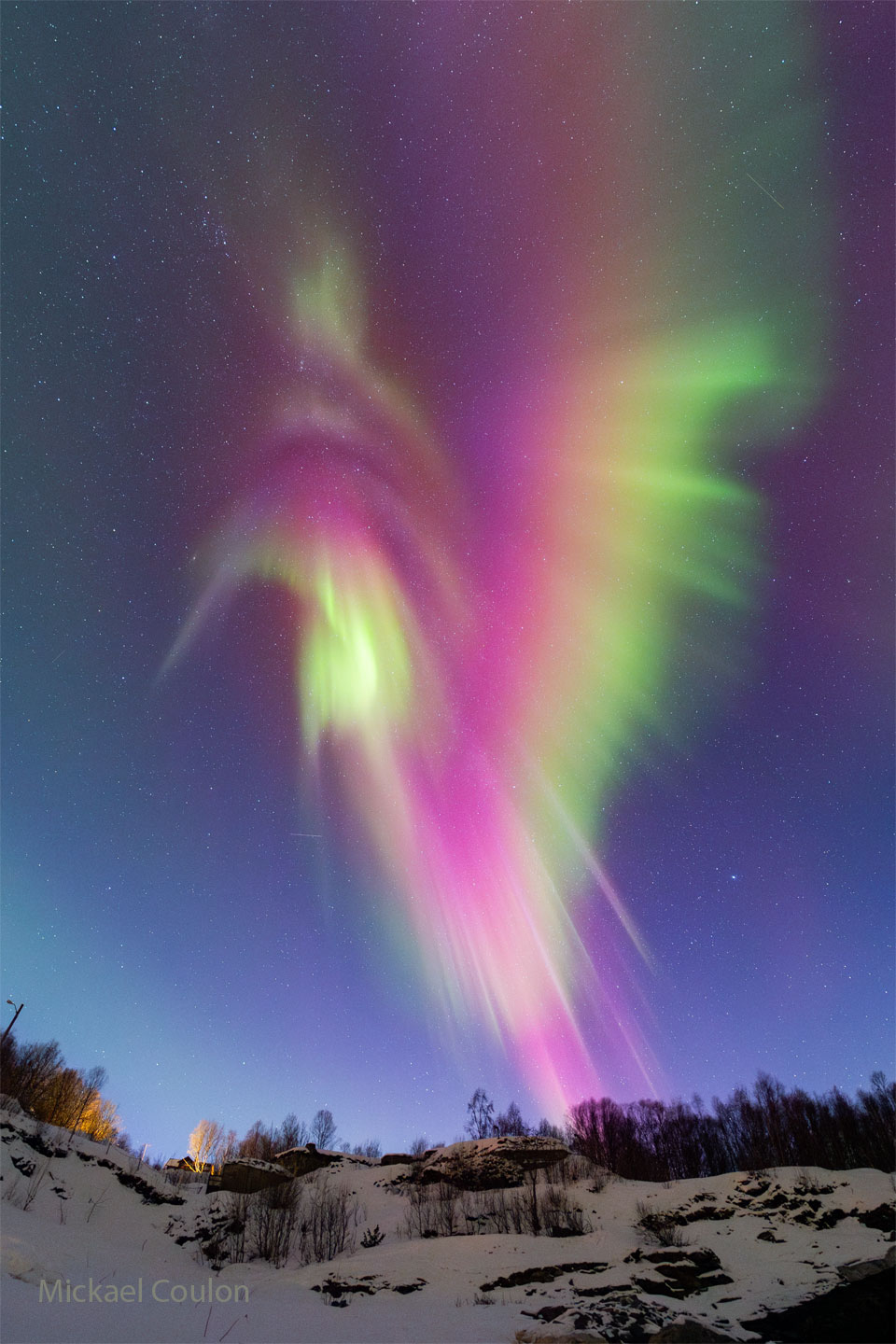
Image Credit & Copyright: Mickael Coulon
This phenomenon has secrets you may not be aware of:
- Does it “sound”? Old Sami legends tell of a quiet crackling sound. Scientists laughed, but stubborn Finns proved that the sound exists! It is generated lower down (70 km) by electrical discharges. Such is the amazing polar light.
- The color of mood. The eye perceives faint light as white-gray. This is how our photoreceptors (rods) work in the dark. Bright colors become visible only during strong geomagnetic storms.
- The name comes from Galileo. Galileo Galilei gave it the scientific name Aurora Borealis (“Morning Star of the North”) in 1619. The name Aurora Australis, on the other hand, is much more prosaic. Australis is a Latin word meaning “southern.”
- No two are alike. You will never see the same northern or southern lights twice. Each “performance” in the sky is unique.
These are just a few of the secrets hidden within this amazing phenomenon.
Aurorae on other planets: a cosmic party in the Solar System
Earth is not unique. Aurorae occur on any planet with an atmosphere and a magnetic field. The main “star” is Jupiter. Its aurorae are thousands of times more powerful and never stop; they are powered not only by the Sun, but also by the volcanoes of its moon, Io.
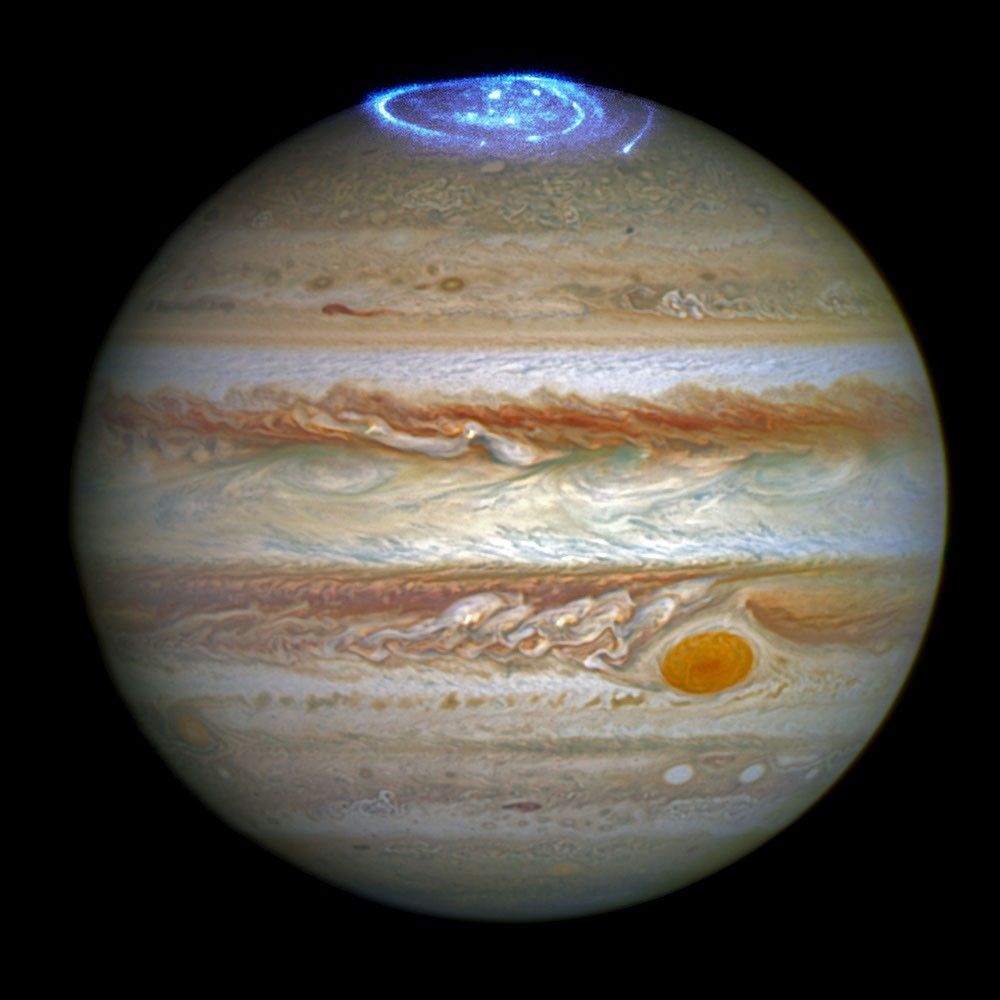
Image Credit & Copyright: NASA, ESA, and J. Nichols (University of Leicester);
Acknowledgment: A. Simon (NASA/GSFC) and the OPAL team
Saturn also has its own elegant aurorae. Even on Mars, probes have detected faint flashes. This is a direct reminder that we live in a living cosmos. And the chances of seeing crimson rivers in the sky in Ukraine are high right now. So keep your cameras ready to capture your own aurora!
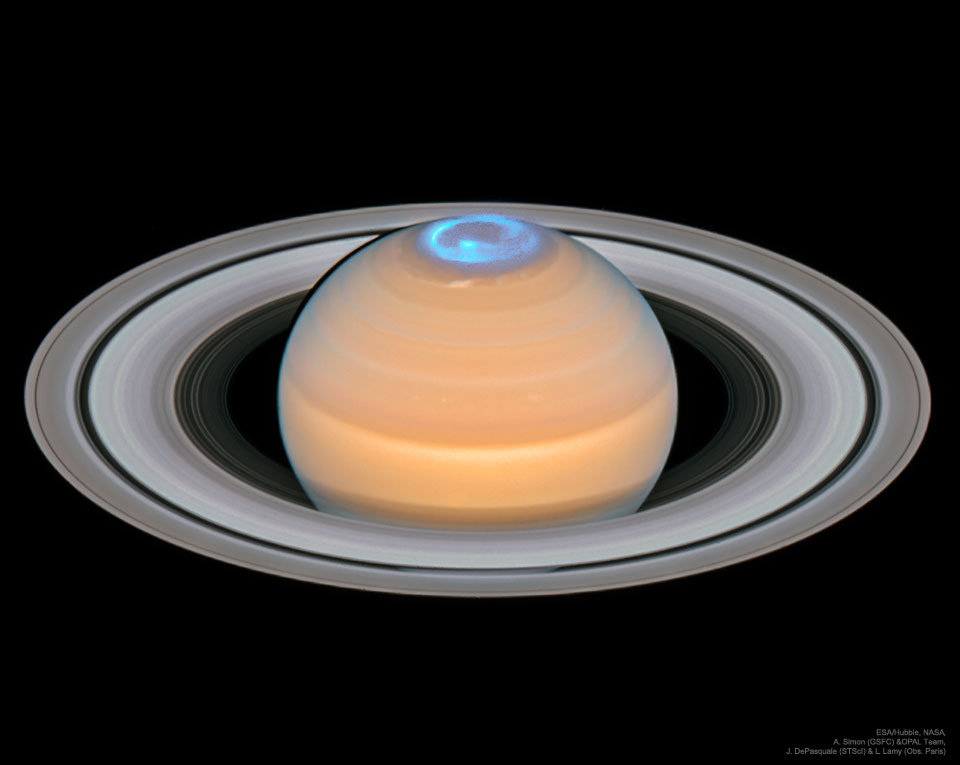
Image Credit & Copyright: NASA, ESA, Hubble, OPAL Program, J. DePasquale (STScI), L. Lamy (Obs. Paris)

