

In the space industry, breakthroughs stem not only from new rockets or satellites, but also from advances in ground-based technologies, without which efficient materials production, closed-loop life support systems, and future in-space resource processing facilities would be impossible. For this reason, BASF’s launch of the world’s first industrial facility for the production of 3D-printed catalysts is far more significant than just another news item from the chemical industry.

*3D-printed catalysts are substances that accelerate chemical reactions without being consumed in the process. In 3D printing, they are given a specially designed three-dimensional shape: for example, a grid or porous structure with channels for the passage of gas or liquid. BASF explains that X3D technology combines proven active materials with a new shaping method, enabling the catalyst to demonstrate higher reaction efficiency, greater design flexibility, and lower pressure drop in the reactor—and thus lower energy consumption.
BASF announced that on March 19, 2026, it commissioned the world’s first production facility for catalysts based on X3D technology in Ludwigshafen. The goal is to scale up additive manufacturing of catalysts to an industrial level. According to the company, these catalysts feature optimized geometry, combine mechanical strength with an open structure, reduce pressure drops in reactors, and simultaneously increase the catalytically active surface area. This makes it possible to increase reactor productivity, improve product quality, and reduce energy consumption compared to conventional catalysts.
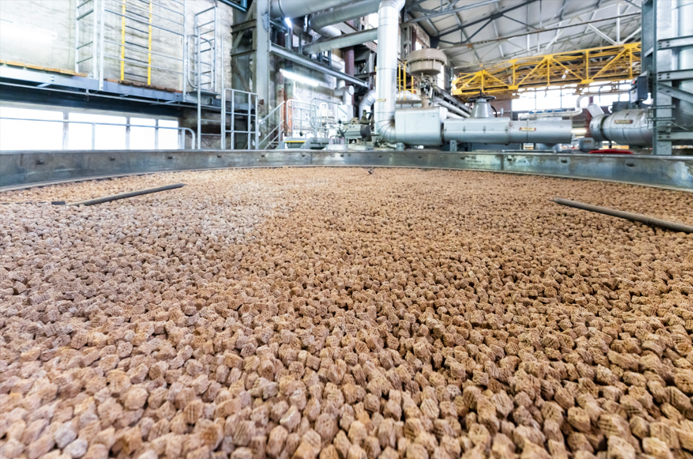
BASF also emphasizes that X3D is not a laboratory experiment, but a technology that has already been implemented at industrial sites for both internal and external customers. It is suitable for a wide range of catalytic materials—both those based on precious and non-precious metals—as well as various supports. BASF’s technical page states that X3D catalysts have a proven track record in industrial applications since 2019, and that the new plant was built to meet growing demand and bring such solutions to market more quickly.
How does it work? Imagine a typical catalyst as a collection of small, dense granules that a gas or liquid needs to pass through. Instead, BASF prints the catalyst in the form of a complex three-dimensional grid. Thanks to this shape, the flow passes through more easily while covering a larger active surface area. As a result, the reaction proceeds more efficiently, the reactor consumes less energy, and production can yield more product without a major overhaul of the entire plant.

Why is this important? For the space industry, this is significant as it demonstrates a new level of control over catalyst geometry. Catalytic reactors are already critical to life support systems: ESA uses the Sabatier reactor in the ACLS system to convert CO₂ into water and oxygen on the ISS, while NASA is developing oxygen regeneration technologies and ISRU schemes in which CO₂ and water can be converted into methane and oxygen for future missions to Mars. Thus, more efficient, lightweight, and energy-efficient catalysts have the potential to be useful for orbital stations, lunar bases, and Mars-based fuel production facilities. For astronomy, on the other hand, the benefits are more indirect: cheaper and more energy-efficient chemical processes simplify the production of high-purity materials and components for scientific infrastructure.
According to basf

