

Imagine a satellite that repairs itself in space, removing microcracks. It sounds like science fiction. However, this could become a reality very soon if European engineers succeed in creating a device based on the self-repairing composite they have developed.
Self-healing material
At first glance, all spacecraft that do not encounter friction in a vacuum can operate practically forever. However, in reality, their structures, especially those made of composite materials, are constantly subjected to complex influences that can lead to their destruction.
But what if spacecraft could repair their own structure when microcracks are detected? This incredible idea may soon become a reality thanks to engineers from the Swiss company CompPair and CSEM and their colleagues at Com&Sens.
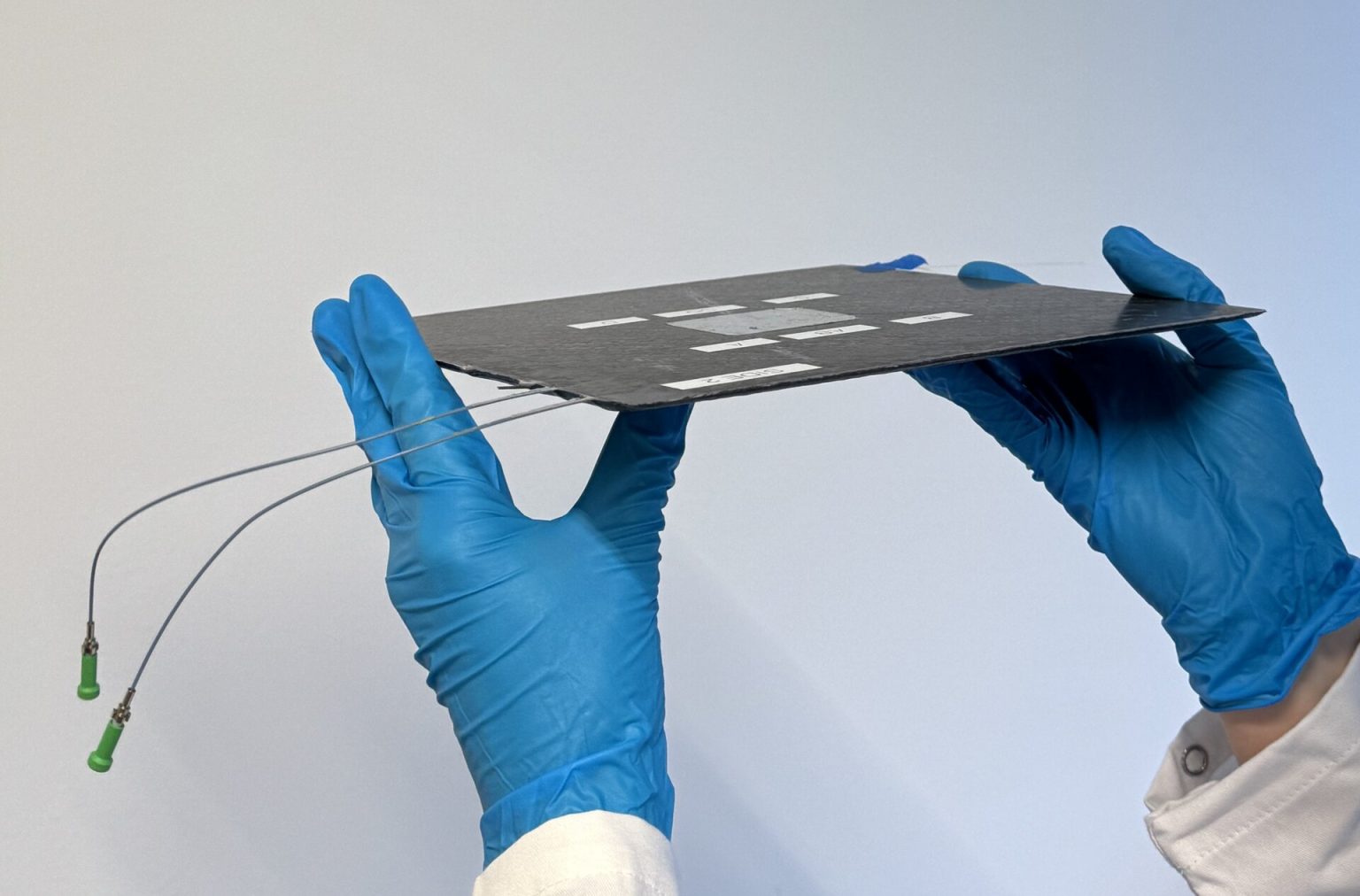
They are working on the Cassandra project for the European Space Agency. It involves integrating sensors and heating elements into the composite material. These elements are designed to teach it to heal itself.
Cracks in composite material
In general, composite materials are a very good option for spacecraft. They consist of a reinforcing element immersed in a matrix, which allows combining the advantages of both without their disadvantages. As a rule, these are carbon fibers in a polymer medium, which allows creating very light and strong structures.
However, sooner or later, microcracks will appear in any polymer material, begin to grow, and eventually destroy the entire element. This is precisely the problem that the Cassandra project aims to solve. The approach involves integrating not only reinforcing elements into the composite material, but also sensors and a metal mesh through which an electric current can be passed.
The idea is quite simple. If the sensors detect microcracks in the element, for example, due to a change in stress, current is supplied to the heating elements, which melts the material and closes the breach in integrity.
Research results
However, this is all in theory. In practice, engineers have only conducted initial tests. Various samples ranging in size from 2×10 to 40×40 cm were used for these tests. Damage was inflicted in a controlled manner, as the scientists were primarily interested in whether the sensors would respond adequately to it. However, resistance to thermal shock, i.e., sudden cooling, was also tested at the same time.
In principle, all tests can be considered successful. Microcracks were successfully eliminated. However, engineers did not check thermal stability for nothing. They understand that the technology can only be truly evaluated on a real part. Therefore, next time they will make an entire cryogenic tank out of them.
Provided by: phys.org

