

The Southwest Research Institute (SwRI) has completed a study of a mission to explore interstellar comets. The project describes in detail how a spacecraft could fly past such an object and study it.
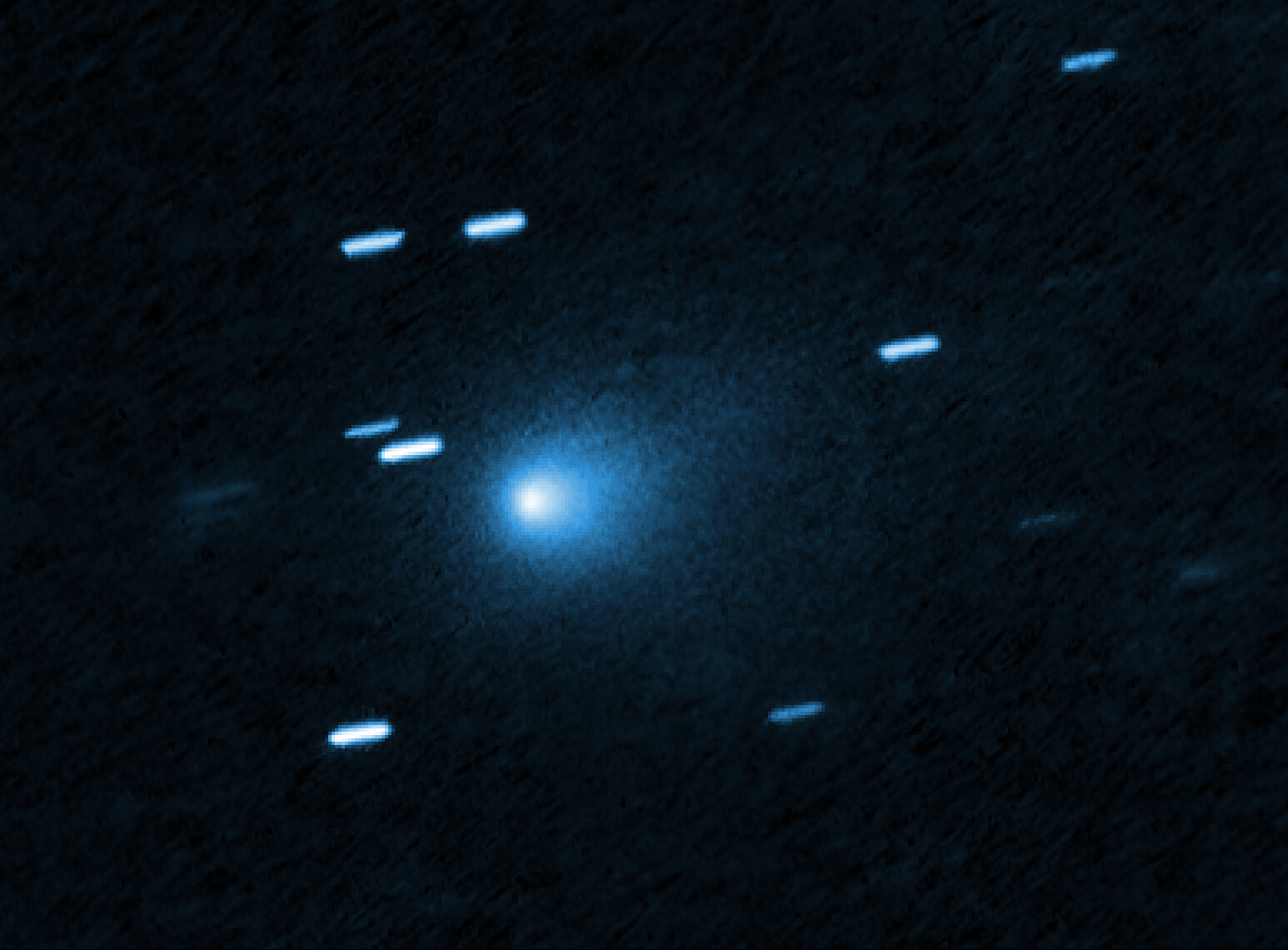
In 2017, the object, later designated Oumuamua, became the first interstellar comet discovered in the Solar System. Two years later, a second interstellar comet (2I/Borisov) was discovered, and this year, ISC 3I/ATLAS made headlines around the world as the third officially recognized interstellar object to cross the boundaries of the Solar System.
As next-generation telescopes such as the Vera Rubin Observatory become operational, astronomers expect that many more interstellar objects will be discovered over the next decade. According to scientists’ estimates, every year, numerous interstellar objects of extrasolar origin pass within Earth’s orbit, and during any year, up to 10,000 of them are found within Neptune’s orbit. Studying them will provide humanity with a unique opportunity to look at other star systems and better understand their formation.
As part of a new study, SwRI experts attempted to develop a mission design that could study an interstellar comet. The hyperbolic trajectories and high speeds of these objects rule out the possibility of orbital flybys using modern technology. However, SwRI calculations indicate that the reconnaissance flight is entirely possible.
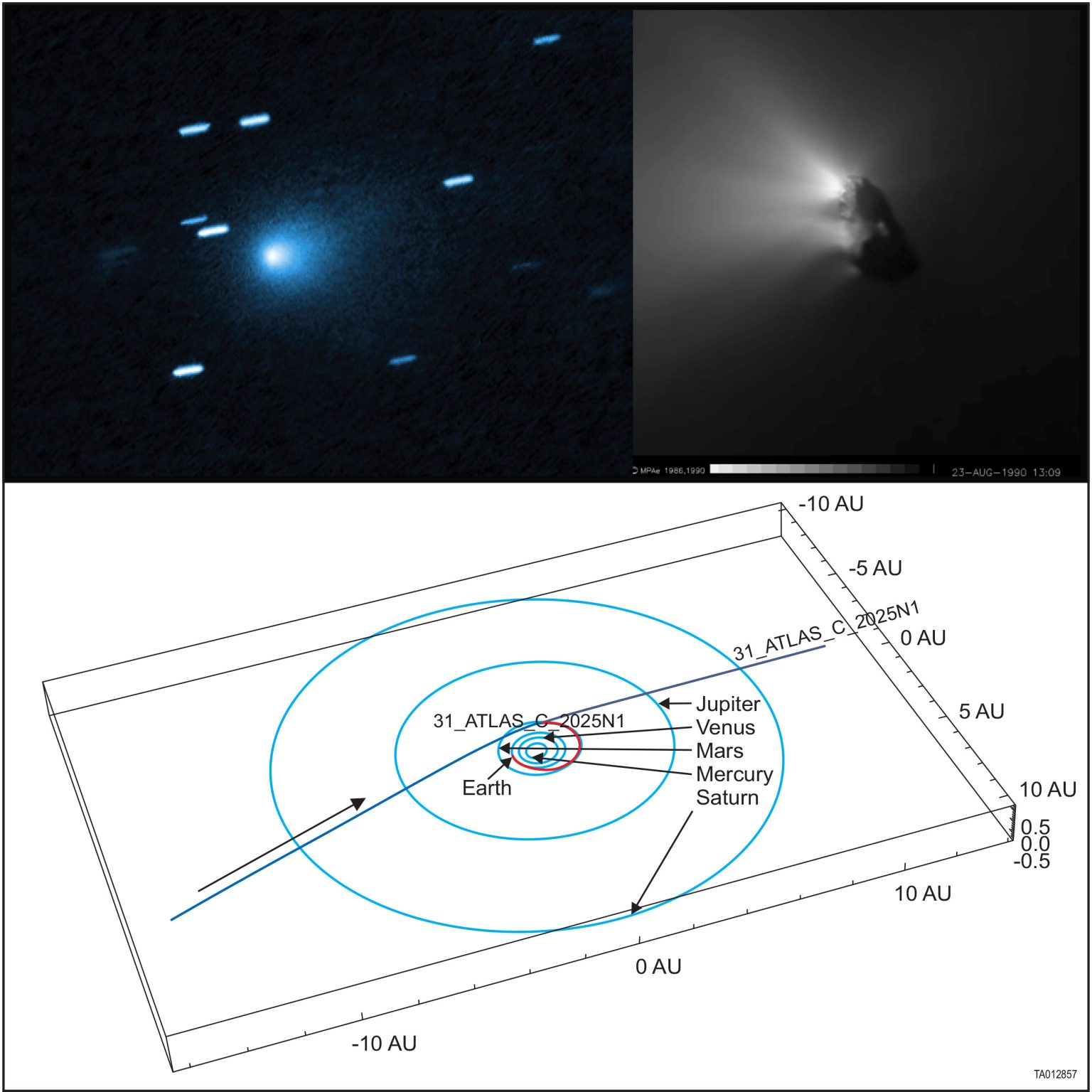
“The trajectory of 3I/ATLAS is within the interceptable range of the mission we designed, and the scientific observations made during such a flyby would be groundbreaking,” said Matthew Freeman of SwRI, the project’s principal investigator. “The proposed mission would be a high-speed, head-on flyby that would collect a large amount of valuable data and could also serve as a model for future missions to other ISCs.”
SwRI scientists and their external research partners have identified the primary scientific objectives of such a mission. Determining the physical properties of the body will give an idea of its formation and evolution. Studying the composition of an interstellar comet can help explain its origin and evolution. Another objective of the study will be the gas envelope surrounding it (the coma).
To develop mission trajectory options, SwRI specialists developed software that generated a representative synthetic population of interstellar objects and then calculated the minimum energy trajectory from Earth to the trajectory of each comet. Software calculations have shown that a low-energy trajectory is possible and, in many cases, will require fewer resources to launch and change speed in flight than many other missions in the Solar System. SwRI orbital mechanics expert Dr. Mark Tapley used this software to calculate the trajectory along which the proposed spacecraft could fly from Earth to 3I/ATLAS. He discovered that the mission developed as part of the SwRI study could well achieve it.
According to SwRI

