

For many years, the prevailing opinion was that water on Earth was a gift from space, delivered by comets and asteroids during the so-called late heavy bombardment 4-3.8 billion years ago. It was believed that our young planet was too hot to retain its own volatile substances due to its proximity to the Sun. However, new research based on lunar rocks radically revises this theory. The new study is published in the journal Proceedings of the National Academy of Science.
A priceless archive
Unlike Earth, where plate tectonics have erased traces of ancient catastrophes, the Moon is an ideal geological archive. Its surface has remained unchanged for billions of years and preserves the history of bombardments to which the Earth-Moon system was subjected. The key to solving the mystery was the samples brought back by the Apollo missions. Until now, scientists have analyzed the metallic elements rich in meteorites. But a team led by Dr. Tony Gargano (USRA, LPI, UNM) took an innovative approach.
Oxygen footprint
Researchers focused on high-precision analysis of oxygen triplet isotopes — a unique “chemical signature” embedded in the very foundation of matter. This allowed them to clearly distinguish material added during the collision from the lunar soil itself, which had been melted and mixed many times over by impacts.
“This signature allows us to isolate the ‘trace’ of the impact from a complex mixture,” explains Gargano.
Unexpected conclusions
The analysis showed that only about 1% of the mass of the lunar material studied came from impactors, probably carbonaceous meteorites. Using this data, scientists modeled the upper limit of water that could have been delivered to Earth by later bombardment.
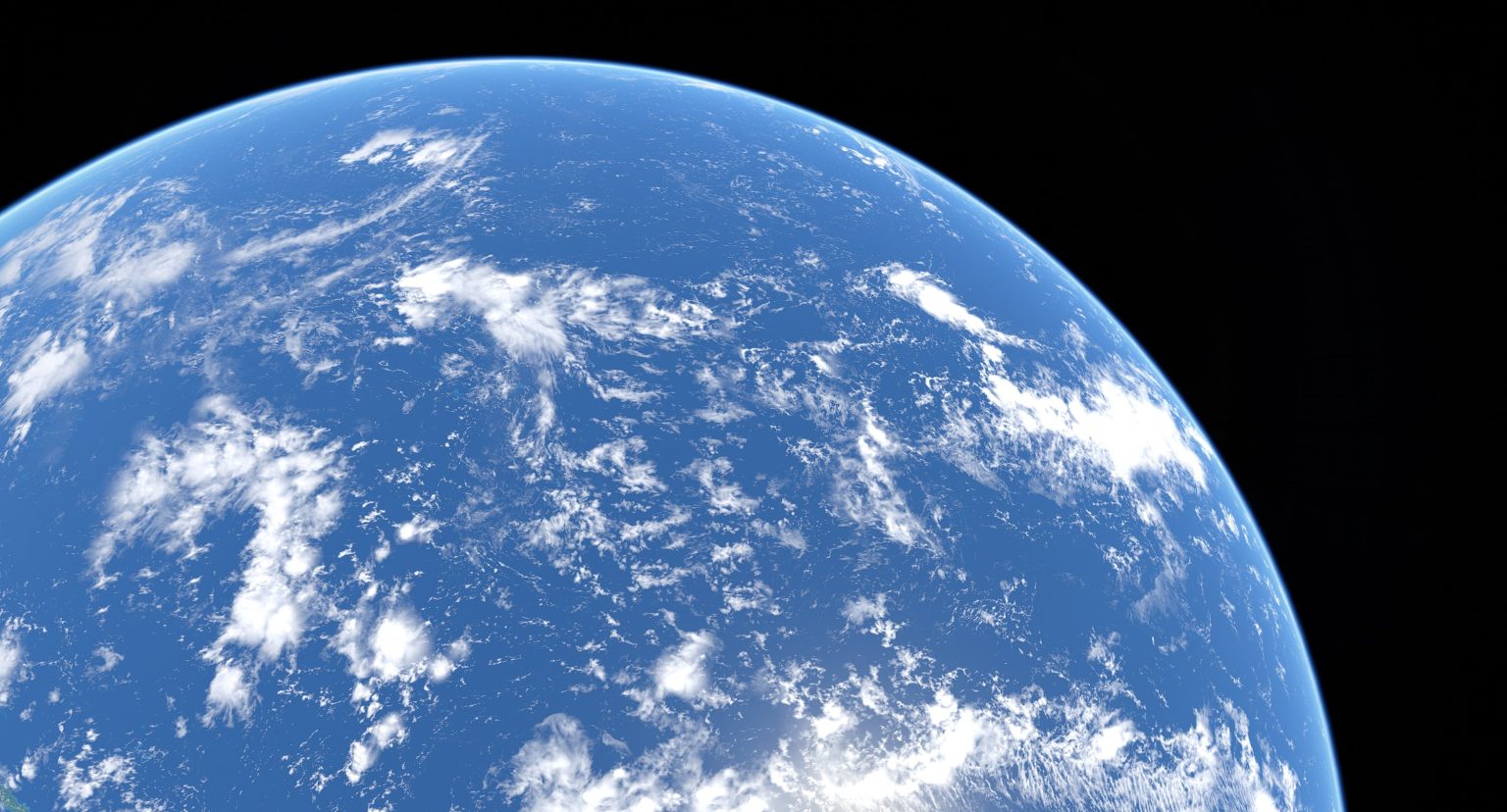
The result is impressive: this amount is only a tiny fraction of the volume of modern Earth’s oceans. Water covers 71% of the planet, but accounts for only 0.023% of its total mass — about 1.46 sextillion kilograms. The contribution of meteorites was too small to fill the Earth with water.
The search for a water source continues
“Our results don’t say meteorites delivered no water,” says co-author Dr. Justin Simon (NASA ARES). “They say the moon’s long-term record makes it very hard for late meteorite delivery to be the dominant source of Earth’s oceans.”
This opens the door to new hypotheses: perhaps water was “built into” the very substance from which the Earth was formed, or was delivered much earlier by other types of cosmic bodies.
The study is a striking example of how unique lunar samples continue to provide answers to fundamental questions.
Earlier, we shared the top seven places where water can be found in the Solar System.
According to hys.org

