

China conducted the first full-scale static fire test of the first stage of the Long March-10 rocket at the Wenchang Space Launch Site (Hainan Island). Seven YF-100K engines were started simultaneously, and according to the CMSA, the thrust reached almost 1,000 tons. This is a key step towards a manned landing on the Moon, planned for 2030.
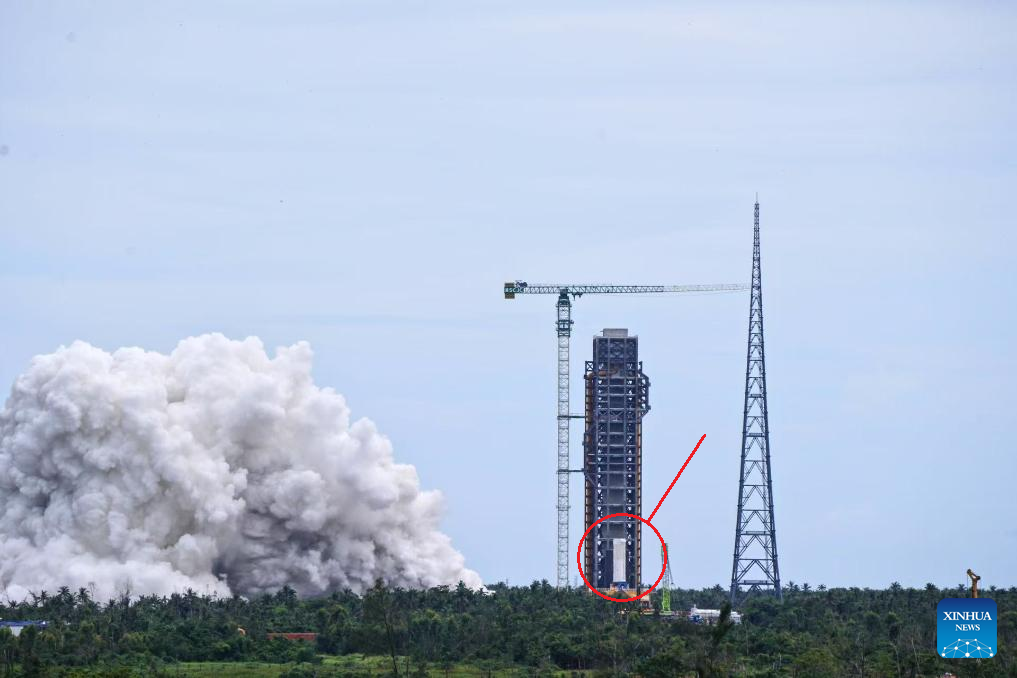
Long March-10 – a three-stage rocket with two boosters, approximately 92 m high. At launch, 21 engines will be operating (7 in the central block and 7 on each of the two side blocks), which is three times the thrust of Long March-5. According to estimates, the carrier will be able to send approximately 27 tons on a flight path to the Moon. The recent test lasted about 30 seconds and served as a test of the synchronous operation of the engine cluster on a real launch pad.
The PRC’s manned mission involves two separate launches: the Mengzhou spacecraft with a crew and the Lanyue landing module, their rendezvous and docking in lunar orbit, followed by a landing. At the same time, China is preparing a reusable version of Long March-10A for missions to near-Earth orbits. The long-term goal is to build an International Lunar Research Station (ILRS) at the South Pole by 2035.
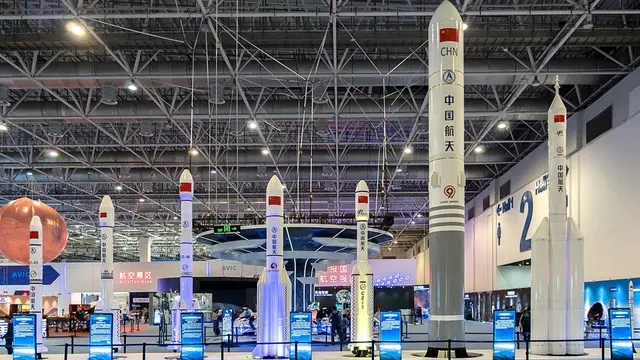
The development of such a heavy-lift vehicle opens up the possibility of delivering significantly more massive scientific complexes to the Moon: cryogenic equipment for research, autonomous geophysical stations, and, in the future, elements of radio observatories on the far side of the Moon, where there is no terrestrial radio interference. Powerful launches will also increase the frequency and reliability of missions involving soil samples, testing new navigation/communication systems, and conducting long-term experiments in stable cold polar craters.
Following the news about Long March-10, it is logical to ask: how long does it take to fly to Mars, Venus, or even Jupiter? From launch windows and trajectories to engine thrust and fuel limitations, we examine what really determines the duration of interplanetary travel and how new technologies are reducing travel time. More facts, figures, and illustrative examples can be found in the article “How long does it take to fly to other planets in the Solar System?”
According to news.cn, interestingengineering


