

After several months, the Chinese experimental satellites Shijian-21 and Shijian-25 undocked in geostationary orbit. According to most experts, they were testing space refueling technology.
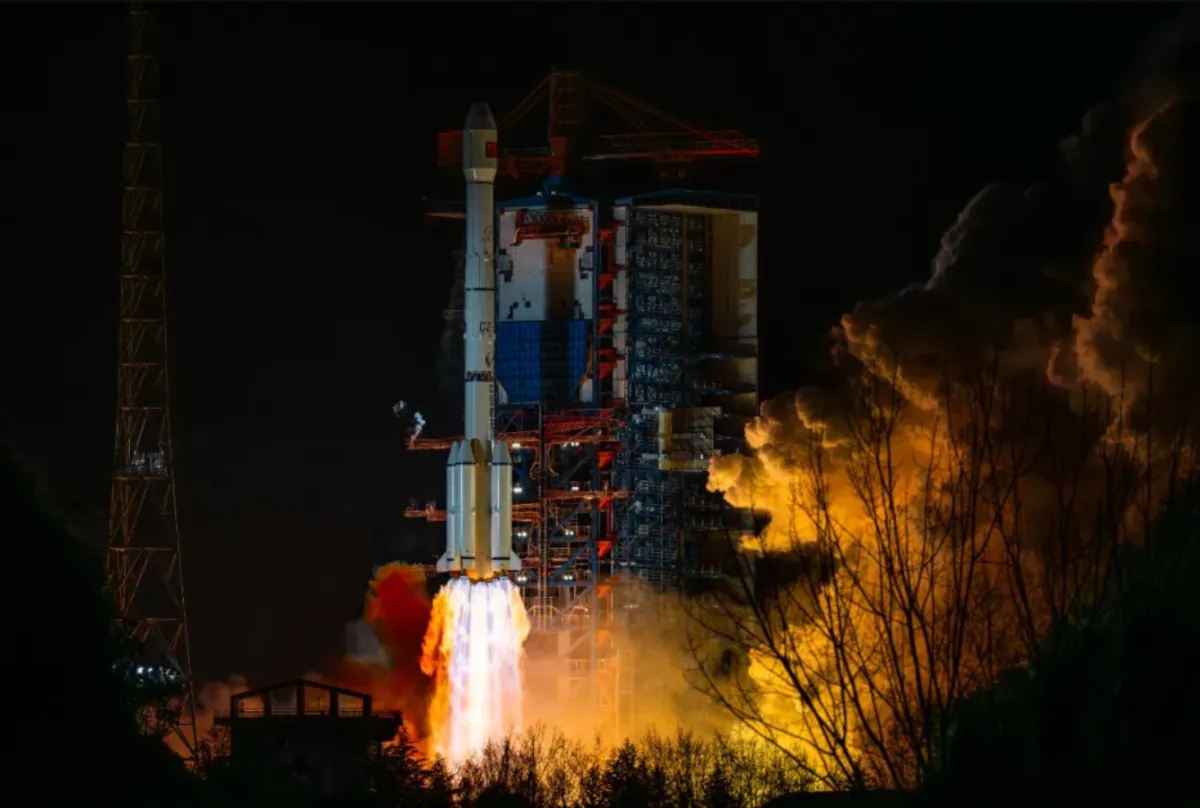
The Shijian-21 and Shijian-25 satellites were developed by the state-owned Shanghai Academy of Space Technology (SAST). Shijian-21 has been in space since 2021. It previously participated in an experiment to clean up space debris by towing a non-functioning satellite from geostationary orbit to a higher “graveyard orbit.” Shijian-25 was launched in January 2025. At the time, it was announced that the spacecraft was intended to demonstrate orbital refueling and satellite servicing technologies.
Shijian-21 and Shijian-25 conducted rendezvous operations in the first half of 2025. Their docking apparently took place in late June or early July, when it was virtually impossible to distinguish them from Earth. According to experts, this was the beginning of orbital refueling tests. The docked pair then performed maneuvers to change their orbital plane, which required a large amount of fuel. These maneuvers resulted in a decrease in the inclination of their orbit.
Bad weather delayed the obs, but here they are: SJ-25 and SJ-21A on 2025-11-29, 13:37:43 UTC. pic.twitter.com/4djHhqM6ET
— s2a systems (@s2a_systems) November 29, 2025
After several months, the devices finally separated. Optical ground observations conducted on November 29 by the Swiss company S2a systems show that the two satellites are now in geosynchronous orbit, close to the geostationary belt at an altitude of 35,786 km above the Earth’s equator. The pair’s orbits are inclined at 4.6 degrees relative to it.
As usual, China has not commented on the orbital tests. Such opacity raises concerns, including at the Pentagon. Although orbital servicing and refueling can be carried out for civilian purposes, the ability to dock, attach, and manipulate objects in geostationary orbit also has military significance. Satellites used for communications, weather monitoring, remote sensing, and early warning of missile attacks are located there.
If the test is successful, it could provide a major boost to China’s space industry. In-orbit servicing, including refueling, orbit adjustment, or relocation, allows for the extension of the service life of expensive or strategically important spacecraft, such as communications satellites, or the repurposing of old satellites. This provides an opportunity to reduce costs and also reduce the amount of space debris.
Provided by Spacenews

