

Astronomers have managed to uncover the secret of blue stragglers — stars that shine brighter and more intensely than their neighbors and appear much younger than their true age. The Hubble telescope helped them do this.
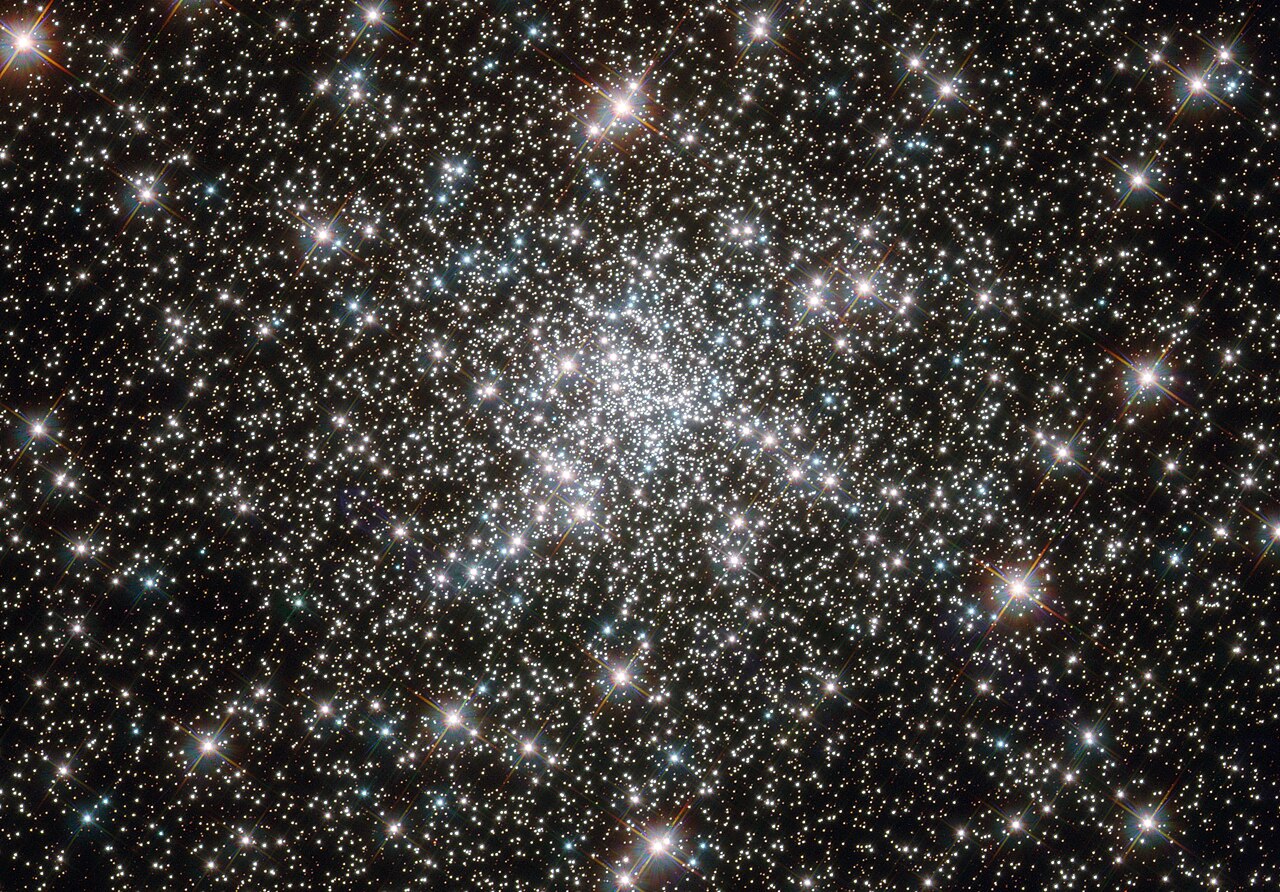
Blue stragglers are found in ancient star clusters. They stand out because they appear hotter, more massive, and younger than stars that should have formed billions of years ago. Even their very existence contradicts standard theories of stellar aging, sparking decades of debate about whether they arise from violent collisions between stars or more subtle interactions between pairs of stars.
New research has provided astronomers with some of the clearest evidence to date that blue stragglers owe their youthful appearance not to collisions, but to living in close stellar pairs and an environment that allows them to survive. Hubble data was the key. An international research team analyzed ultraviolet observations of 48 globular clusters in the Milky Way, compiling the largest and most complete catalog of blue stragglers ever created. The sample includes more than 3,000 of these mysterious objects. Their native clusters cover the entire spectrum of possible environmental conditions, from very loose to very dense systems.
This extensive dataset allowed astronomers to investigate long-suspected connections between blue stragglers and their surroundings. Instead of finding more of these objects in the most densely populated, collision-prone clusters, the team was surprised to discover the opposite: there are fewer blue stragglers in dense environments. On the contrary, these stars are most often found in low-density clusters, where stars have more space and where fragile binary systems have a better chance of survival.
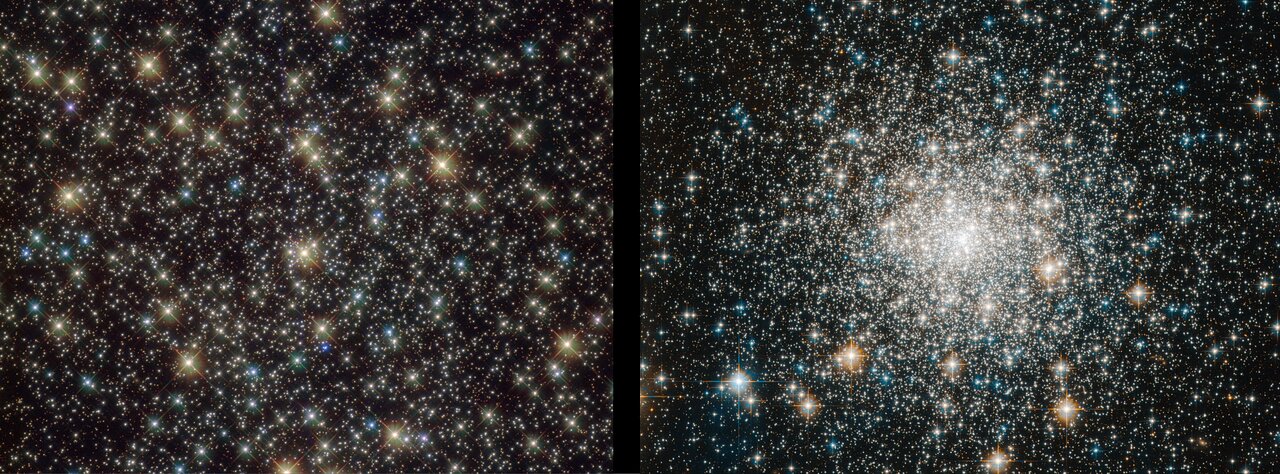
The team discovered that blue stragglers are closely associated with binary star systems, in which two stars orbit each other. In such systems, one star can siphon material from its partner or merge with it completely, receiving fresh fuel and shining brighter and bluer (effectively resetting the stellar clock).
At the same time, Hubble observations show that there are fewer binary stars in denser environments. This suggests that in tightly packed clusters, frequent close encounters between stars may break up binary systems, preventing them from producing blue stragglers. In calmer environments, binary systems survive and blue stragglers thrive.
This discovery is the first time that such clear and unexpected correlations between blue straggler populations and their environment have been found. It confirms that these objects are a direct byproduct of binary star evolution and highlights how much the environment can influence a star’s life story.
According to Esahubble

