

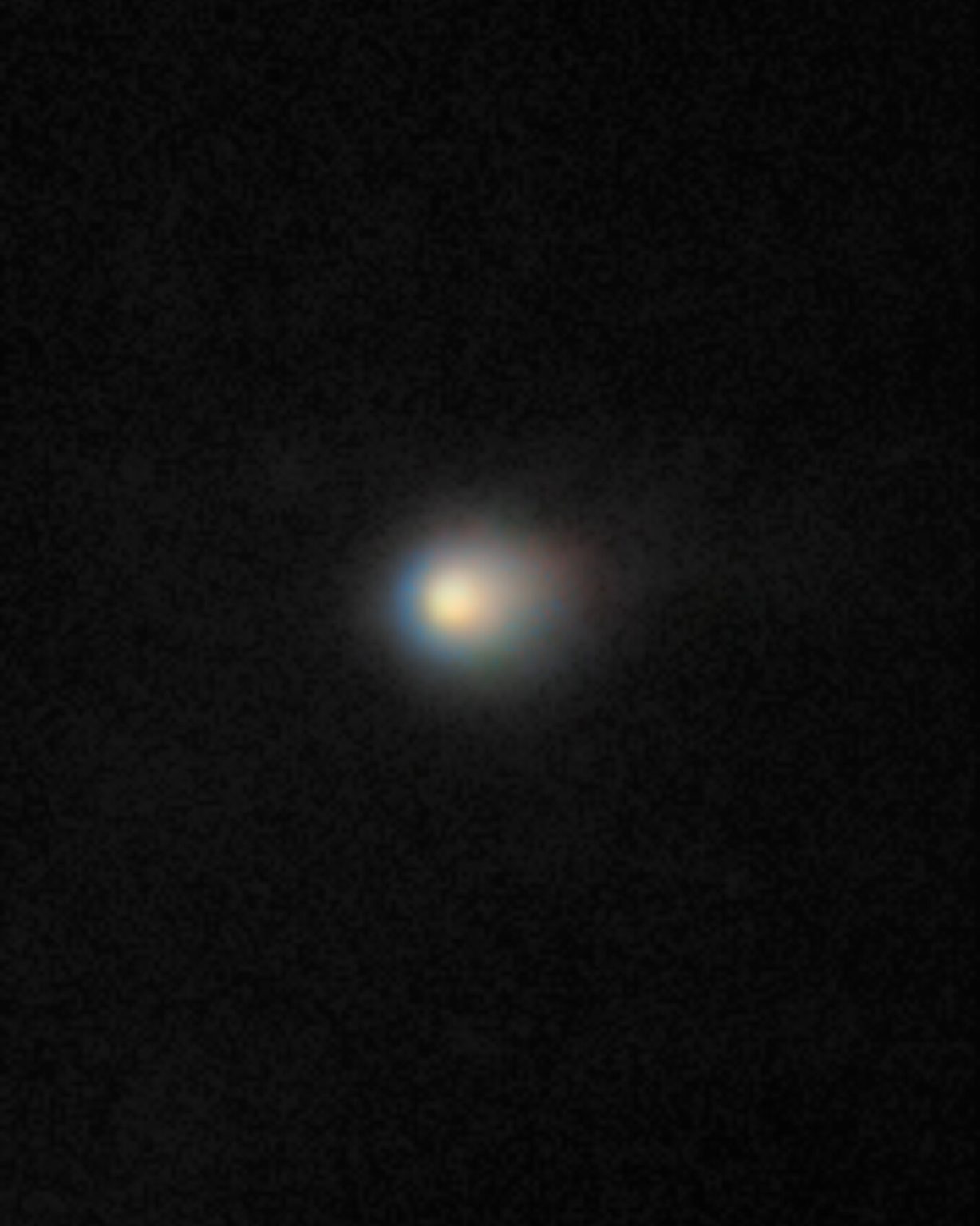
The NOIRLab research center has published an image taken by the Gemini North telescope. It shows 3I/ATLAS, an interstellar comet that is currently approaching the Sun.
According to astronomers, numerous objects of interstellar origin regularly pass through our Solar System. However, they are extremely difficult to detect, as they are only visible when they are close enough and when our telescopes are pointed in the right place at the right time.
Throughout history, astronomers have only managed to find three objects of interstellar origin in the Solar System. The first was the asteroid Oumuamua in 2017, the second was Comet Borisov in 2019, and the third was Comet 3I/ATLAS.
3I/ATLAS was discovered in early July by the telescopes of the automated ATLAS system. As it approaches the Sun, it becomes increasingly brighter, as demonstrated by the published images. They were made using the GMOS-N multi-object spectrograph installed on the 8.1-meter Gemini North telescope. It is located in Hawaii and is one of two parts of the Gemini International Observatory.
The photo shows the cloud of gas and dust surrounding the comet’s nucleus, called the coma. Its analysis is of considerable interest to astronomers. Comets carry the chemical signature of the system in which they formed, giving scientists insight into how planets form around other stars. In the case of 3I/ATLAS, this interest is further intensified by the fact that it may be several billion years older than our Solar System, having formed in an earlier cosmological epoch.
The size of the nucleus of 3I/ATLAS remains unknown to astronomers. However, it is believed to be larger than Oumuamua and Comet Borisov. The comet also has an extremely eccentric orbit. Its eccentricity is 6.2. For comparison, Oumuamua’s eccentricity was about 1.2, and Borisov’s was about 3.6.
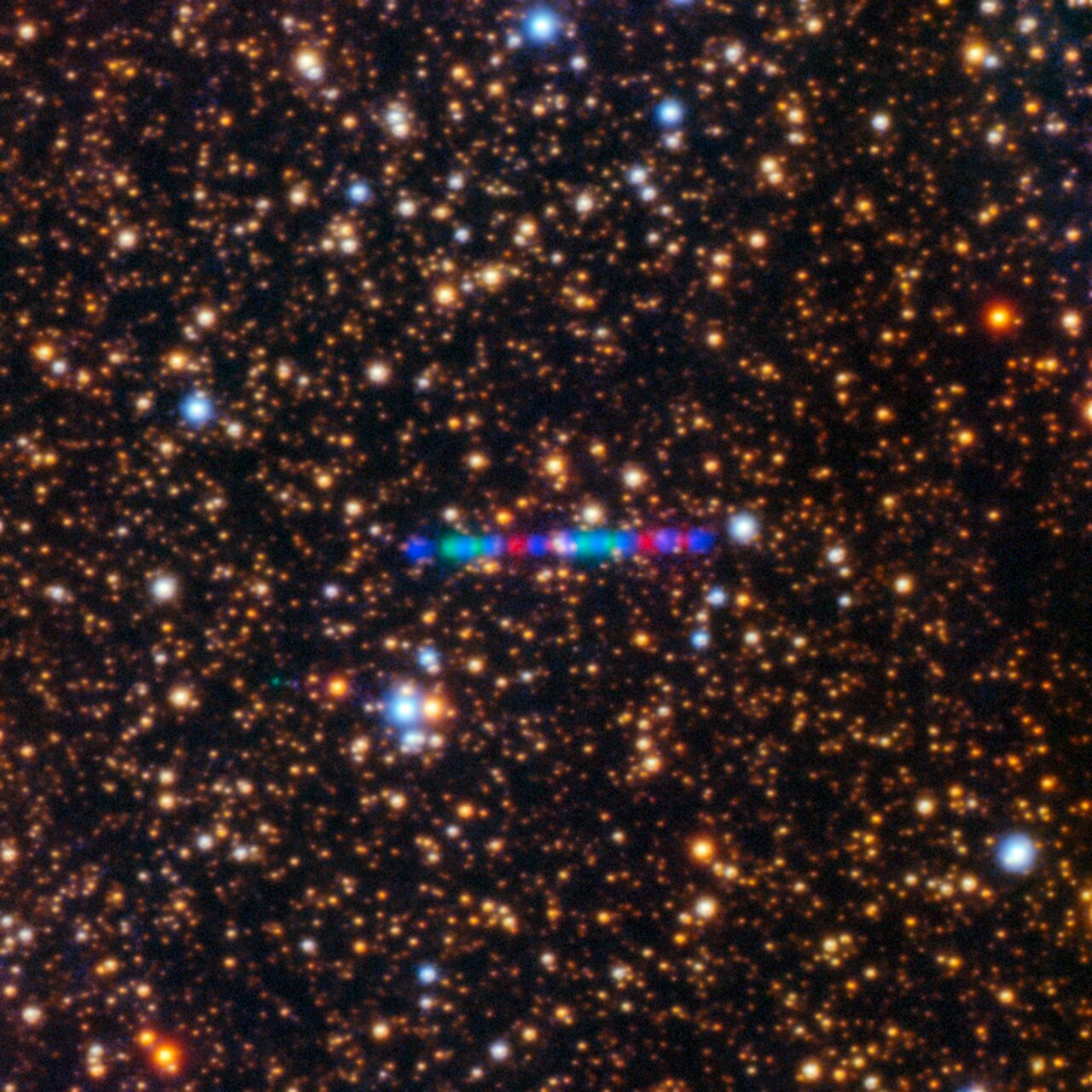
3I/ATLAS will reach the perihelion of its orbit on October 29. On this day, the interstellar comet will be at a distance of 1.357 AU (203 million km) from the Sun. As for Earth, 3I/ATLAS will come closest to our planet on December 19, at a distance of approximately 270 million km. After that, 3I/ATLAS will once again head into interstellar space in the direction of the constellations Gemini and Orion.
Although 3I/ATLAS is only the third interstellar object ever discovered, astronomers hope that this number will soon change. The main expectations are linked to the recently launched Vera Rubin Observatory, which will soon begin its ten-year Legacy Survey of Space and Time. By repeatedly scanning the entire southern hemisphere sky every few nights, the observatory will record millions of objects moving through our Solar System, including an unpredictable number of interstellar objects that have never been observed before.
According to NOIRLab

