

By combining the power of ground-based and space telescopes, astronomers have discovered a previously unknown brown dwarf. Fluctuations in its brightness suggest that clouds and storms are forming in its atmosphere.
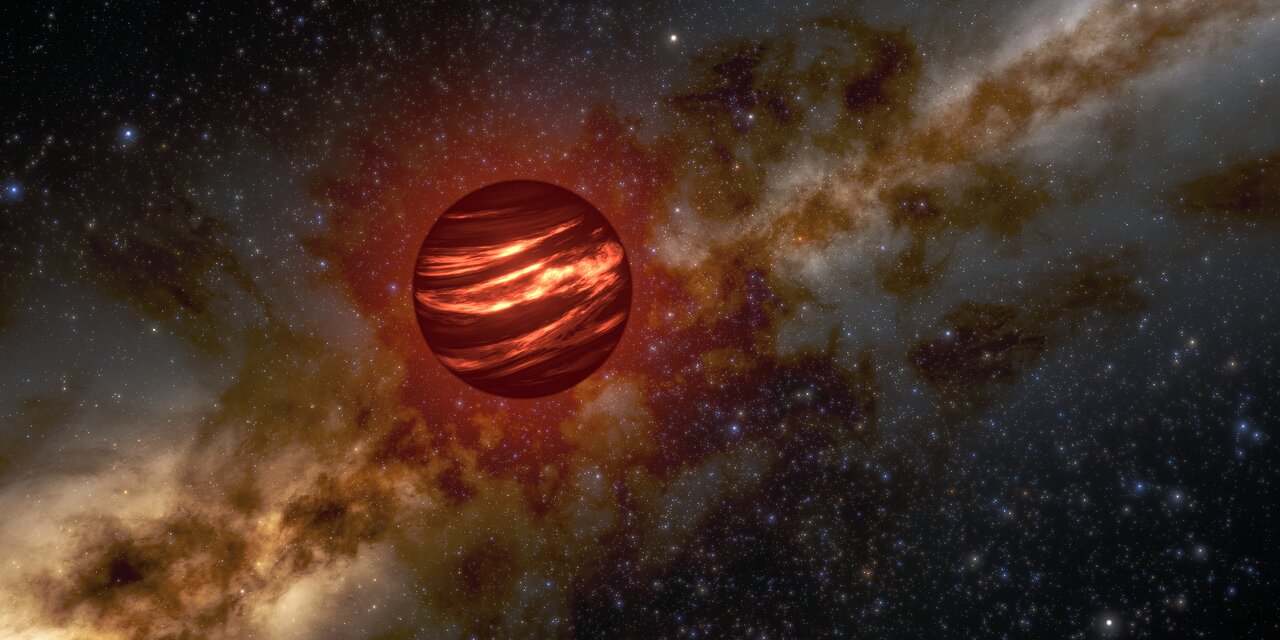
About three-quarters of the stars in our Milky Way galaxy are small, cool stars known as red dwarfs. Since they are dim by nature and emit little light, it is difficult for astronomers to determine how many of them have companions in the form of planets or brown dwarfs.
The latter objects occupy an intermediate position between planets and stars. Some thermonuclear reactions may occur inside brown dwarfs, but their mass is insufficient to trigger full-scale thermonuclear reactions involving hydrogen, as in the core of our Sun. Understanding how common brown dwarfs are and how much they weigh is important for studying the formation and evolution of stars and planets.
An international research team led by the Center for Astrobiology at California State University, Northridge, and Johns Hopkins University has announced the discovery of a new brown dwarf that is a companion to the red dwarf J1446, located approximately 55 light-years from Earth. The discovery was made using three complementary methods: precise measurements of radial velocity using the Subaru telescope, direct imaging using the Keck Observatory, and astrometric measurements of the host star’s motion using the Gaia spacecraft.
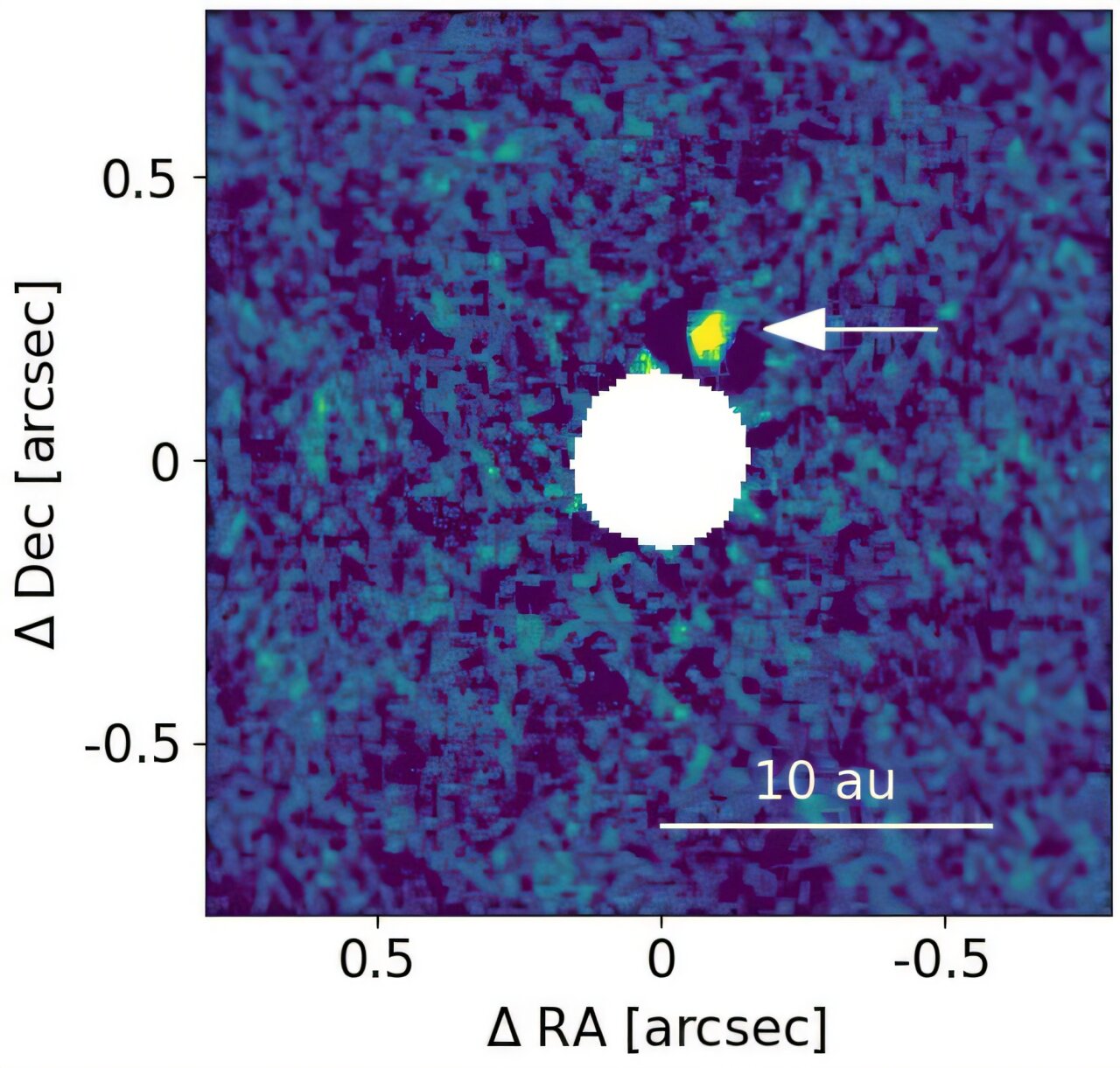
The mass of satellite J1446B is approximately 60 times that of Jupiter. It orbits its star at a distance 4.3 times greater than that between Earth and the Sun, completing one orbit in approximately 20 years. In addition, observations in the near-infrared range revealed brightness fluctuations of about 30%, indicating possible cloud activity or atmospheric circulation on the brown dwarf.
This discovery is an important benchmark for testing scenarios for the formation of brown dwarfs and models of their atmospheres. Future observations may even allow researchers to map the weather conditions of this intriguing object. This will not only help them understand how the atmosphere of brown dwarfs is formed, but also provide information that can be used in the future in the search for planets with life beyond the Solar System.
Earlier, we reported on how a molecule found on a brown dwarf cast doubt on the possibility of life on Venus.
According to Phys.org

