

The unmanned spacecraft Shenzhou-22 successfully docked with the Chinese space station Tiangong. This allowed its crew to return safely to Earth.
The crisis in orbit arose on November 4, when the crew of the Shenzhou-20 mission was preparing to return to Earth after a six-month assignment to the Tiangong space station. However, just a few hours before undocking, they discovered cracks in the spacecraft’s window, presumably caused by a collision with space debris.
After assessing the situation, the China Manned Space Agency (CMSA) concluded that the crack in the outer layer of the heat-resistant glass of the window could cause it to shatter. As a result, the inner layers would be exposed to high-temperature plasma during atmospheric entry, which could lead to a loss of window integrity and depressurization of the spacecraft.
Therefore, it was decided to return the Shenzhou-20 crew on the Shenzhou-21 replacement expedition spacecraft, which had arrived at the station a few days earlier. They safely returned to Earth on the Shenzhou-21 spacecraft on November 14. However, this created a problem: those remaining on board the Tiangong station did not have a spacecraft on which they could safely return to Earth.
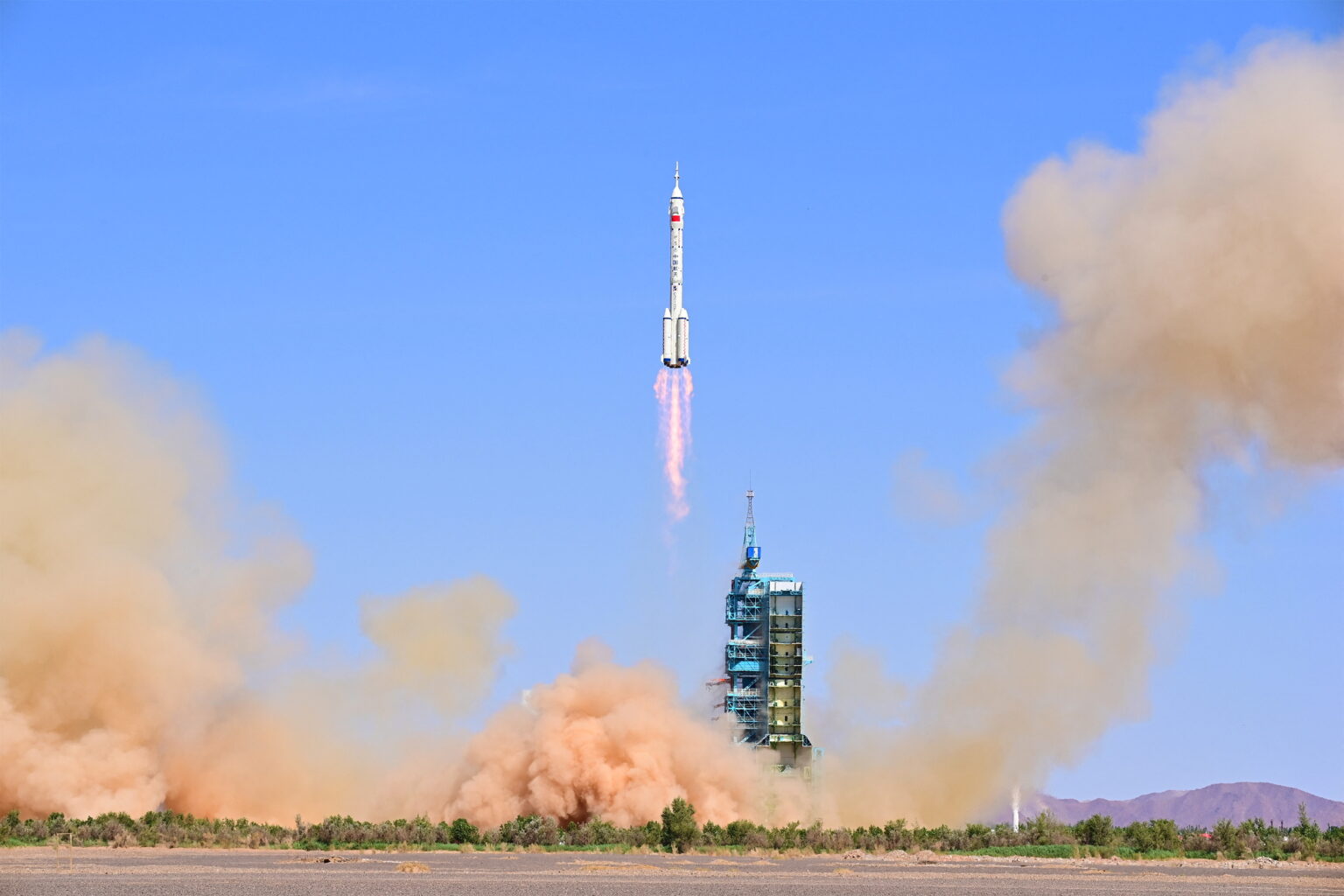
Fortunately, Chinese specialists were able to prepare the Shenzhou-21 spacecraft in an extremely short time frame. It was originally planned to be launched into space in April-May 2026. On November 25, it was launched in unmanned mode from the Jiuquan spaceport and later successfully docked with the Tiangong station. Thus, the crisis was successfully overcome.
As for the damaged Shenzhou-20 spacecraft, it remains docked to the Tiangong space station for the time being. According to an official statement, it will be operated as an experimental platform for some time.

