

Exoplanets in habitable zones around red dwarfs are unlikely to have large exomoons. This is the conclusion reached by a team of American scientists. The results of their research were published on the arXiv preprint website.
The most common stars in the Universe
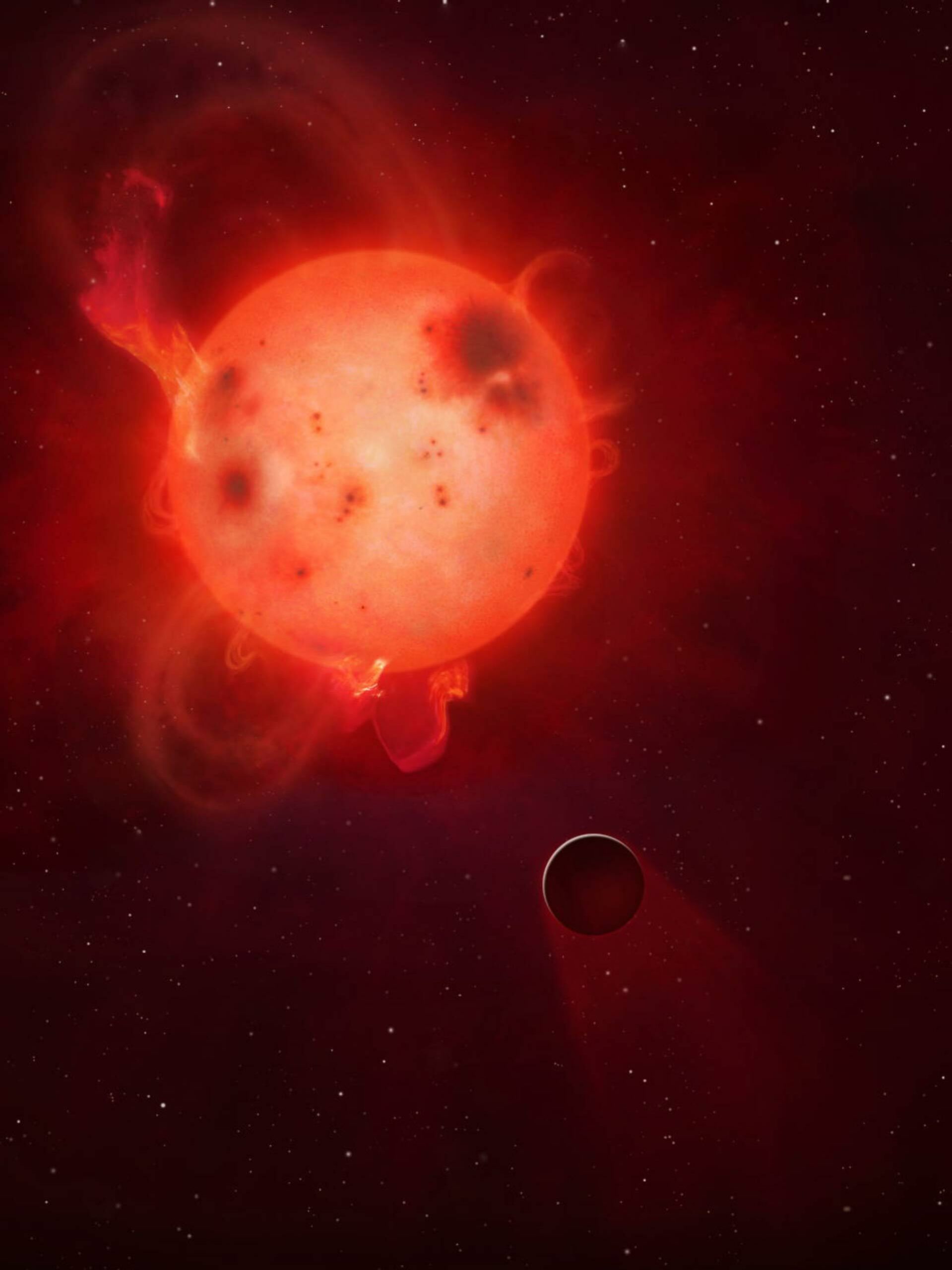
Red dwarfs are the most common stars in the Universe. They make up about 75% of the Milky Way’s population. Astronomers are actively debating whether such stars could be home to life. Due to their dimness, the habitable zone in their systems is located at a very small distance, and the exoplanets located in it are most likely in tidal capture. In addition, red dwarfs are known for their highly volatile nature. They produce very powerful flares, which are believed to be capable of completely stripping away an exoplanet’s atmosphere over time.
However, there is another factor that scientists have long ignored: exomoons. Our planet has a very large moon, whose presence is an important factor in keeping it habitable. The Moon stabilizes the Earth’s axial tilt, which helps create a climate and seasonal changes that are more favorable for life. It also causes tides in the oceans, which may have played a key role in life moving onto land.
A dangerous place for exomoons
But what about exoplanets in the habitable zones of red dwarfs? Could they have large exomoons?
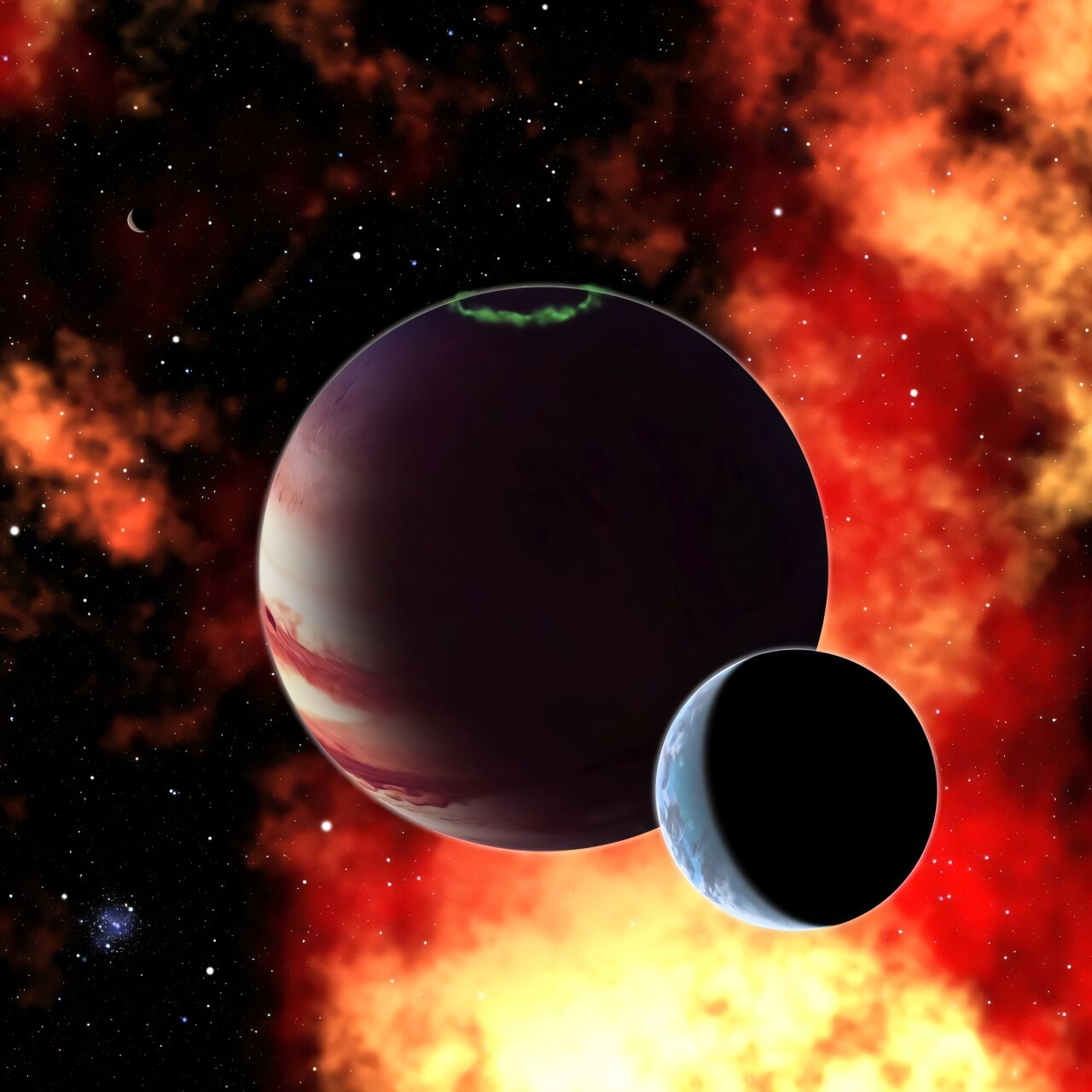
To find the answer to this question, scientists resorted to computer modeling. The results were not very encouraging. Scientists concluded that due to gravitational interaction with red dwarfs, Earth-like exoplanets very quickly lose large moons. Their typical lifespan is less than 10 million years. At the same time, due to extreme tidal heating, such objects have no chance of developing conditions for life to arise on their surface.
However, despite the general instability of such systems, there are some cases where a large moon can exist for a long time. This is possible in the systems of the most massive and hot red dwarfs, where the habitable zone is further away from the star and exoplanets are subject to less tidal forces. In this case, if the host planet has a mass equal to twice that of Earth, a large exomoon could survive for a maximum of 1.35 billion years. For comparison, this corresponds to the period when oxygen was just beginning to accumulate in Earth’s atmosphere.
The authors of the study also note that in extremely rare cases, an exomoon could exist for longer than 5 billion years. They also note that much smaller moons, such as Ceres or Phobos, could exist for a long time, but such bodies are beyond our current detection capabilities.
According to Phys.org

