

On the night of March 28-29, Ukraine will switch from standard time to daylight saving time. The hands of mechanical clocks will need to be set forward one hour. Modern electronic devices should adjust automatically.

Daylight saving time
On the night between the last Saturday and the last Sunday of March, Ukraine undergoes what is traditionally known as the clock change. Over time, this term has become increasingly arbitrary, since most of us check the time on electronic devices, which adjust automatically.
Nevertheless, to understand what is supposed to happen on the night of March 29, we need to break down the situation as if we were setting a mechanical clock. So, if you have one, on the morning of March 29, you will need to set the hands forward by one hour. It is as if 4:00 a.m. came immediately after 2:59 a.m.
For many people, this simple procedure triggers extremely negative emotions, and the movement to abolish this change has long since gained widespread support. This is not surprising, since the body has to readjust to a new rhythm every time, and for many people, this is extremely difficult. Yet, not only in Ukraine but also in most developed countries around the world, the switch to daylight saving time still takes place. So what is the reason behind this?
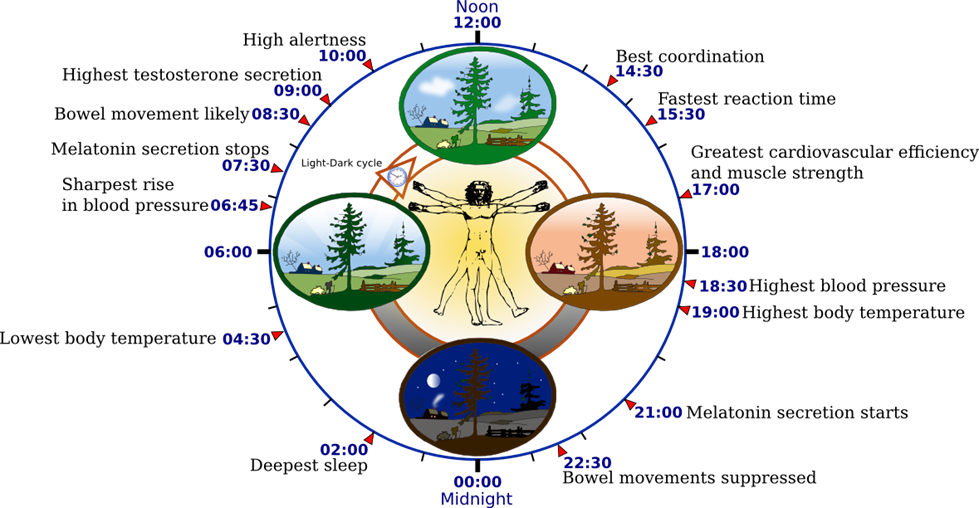
Internal and external clocks
To begin with, there is simply no clock with hands and numbers that works consistently regardless of the season outside the bounds of human civilization. There are only light and dark parts of the day, the duration of which changes as the Earth orbits the Sun, and varies from place to place.
There is also the human biological clock. This article explains how it works. In short, it determines the length of the day and the periods of sleep and wakefulness within it in a very general way, constantly adjusting itself slightly to the length of daylight hours.
And everything was fine as long as people lived in villages and rose with the roosters. However, the complexities of city life require a more precise and accurate measurement of time, so humanity invented the clock. And several centuries ago, with the advent of its mechanical version, it became completely detached from daylight, retaining only the principle that 12 o’clock noon is when the Sun is directly overhead (at its zenith).

However, this immediately led to some problems, because the exact moment when the sun is directly overhead depends on your longitude.
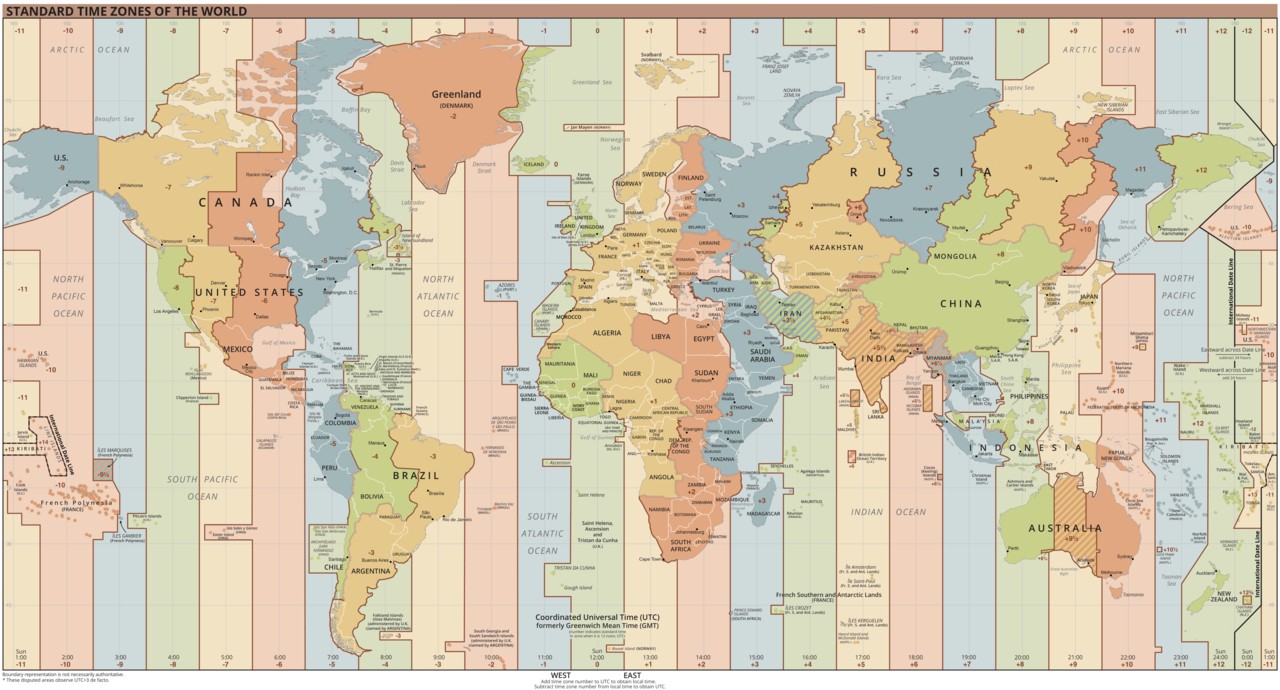
Time zones
However, a practical – albeit compromise – solution was found for this problem: the Earth was divided into 24 time zones, each 15 degrees wide, and it was decided that noon throughout each zone occurs when the Sun is directly overhead the meridian passing through its center.
However, problems with this concept arose immediately. The Earth’s surface features mountains, rivers, and, most importantly, national borders. Furthermore, it is advantageous for time zones to be arranged so that the time in a given region is always the same as in the capital or a regional center. It may seem a bit confusing, but overall, the system works.
Daylight Saving Time
To be more precise, the system would work well if it were not for the variations in daylight hours throughout the year. Most industrialized countries, where standard time originated, are located in the temperate latitudes of the Northern Hemisphere. And there, the Earth’s rotation and the tilt of its axis significantly affect the length of daylight hours.
All of this took place at a time when lighting was expensive and often simply unavailable. Therefore, work schedules were designed so that even on the shortest winter days, they coincided with daylight hours.
However, it was quite difficult to adjust them throughout the year. As a result, a situation arose where, in the summer, people had a couple of hours before work that they did not know what to do with, but in the evening, there still was not enough daylight for outdoor activities.
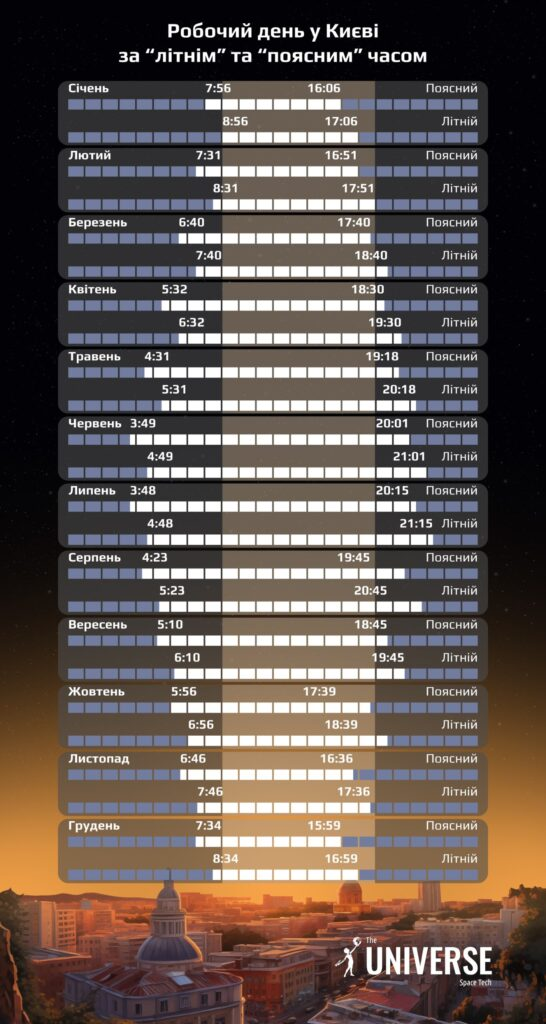
And it was precisely to address this issue that the concept of daylight saving time was devised. Instead of switching from one schedule to another, clocks are set forward one hour in March and set back one hour in October. In fact, there is no such thing as standard time; there is only standard time and its modified form – daylight saving time.
Should we continue switching to standard time?
When daylight saving time was first introduced, it was definitely a good idea. That is because daily life was entirely tied to daylight. Activities under artificial lighting were extremely limited.
But since then, electric lighting has become much more accessible, and more and more people are working from home on flexible schedules. The concept of “working hours” is becoming blurred, and the need to preserve daylight hours is diminishing. It turns out that not having an extra hour at a convenient time causes less stress than having to adjust one’s biological clock.
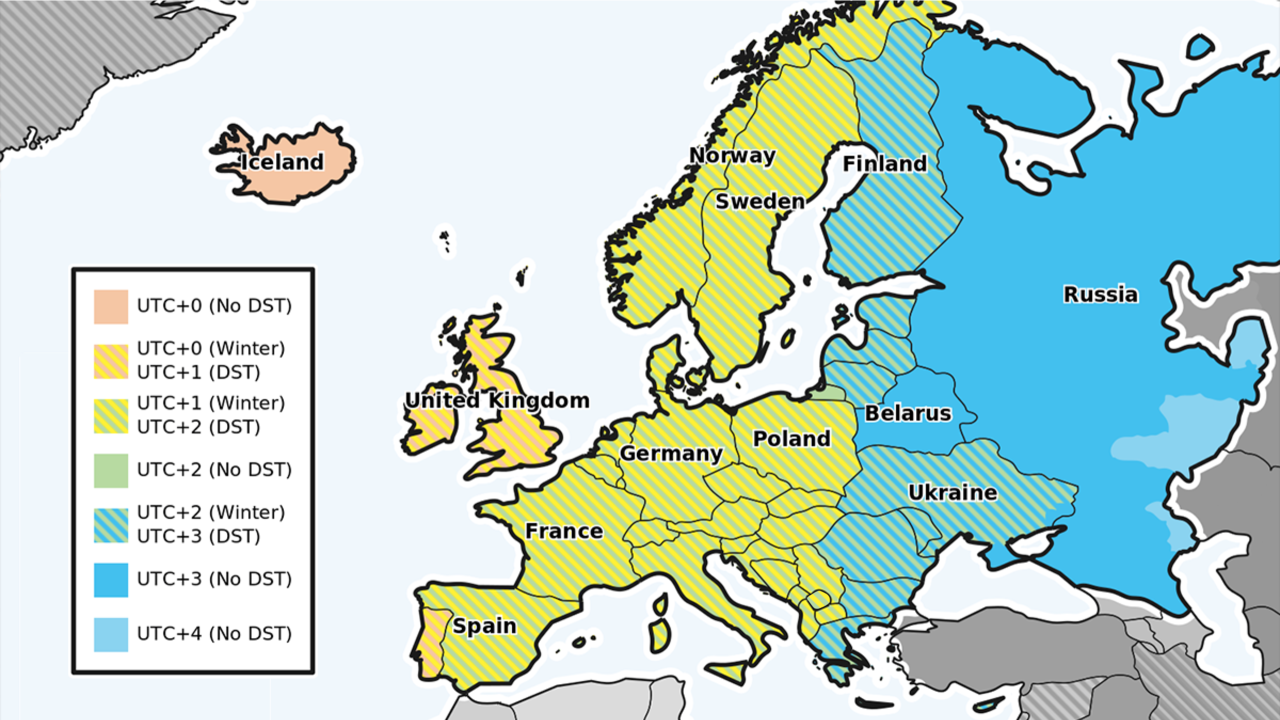
That is precisely why the idea of abandoning daylight saving time truly deserves consideration. To be sure, russian attacks on Ukraine’s energy infrastructure this winter have had a significant impact on the situation. Ukrainians have come to appreciate daylight more.
In any case, it is important to remember that the switch to daylight saving time is also an international practice. This is because the whole world tries to coordinate its actions. It is essential for the functioning of financial and transportation systems.
The situation is such that EU countries have not yet abandoned this transition, even though they decided many years ago that they had the right to do so. The same goes for the United States. russia, Belarus, and Kazakhstan, on the other hand, stopped making this transition long ago. So, in a way, this decision answers the question of whose side we are on.

