

Five days after the maiden flight of the most powerful rocket in SpaceX’s history, the company was barred from conducting further launches. The U.S. Federal Aviation Administration classified the issue with the first stage as an incident and is requiring an investigation before the next launch.
What went wrong?
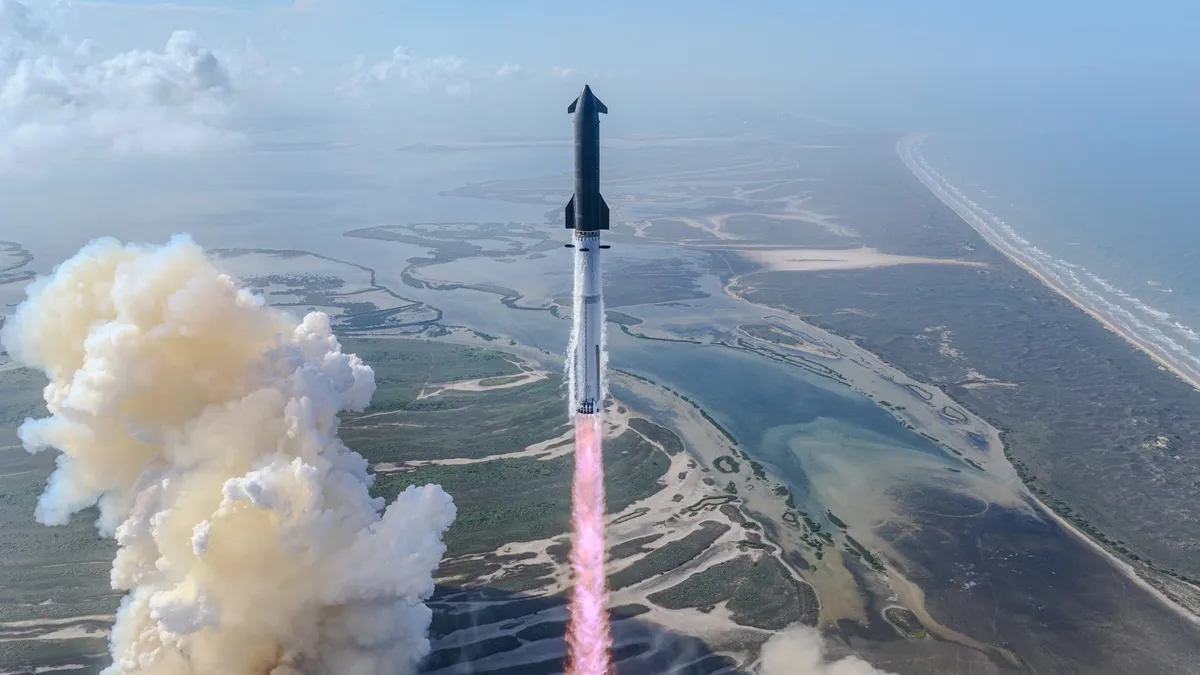
The launch on May 22 was generally successful. The upper stage placed 20 Starlink satellite mockups and two actual satellites equipped with cameras for imaging the heat shield into orbit, then returned safely and splashed down off the coast of Australia.
The problem arose with the first stage, Super Heavy. It was supposed to perform a series of engine braking maneuvers and make a soft splashdown in the Gulf of Mexico. Instead, the first stage was unable to perform these maneuvers and crashed into the water with a hard impact.
What’s happening now?
The U.S. Federal Aviation Administration (FAA) has required SpaceX to conduct its own investigation under the agency’s supervision. The regulator will participate in every stage of the investigation and must approve the final report along with a list of corrective actions.
The exact timeline for the investigation is unknown, but delays rarely last long for SpaceX. For example, the flight ban on the Falcon 9 rocket in February of this year lasted only four days.
Rates for the lunar program
The new 124-meter-tall Starship V3 is the first configuration of the system capable of deep-space flight. NASA plans to use it to land astronauts on the Moon as part of the Artemis 4 mission in 2028, although a landing module has not yet been selected. Blue Origin’s Blue Moon is also competing for the contract.
SpaceX expects Starship to make interplanetary flights economically viable thanks to the full reusability of both stages. After all, every test launch is intended precisely to identify problems and resolve them. This is a step toward much more ambitious goals.
According to space.com

