

SpaceX’s Starship spacecraft is not just a super-heavy rocket, but a means of transportation that was designed from the outset to deliver passengers to other planets. And the first stop on this journey is the Moon, for which a special modification was to be developed. So, what is the current status of this project?
Starship and interplanetary flights
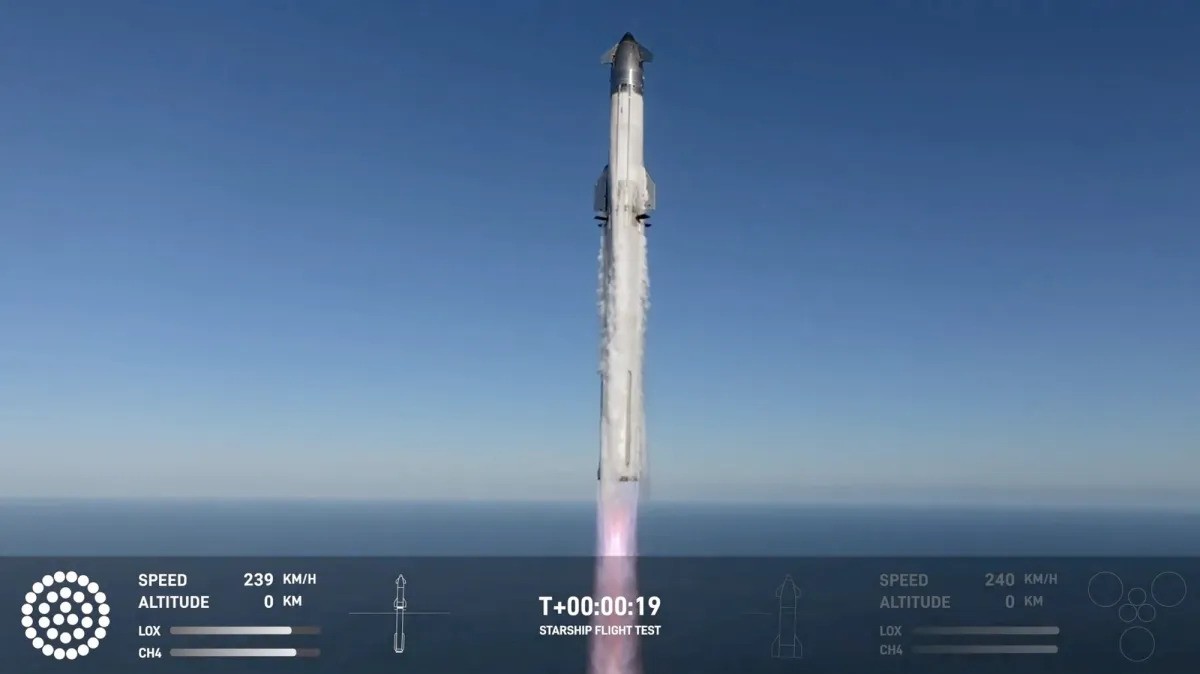
On August 24, SpaceX launched its tenth heavy-lift rocket, Starship. Everyone was delighted that this time the space system did not explode at launch, as it had done on previous occasions. And somehow, everyone forgot that reaching orbit and descending to Earth in a controlled manner in a specified area is far from the only reason why it was created.
The Starship concept was officially unveiled in November 2019. However, in reality, it was simply a renaming of a project that had existed long before that. Back in 2005, Elon Musk spoke about a super-heavy system, whose main task in the future would be to colonize the Moon and Mars. At that time, it was called BFR, and there were no specifics about its design or when it would begin operation.
This concept was revisited in 2012. At that time, it was called Mars Colonial Transporter (MCT) and was planned to deliver 150–200 tons of cargo to low Earth orbit and 100 tons or 100 people to Mars. No specific plans were announced, but even then, it was known that the concept would be based on the use of multiple Raptor engines, which are now the basis of Starship.
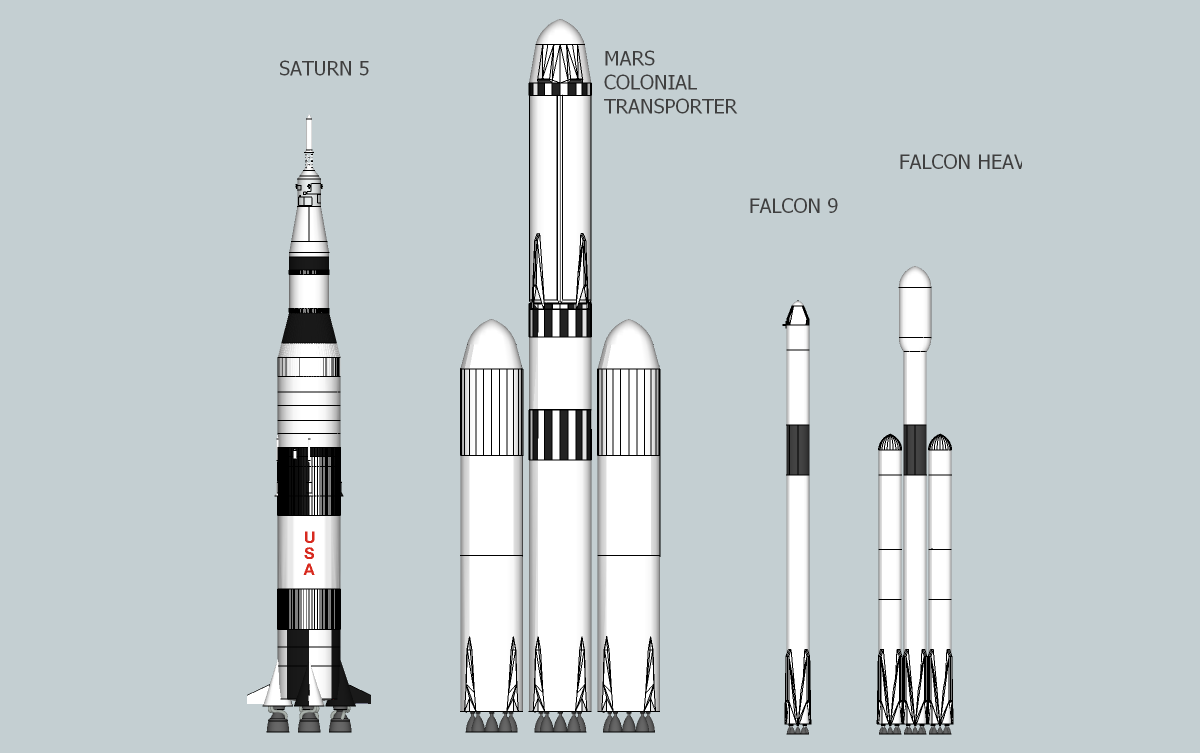
In 2016, the project was renamed Interplanetary Transport System (ITS). Even then, it was a two-stage system with a super-heavy lower part and an interplanetary spacecraft resembling a rocket or a refueling tanker as the second stage. However, the diameter of the rocket was supposed to be as much as 12 m, compared to the current 9 m.
In September 2017, the project took on its current form, with its main goal once again being to send people to Mars and the Moon. It was then renamed BFR, which stands for Big Falcon Rocket.
Lunar module
So when Elon Musk announced in 2018 that Starship would take dozens of people to Mars, it was a project that was already well known to anyone interested in space. And the main question for SpaceX was not what they planned to do, but what they could actually do.
Because even though in 2020 Musk solemnly promised that by 2050, thanks to his ships, a million people would be living on Mars, as real tests took place, the actual task for the coming years was formulated more as “building a super-heavy rocket to launch cargoes weighing more than 150 tons into orbit”.
The only problem was that even the much smaller Falcon Heavy, whose maiden flight was also accompanied by great fanfare, was launched into space less often than it could be. There are simply not enough cargoes to justify its operation.
So, in the end, Starship itself could prove that it was more than just a way to satisfy Musk’s megalomania only if it could take people somewhere and bring them back safely. Fortunately, in 2020, NASA turned to it with a request to land astronauts on the Moon. This was because the landing module for the Artemis program had not yet been created, and the plans envisaged that astronauts would walk on the Moon during the third mission.
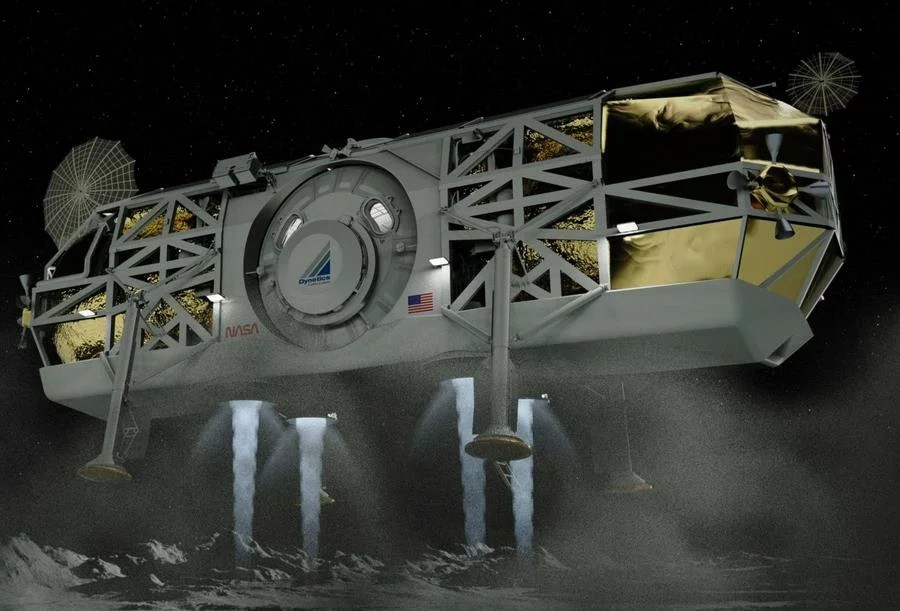
To be more precise, there was a project called Dynetics Autonomous Logistics Platform for All-Moon Cargo Access (ALPACA), also known as Dynetics HLS. It was a more traditional landing module concept, but it was also at the general concept stage. So the contract was awarded to SpaceX.
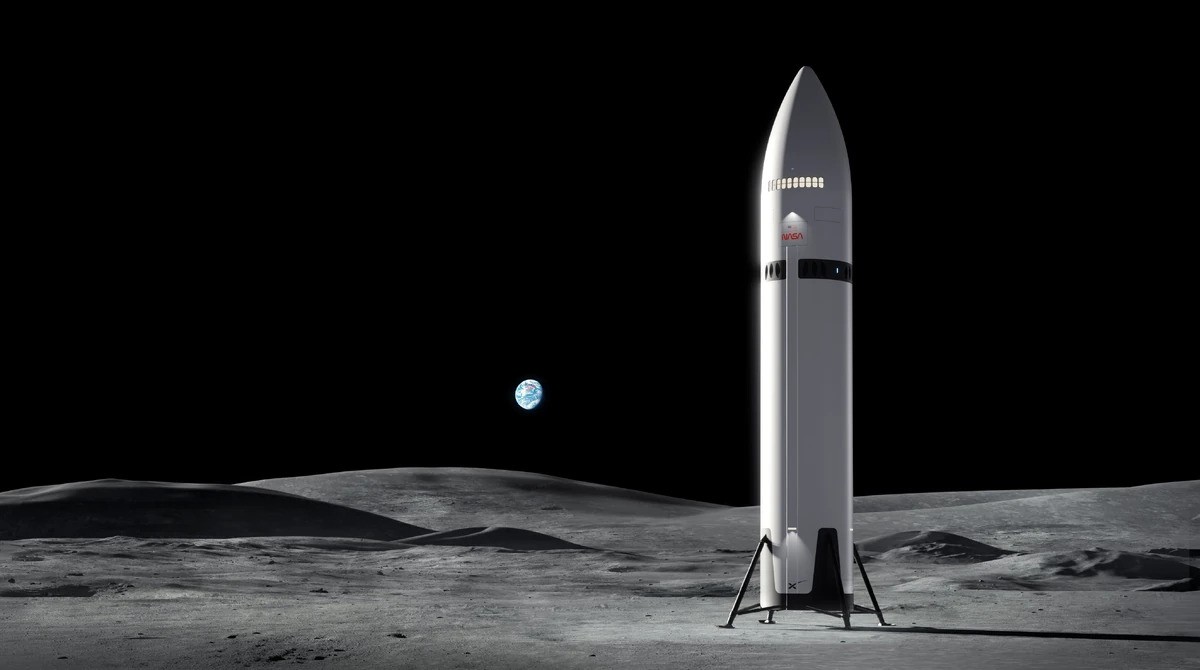
Musk announced that this task will be handled by a specially designed version of his spacecraft, which will be called Starship HLS (Human Landing System). It will be available in two versions: cargo and manned.
Both will be similar in size to conventional Starships, but will be equipped with soft landing systems and everything necessary to keep people and cargo safe. This in itself was not so easy, because we are talking about the safe landing of a short tube with a diameter of 9 m and a length of 52 m on the uneven surface of the moon, and it has to land in a vertical position and then take off from our satellite after completing its mission.
SpaceX has performed this trick many times with significantly smaller Falcon 9 boosters, but that was on Earth, and there were never any people on board.
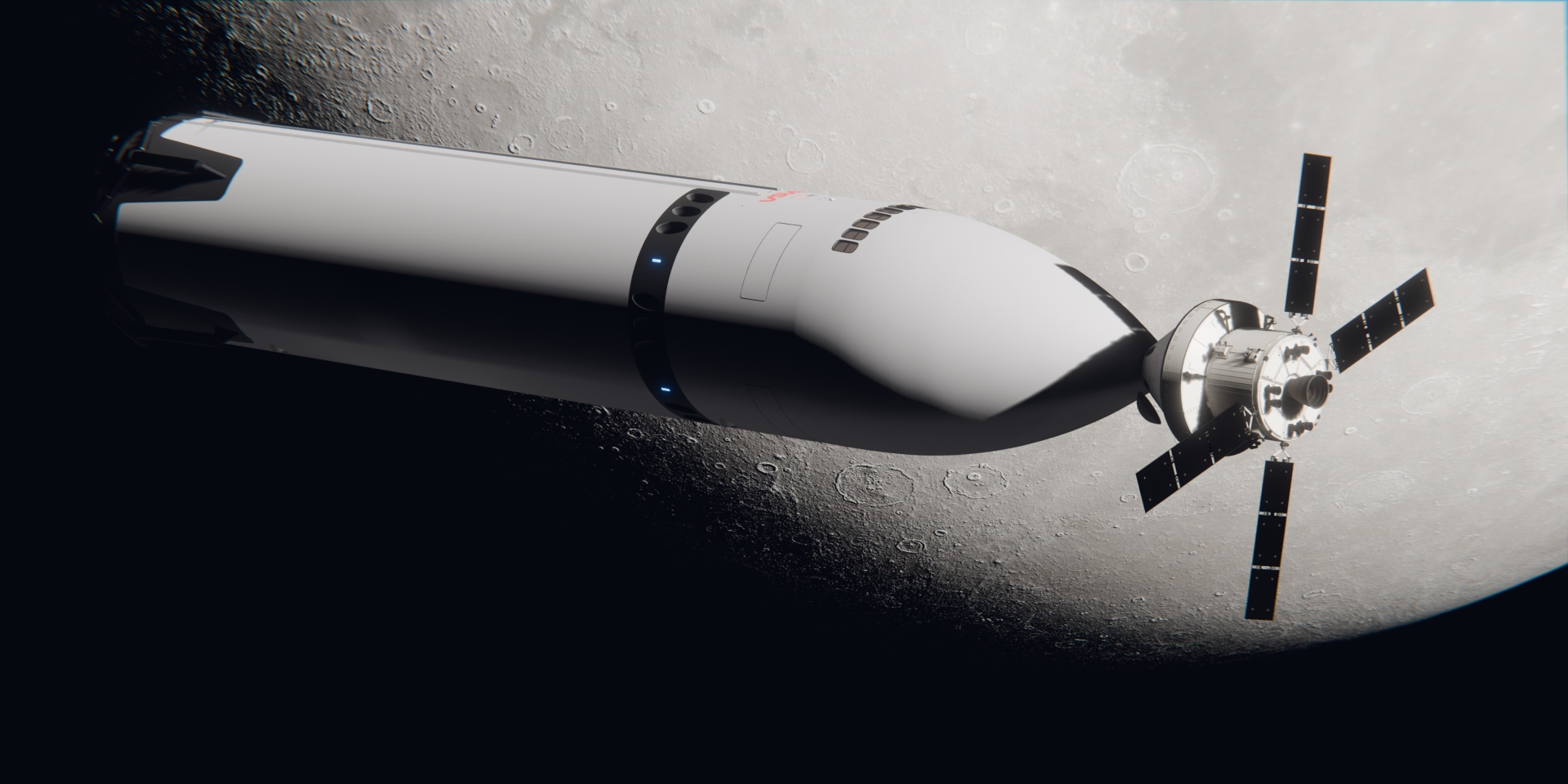
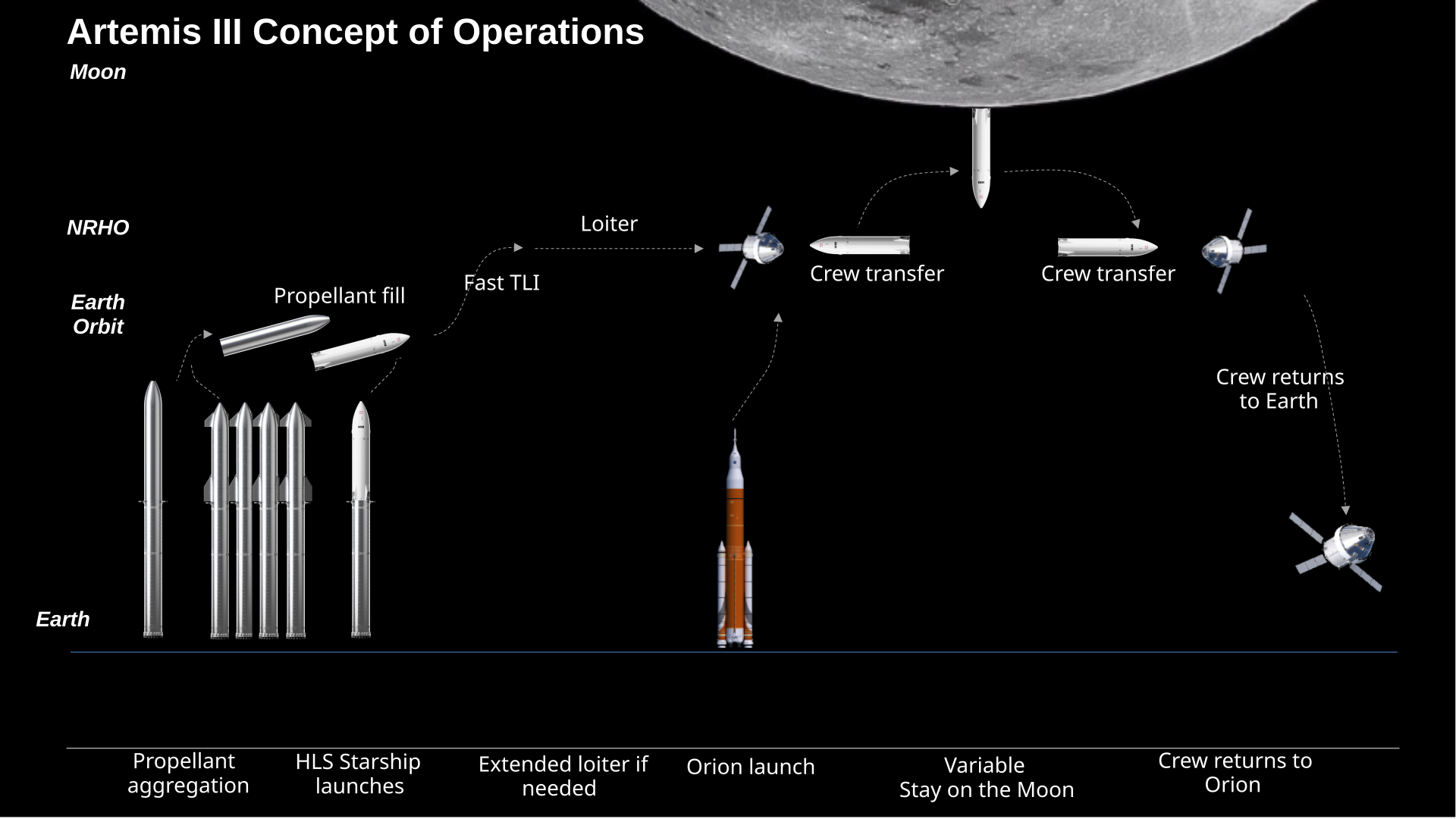
The flight plan is as follows. First, an unmanned Starship tanker will launch from Earth. It will remain in orbit and will be used as a refueling vehicle in the future. Its entire internal volume will be used for additional fuel tanks, but immediately after launch, they will be practically empty.
It will be refueled by several other Starship tankers. Exactly how many ships will be needed for this is unknown, with different numbers being cited each time. Musk himself said about ten.
Then Starship HLS will launch from Earth, but without a crew. It will dock with the refueling vehicle, transfer fuel, undock, fly to the Moon, and enter orbit around it. After that, astronauts will launch from Earth on the Orion spacecraft. They will enter lunar orbit and dock there with the landing module.
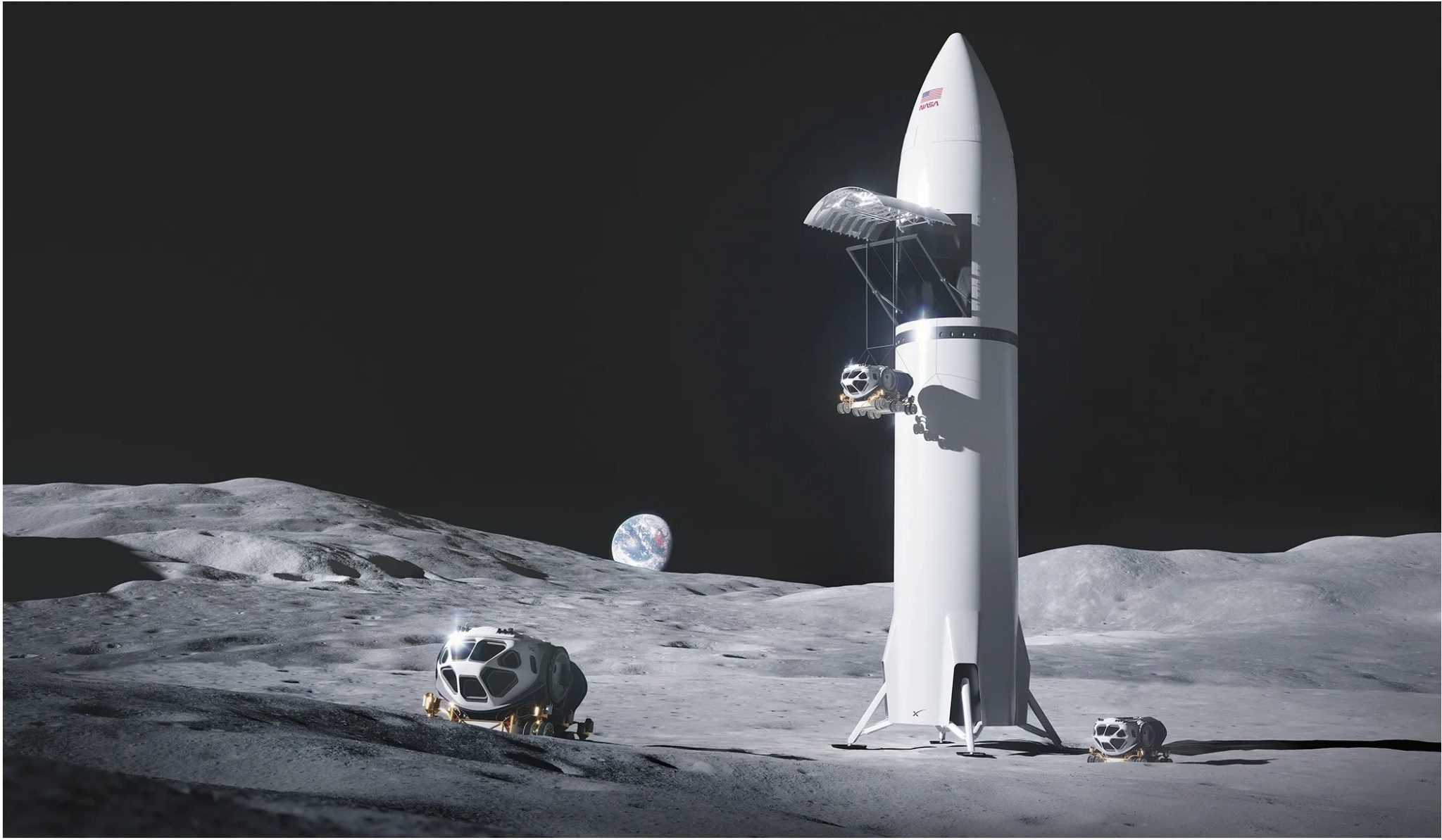
After that, it will descend to the surface, perform work there, and return to the Moon’s orbit. Then it will dock with Orion again and return to Earth. Starship will remain orbiting in space.
The cargo version is pretty much the same story, except that after refueling, Starship will simply land on the Moon, and after unloading, it will take off from it and return to Earth.
All this seems a little complicated, but it allows us to build a base from modules immediately, by sending only one manned spacecraft and several cargo ships to our satellite.
Implementation of plans
Of course, no one was going to test this entire complex scheme, where there are thousands of things that could go wrong. Initially, SpaceX was supposed to conduct a demonstration mission involving refueling and landing after launch from the Moon, but without a crew on board Starship HLS.
According to the 2020 plan, this was supposed to happen in 2025. And in 2026, the Artemis III mission was supposed to land on the Moon aboard Starship HLS. However, delays in the implementation of the lunar program have made adjustments necessary.
So far, only the second mission of the Artemis program, which will fly around the Moon, is scheduled to launch in 2026, and therefore, it does not need a landing craft. But the question of Elon Musk’s readiness to fulfill his promise will arise immediately after it, because so far, of all the steps for the implementation of at least a demonstration mission, only fuel transfer tests in orbit have been completed. Even an empty refueling vehicle has not yet been sent into orbit.
It should be noted that the first test launch took place in April 2023 and the tenth in August 2025. That is, they were separated by two years and four months. This is approximately the same number of ships needed to fill the refueling ship with fuel. Of course, one could argue that this was due to the need to debug the system, and that now the same task can be accomplished more efficiently.
On the other hand, it should be remembered that most of these launches were emergency launches, and no one can guarantee that SpaceX will be able to carry out 10 accident-free launches in a row.

There has also been no announcement yet about the readiness of the Starship for testing in the HLS version. In fact, Musk tries not to mention it at all. On the contrary, he makes statements that instead of the Moon, we should fly to Mars.
And if something goes wrong during the demonstration mission, no one will allow Artemis III to be implemented. On the other hand, the mission may not be ready for reasons completely unrelated to SpaceX. So, the question of who is holding up whom more – Musk or NASA – remains open.
In any case, the flight of astronauts to the Moon aboard Starship HLS is not a matter of a few months. Nor is it a matter of the next two years, even though the launch of Artemis III is currently scheduled for July 2027. Most likely, this date will be postponed, as the flight crew has not yet been officially announced.
The China Problem
How long the Artemis III flight can be postponed is a very interesting question. On the one hand, it will not be possible to bring claims against Elon Musk for failing to fulfill his part of the agreement in the coming years.
He himself is not limited in terms of time and launch attempts. He talked about his rocket flying to Mars 20 years ago. What will prevent it from getting there in just two decades? After all, non-experts are willing to believe him.
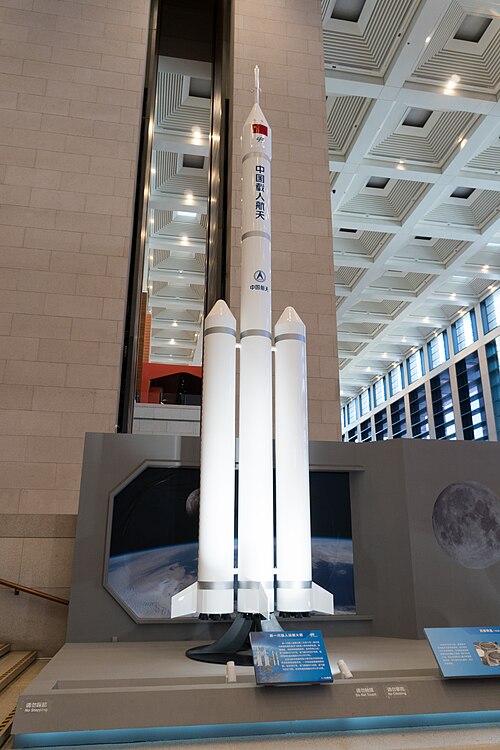
However, there is another factor in this simple scheme – China. The new space race is in full swing. And Chinese engineers are not trying to put a 50-meter pipe on the Moon, but are creating a much more traditional and modest module.
China’s victory in the lunar race will mean a change in the leadership of space exploration in general. And this is something that no one in the US will tolerate. And if, after the second mission, it turns out that the Chinese are ready for landing, and the third Orion and SLS are too, while Starship HLS is not yet ready, it will not be difficult to determine who is to blame.

