

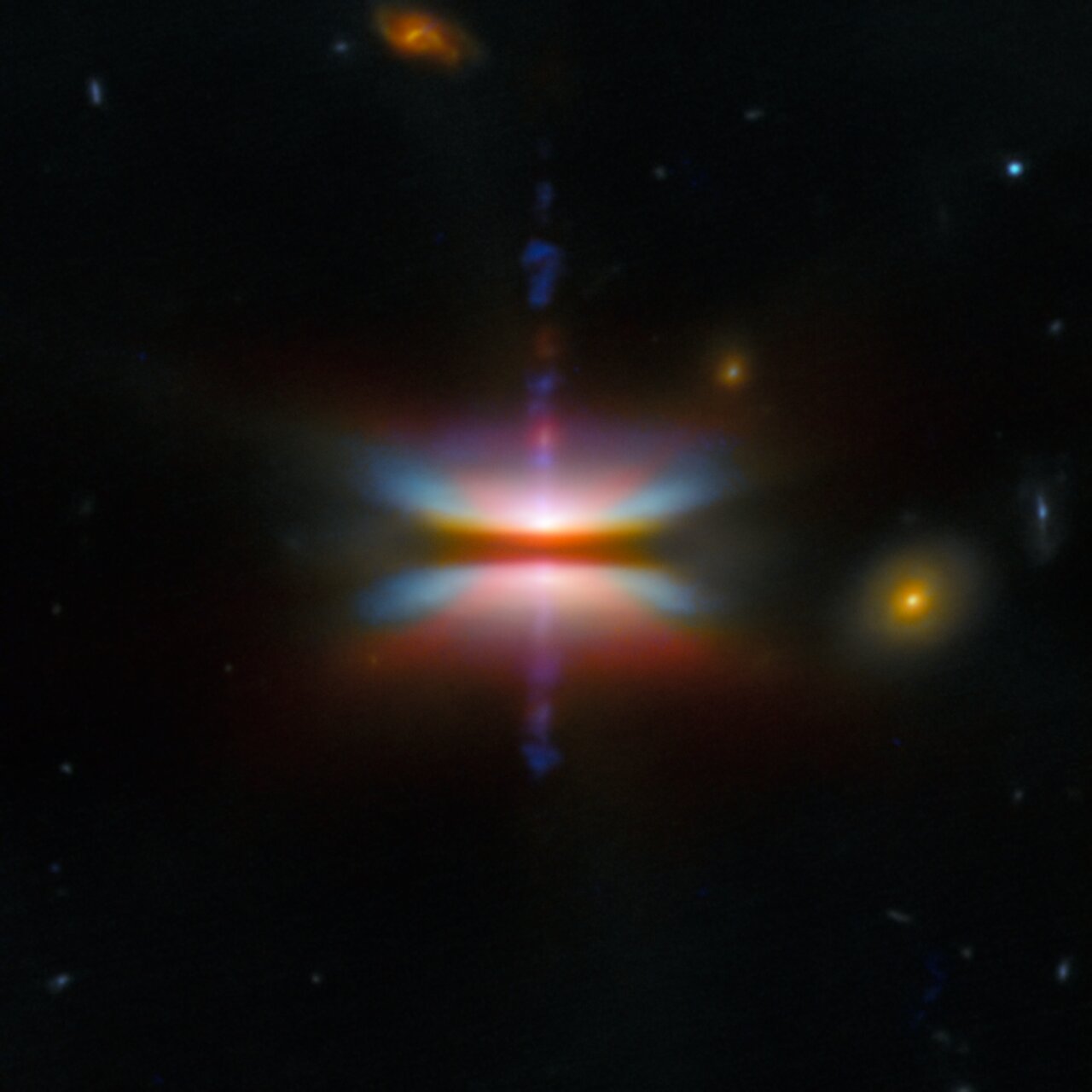
The James Webb Space Telescope has unveiled yet another scientific masterpiece, which has been named Picture of the Month. This time, the lens of the most powerful space observatory captured two extraordinary objects: the protoplanetary disks Tau 042021 and Oph 163131. These structures, resembling bright, rainbow-colored spinning tops floating in boundless darkness, are places where new solar systems are forming right now.
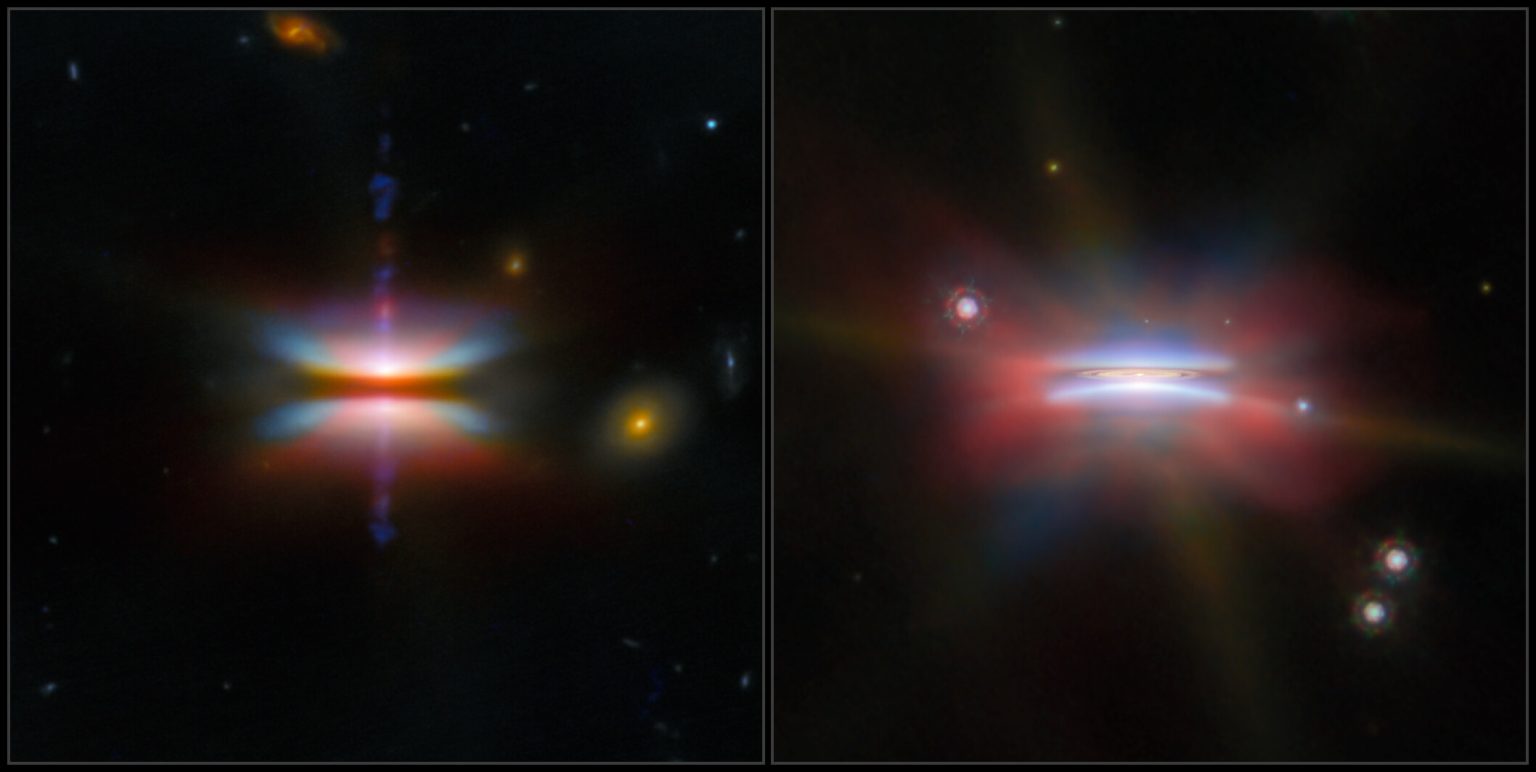
The objects detected by the telescope are located in relative “proximity” to us by cosmic standards. The Tau 042021 disk (also known as 2MASS J04202144+2813491) is located about 450 light-years from Earth in the constellation Taurus. Its “counterpart,” Oph 163131 (2MASS J16313124-2426281), is located a little farther away—480 light-years away in the constellation Ophiuchus.
For astronomers, these objects are invaluable laboratories. By observing them, we are, to some extent, looking back into the distant past of our own Solar System, trying to understand how Earth, Mars, and Jupiter emerged from a chaotic cloud of gas and dust 4.5 billion years ago.
Recipe for creating a planet
The process of planetary system formation begins with the collapse of a giant molecular cloud. Under the influence of its own gravity, a dense cloud of gas contracts, forming a young star at its center. However, not all of the material is absorbed by the star. Some of the gas and dust remains in orbit, forming a dense, flattened disk that orbits the newborn star.
This is where the real magic of cosmic construction begins. Microscopic dust particles within the disk are constantly colliding and clumping together. Gradually, they form larger objects—planetesimals. Some of them grow to the size of full-fledged planets: gas giants or rocky, Earth-like worlds. Those objects that lacked sufficient mass or time remain as asteroids and comets—the “debris” of space exploration.
This stage does not last long. Over the course of several tens of millions of years, the intense radiation from the young star literally blows away the remaining gas that has not yet formed into planets, and the protoplanetary disk disappears, leaving behind a fully formed system.
A unique perspective
So why are these images so special? It’s all about the orientation of the disks relative to Earth. The James Webb Space Telescope captured them at the very moment when they were oriented edge-on to us.
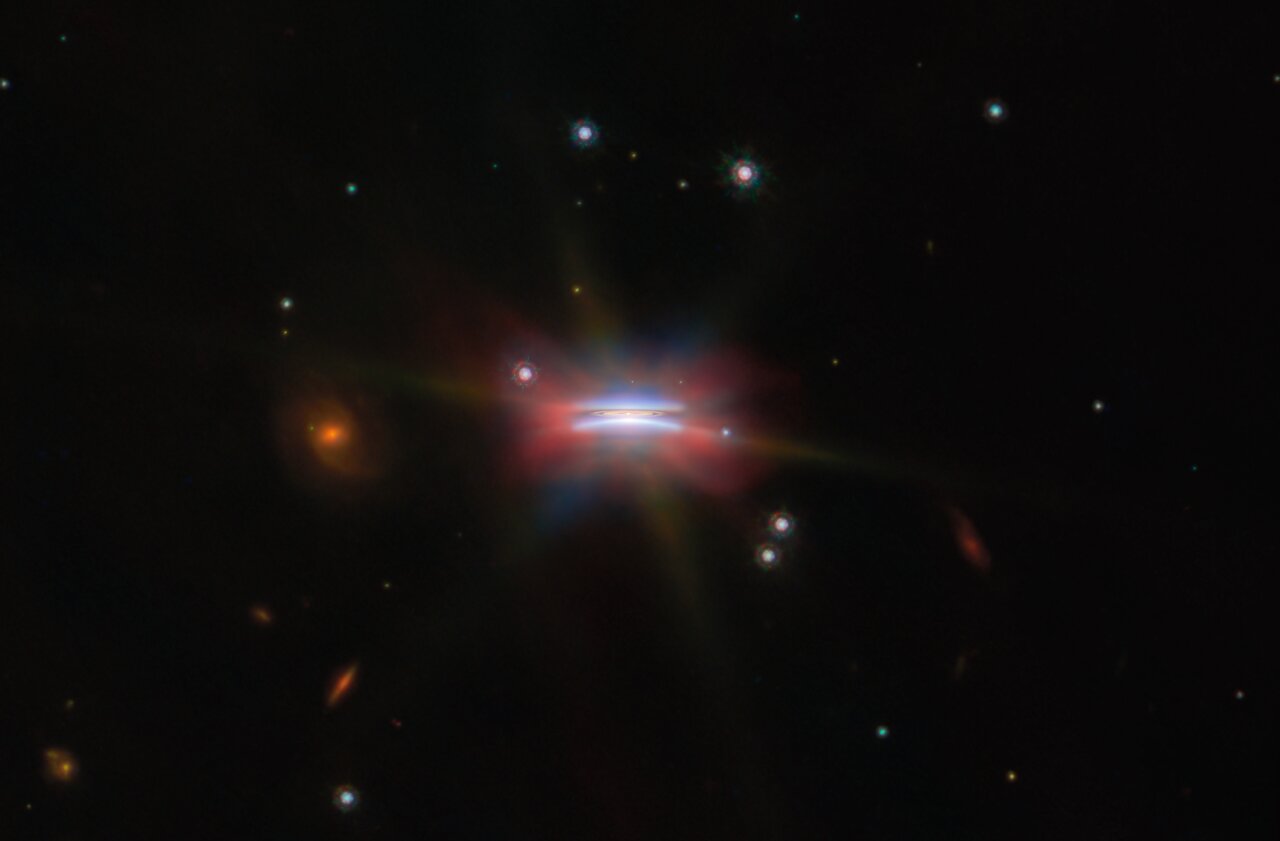
This position acts as a natural filter: the disk itself blocks the blinding light of the central star, which would otherwise simply “wash out” the entire image. Thanks to this, we can see the finest dust rising above and below the plane of the disk, forming a kind of nebula. This light, reflected off dust particles, creates a stunning visual effect that makes these objects look like spinning tops. The distribution of this dust is a key factor in determining exactly where planets will form in the future system and what types they will be.
Synergy of Technologies
A wide range of cutting-edge instruments was used to create these detailed images. The bulk of the work was carried out by the James Webb Space Telescope’s NIRCam and MIRI cameras. Thanks to its ability to see in the infrared spectrum, the telescope “pierces” through thick dust clouds. The colors in the images—red, orange, and green—are not merely for aesthetic appeal, but rather a representation of the chemical composition. They indicate concentrations of hydrogen molecules, carbon monoxide, and complex organic compounds—polycyclic aromatic hydrocarbons.
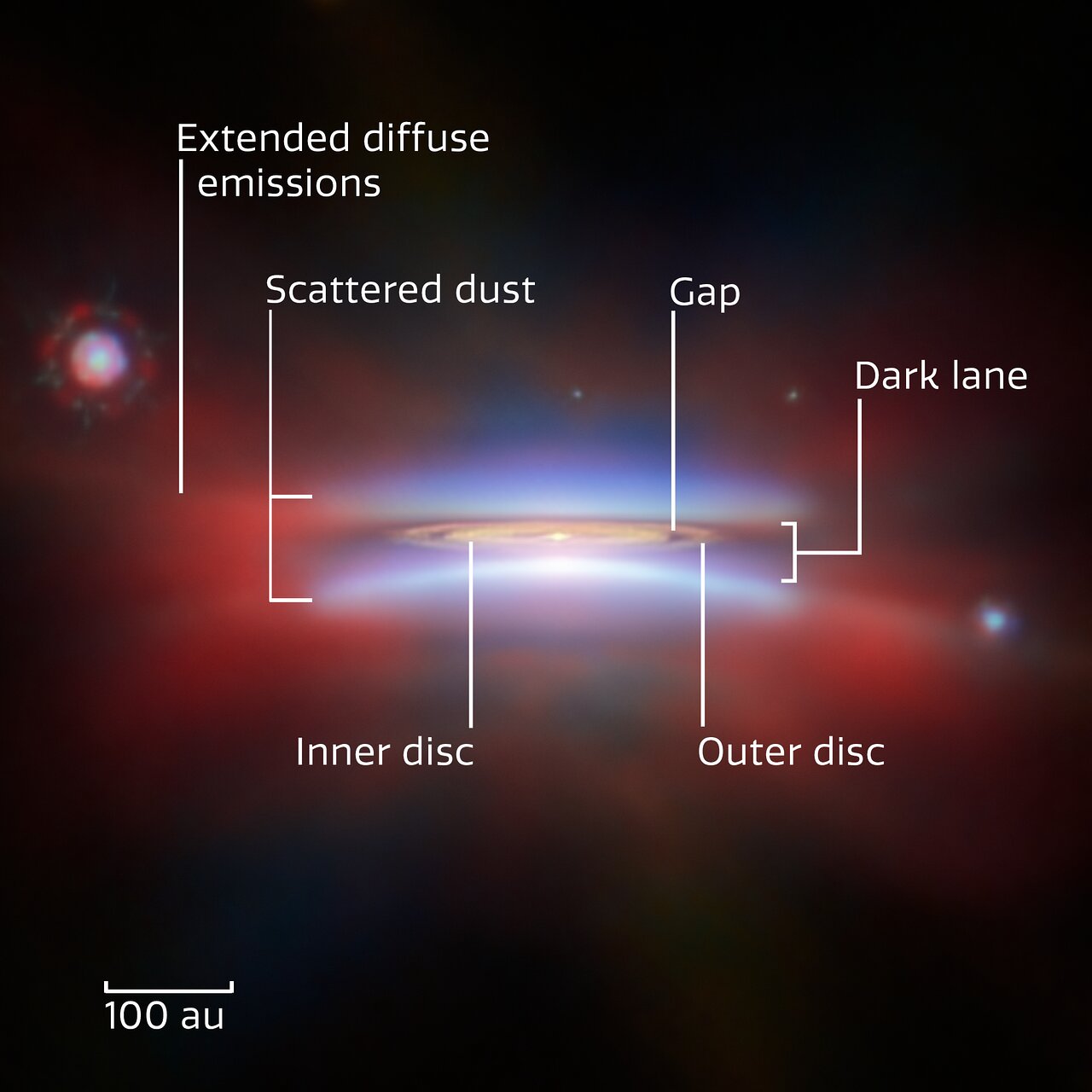
However, the picture would be incomplete without the help of other observatories. Data from Hubble helped capture the visible light reflected by tiny dust particles just a few micrometers in size. Observations using the ALMA (Atacama Large Millimeter/submillimeter Array) ground-based radio telescope revealed large dust grains, each about a millimeter in size, concentrated at the very center of the disk.
Signs of the invisible worlds
The most intriguing discovery awaited the scientists as they analyzed the object Oph 163131. ALMA data revealed a distinct gap in the inner part of the disk. In astronomy, this is considered “conclusive evidence” of the planet’s existence. The massive, forming object literally “sucks up” the space around it with its gravity, clearing its orbit of dust and gas.
In this way, we are not merely looking at beautiful images of space; we are observing the workings of the universe as it creates the conditions for the emergence of new worlds that may one day become home to life.
We previously reported on how Hubble discovered the smallest protoplanetary disk.
According to ESA

