

Simon Marius was a German astronomer of the 16th-17th centuries. He is relatively unknown to the general public, yet it is this figure who claims to be the true discoverer of the Galilean moons. However, the history of this issue is actually quite complicated.
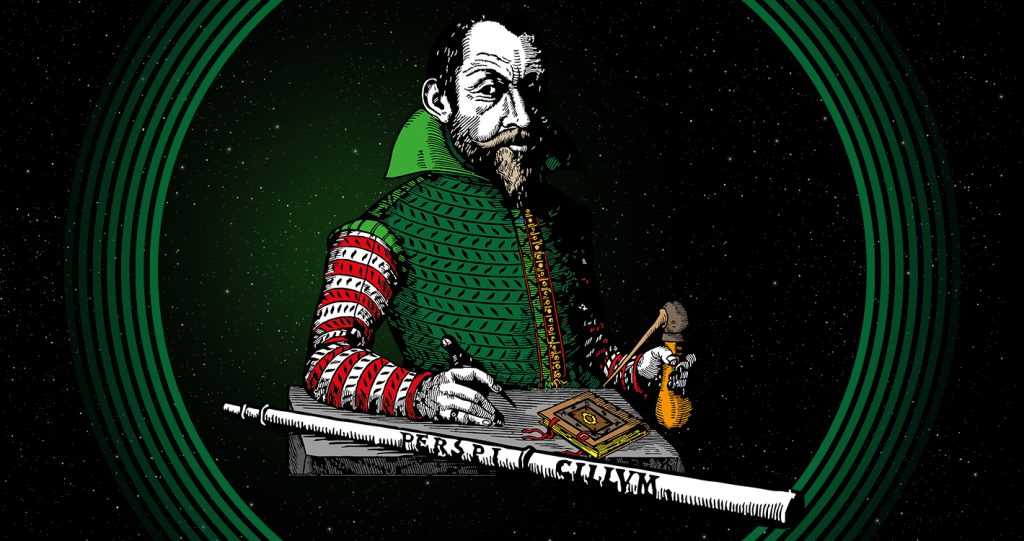
Simon Mayr
January 10 marks the 452nd anniversary of the birth of German astronomer Simon Mayr, whose surname is traditionally Latinized as “Marius.” For centuries, his figure has been the subject of numerous disputes among scientists. After all, researchers of the history of science cannot decide whether he was a mediocrity whose work was closely linked to plagiarism, or a truly outstanding discoverer of astronomical objects.
Marius was born in 1573 into the family of the mayor of Gunzenhausen. From an early age, he showed an aptitude for learning, so in 1586, at the age of 13, on the recommendation of George Frederick, Margrave of Brandenburg-Ansbach, he was accepted into the academy founded by this nobleman. There, Simon proved himself to be a talented mathematician and astronomer and compiled tables of the movements of celestial bodies. However, by 1601, he felt confined within the walls of the provincial academy and wanted to go to the University of Königsberg.
However, he did not have the money to do so. That is when George Frederick came to his aid. However, Marius did not go to Königsberg, but to Prague, where one of the most prominent astronomers of the time, Tycho Brahe, was working. He stayed in Prague for only a few months, after which, for reasons that are not entirely clear, he went to Padua, where he formally studied medicine – a science to which he did not incline either before or after that.
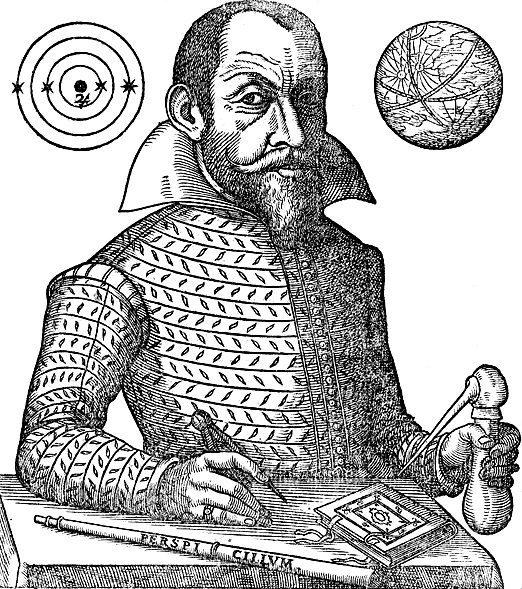
This is doubly surprising given that he did not abandon his studies in astronomy. It was there, in Padua, that Marius met Baldassarre Capra. Astronomy at that time was an extremely fashionable and sometimes scandalous science, as it regularly produced discoveries that could overturn people’s ideas about the world.
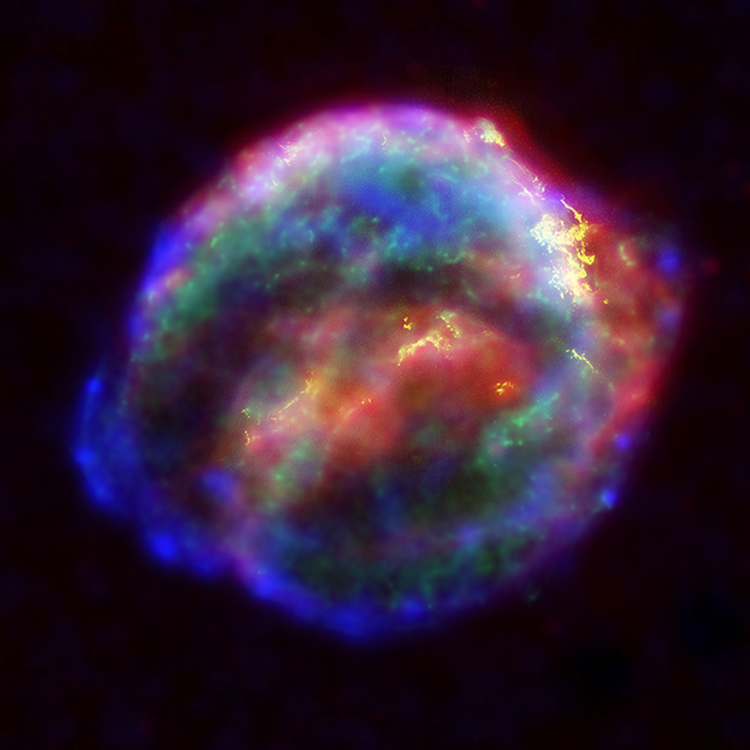
Then, in October 1604, an extraordinary event occurred. A new star appeared in the sky, which we now know as Kepler’s supernova. In fact, many scientists throughout Europe observed it at the time because it challenged the established idea of the immutability of the heavens. After all, the starry sky was then considered the embodiment of eternity, scientists knew nothing about the movement of stars, and supernovae were the first transients ever observed by humans.
Marius and Capra in Padua also observed the new star. The latter passed on the results of those observations to his acquaintance Galileo Galilei, who at that time was not so much an astronomer as a popular lecturer on scientific topics. He took and used this data to question the idea of the immutability of the sphere of stars.
However, he did not mention Capra as the author of the observations, and Capra took great offense at this. He wrote a very critical work on Galileo’s assumptions, in which he pointed out that the previous new star had flared up in 1572, and the time interval between them was equal to the age of Christ. And this must mean something, but not that the heavens are fundamentally unchanging. Capra’s co-author was Marius.
A veritable war of publications broke out between Capra and Galileo, which later escalated into mutual accusations of plagiarism on a completely different topic. In the eyes of the public, Galileo emerged victorious from these dirty disputes, while Capra remained in people’s memories in an extremely negative light.
Telescope and Jupiter’s moons
Simon Marius himself did not live to see the end of this story. In July 1605, he returned to Ansbach to teach mathematics there. However, in the eyes of the European intelligentsia of the time, he remained a friend of the scandalous Capra, a man who had something against the then-popular Galileo.
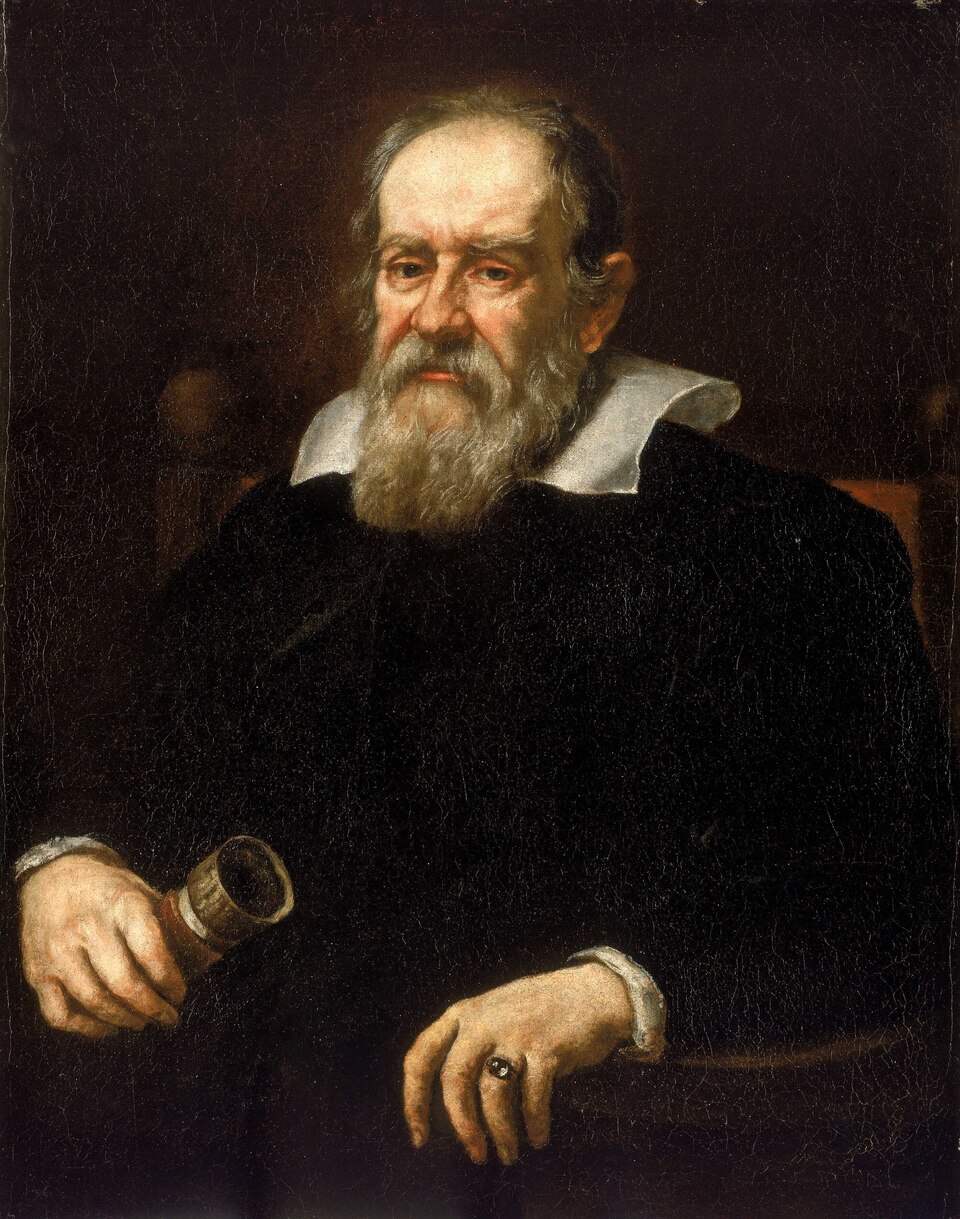
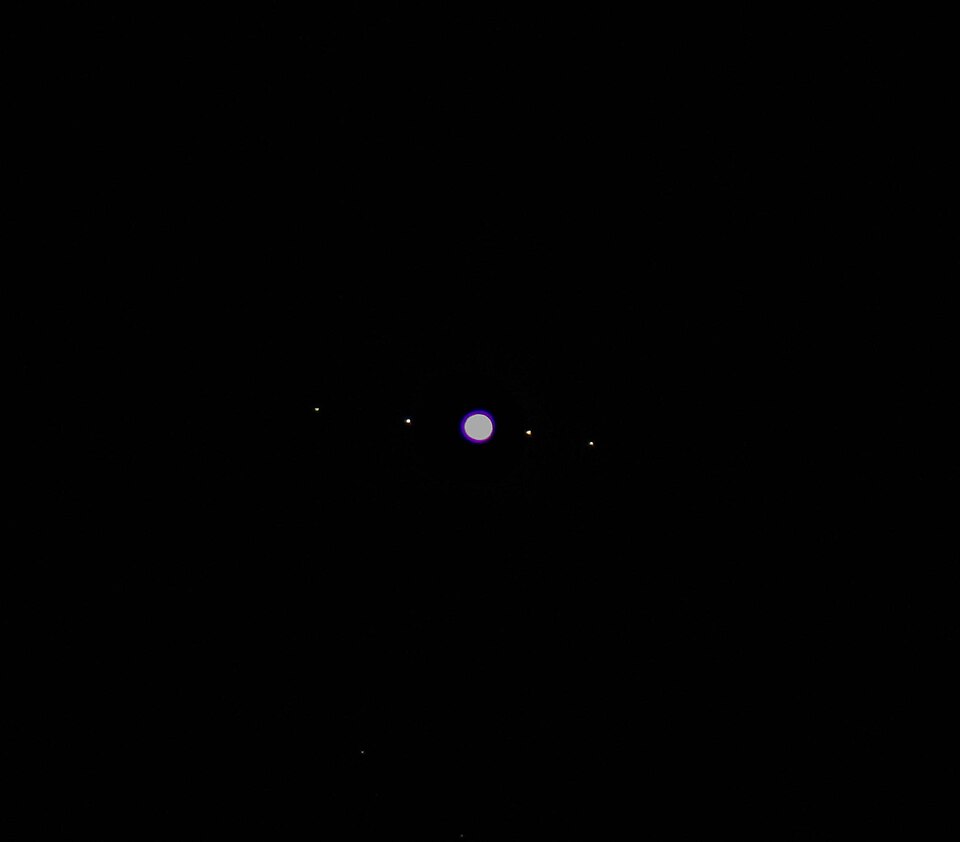
And life brought them together again in the field of astronomy. In 1608, Hans Lipperhey patented a telescope that brought distant objects closer. Soon after, several scientists realized that it could be used for astronomical observations. Among them were Galileo and Marius. And so it happened that not only did they complete the construction of their telescopes almost simultaneously in the fall of 1609, but they also both tried to observe Jupiter with them.
Which of them was the first to see that four more stars were revolving around it has been a subject of debate among scientists for several centuries.
The situation is complicated by the fact that Marius used the old Julian calendar, while Galileo used the new Gregorian calendar. However, regardless of how one interprets the records, it appears that they made their discoveries only a few days apart. Galileo published his observations earlier. In addition, Marius first published them in a small local almanac, and it was not until 1614 that his works became widely known.
At that time, Galileo was already considered a universally recognized pioneer, and a scandal was unfolding around him related to his rejection of the geocentric system of the world. Marius had not yet forgotten his previous hostility towards him. In addition, he himself remained a supporter of the more conservative system of his teacher Tycho Brahe – the one in which the planets revolve around the Sun, and the Sun, in turn, revolves around the immovable Earth.
So instead of fame, the discovery brought him only a reputation as a scandalist. However, in a sense, he managed to get his revenge. The fact is that Galileo himself did not name Jupiter’s moons, limiting himself to numbering them. The names Io, Europa, Ganymede, and Callisto were proposed by Marius. So, in fact, there should be no claims against each other.
Other discoveries and insights
After discovering Jupiter’s moons, Marius lived for another 15 years. He managed to make several more interesting but controversial discoveries. The first of these was the Andromeda Nebula, the galaxy closest to us.
Marius did not understand what it was. But he noticed very clearly that it was a source of light, different from stars, stretching out in space. The nebula, according to his description, was shaped like a candle. Moreover, its brightness decreased evenly from the center to the edges.
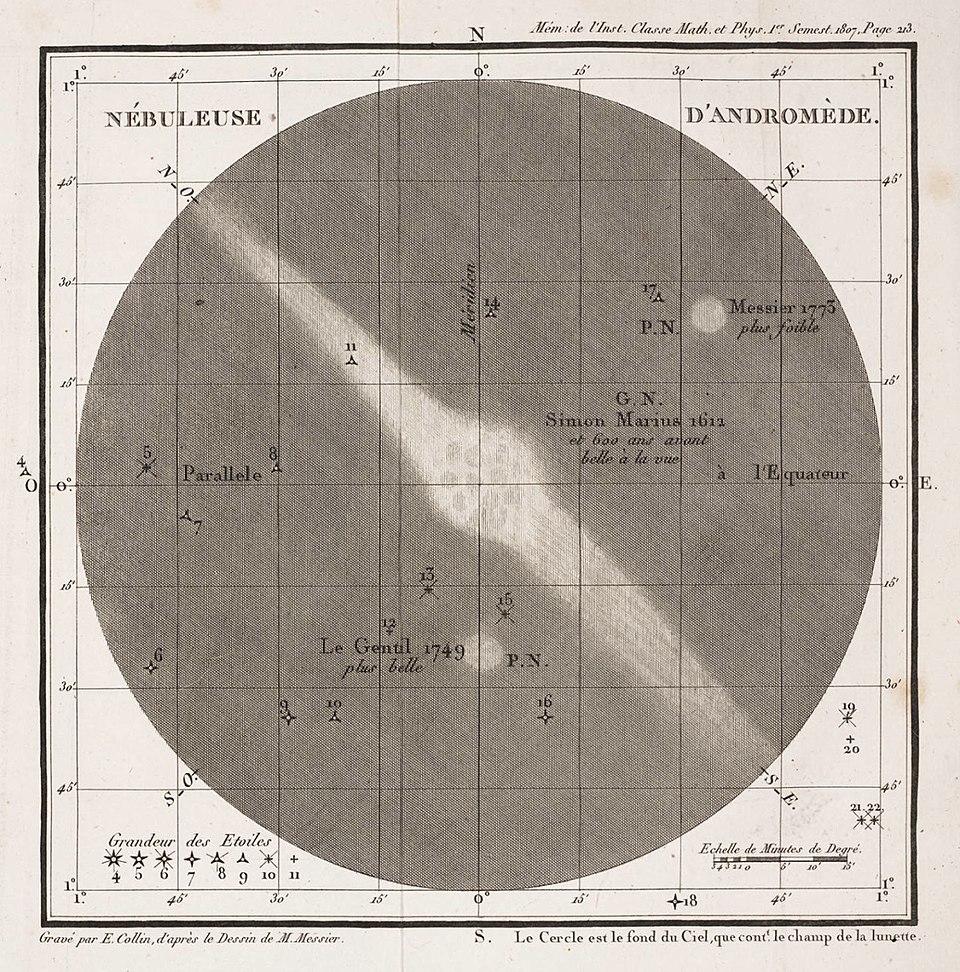
As in the case of Galilean moons, there are certain doubts that Marius was the first to discover the Andromeda Nebula. After all, medieval Arab astronomers had already noted that there was something strange in this part of the sky. It is possible that the German scientist came across a translated work by one of them. But the fact remains that there was no such detailed description of this astronomical object before him.
Another important but controversial discovery by Simon Marius was diffraction discs, which appear around stars when observed through a telescope. This is a purely optical phenomenon, explained by the imperfection of the instruments.
However, Marius took them for real discs of stars. And this led him to false conclusions. Because if he could see them through a telescope, then they could not be far away. Therefore, the idea that each of them was similar to the Sun seemed delusional to him. So, he remained a rather controversial, albeit undoubtedly prominent, figure in people’s memories.

