

For several years now, the Perseverance rover has been exploring a river delta that once flowed into Jezero Crater. Scientists say that these sedimentary deposits may be the very place where life on this planet remains hidden to this day.
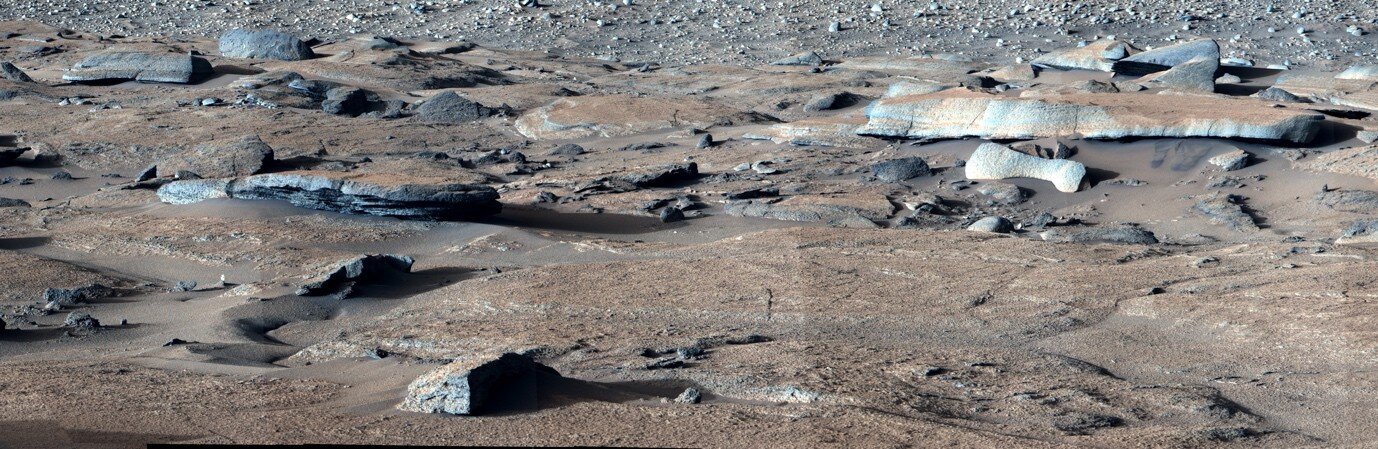
Discovery of an ancient delta in the Jezero crater
Further evidence has emerged that water once flowed on Mars, thanks to the discovery of an ancient river delta deep beneath the surface. NASA’s Perseverance rover detected it more than 35 meters below the surface of Jezero Crater using ground-penetrating radar. Perseverance was launched in 2020 to search for signs of ancient life on Mars. Since landing in February 2021, it has been exploring Jezero Crater and collecting rock samples.
The crater, which is approximately 45 kilometers in diameter, is located north of the Martian equator, resulting from an asteroid impact nearly 4 billion years ago. NASA chose this site for exploration because numerous geological features indicate the presence of water in the past, which may have supported ancient life, particularly in a part of the crater known as the Margin Unit. This region is filled with carbonates, which on Earth typically form in stable aquatic environments, such as shallow seas or lakes.
Detection using radar
The rover used an instrument called RIMFAX (Radar Imager for Mars’ Subsurface Experiment) to peer nearly twice as deep as any previous radar survey of the crater. A team led by Emily Cardarelli of the University of California, Los Angeles, combined this radar data with satellite imagery and the rover’s GPS receiver to create a 3D map of the ancient layers beneath the dusty red surface.
The radar detected numerous fan-shaped features and inclined layers of sedimentary rock characteristic of deltas. These structures form when a river flows into a body of standing water, such as a lake, and deposits sand and silt. According to the researchers, this buried delta formed between 3.7 and 4.2 billion years ago and predates the fan-shaped deposit visible at the bottom of the crater, known as the Western Delta.
More opportunities to discover Martian life?
Perseverance’s latest discovery suggests that a much older river system existed in the same location millions of years ago. “RIMFAX has revealed an earlier subsurface deltaic environment under the present-day delta, thereby extending the period of potential habitability for Jezero back further in time,” the research team wrote in their paper.
The discovery of the delta may indicate that water flowed on Mars much earlier than previously thought, which could well increase our chances of finding preserved evidence of ancient Martian life.
According to phys.org

