

It is now believed that there are only eight large planets in the Solar System. However, the theory that there should be a ninth planet beyond Neptune’s orbit keeps resurfacing in discussions. Does it have reliable evidence, and is it worth paying attention to?
A planet beyond Neptune’s orbit
In 2006, astronomers decided that a new type of object should be introduced to describe the Solar System more accurately: dwarf planets. The result was that Pluto was included in their number, and there were only eight large planets.
Since then, some astronomers have proposed that a real ninth planet must exist somewhere, comparable in size to Earth, Uranus, or even Jupiter. It is worth noting that similar ideas were expressed back when Pluto was considered a full-fledged planet, only then the mysterious body was called the tenth planet, or Planet X.
But where did the assumption that there must be something similar on the outskirts of the Solar System come from? We owe this to the history of the discovery of previous planets.
Invisible planet
Since ancient times, astronomers have known seven celestial bodies that behaved differently from the stars: Mercury, Venus, the Moon, the Sun, Mars, Jupiter, and Saturn. No one discovered them because anyone could observe them anyway. Then came the time of heliocentrism, and scientists concluded that six planets orbit the Sun: Mercury, Venus, Earth, Mars, Jupiter, and Saturn.
When William Herschel discovered Uranus in 1781, it was one of the most important astronomical discoveries of the time. And not only because it forced us to reconsider things that had long been known, but also because it explained certain inconsistencies in the calculations and observational data that had existed until then.
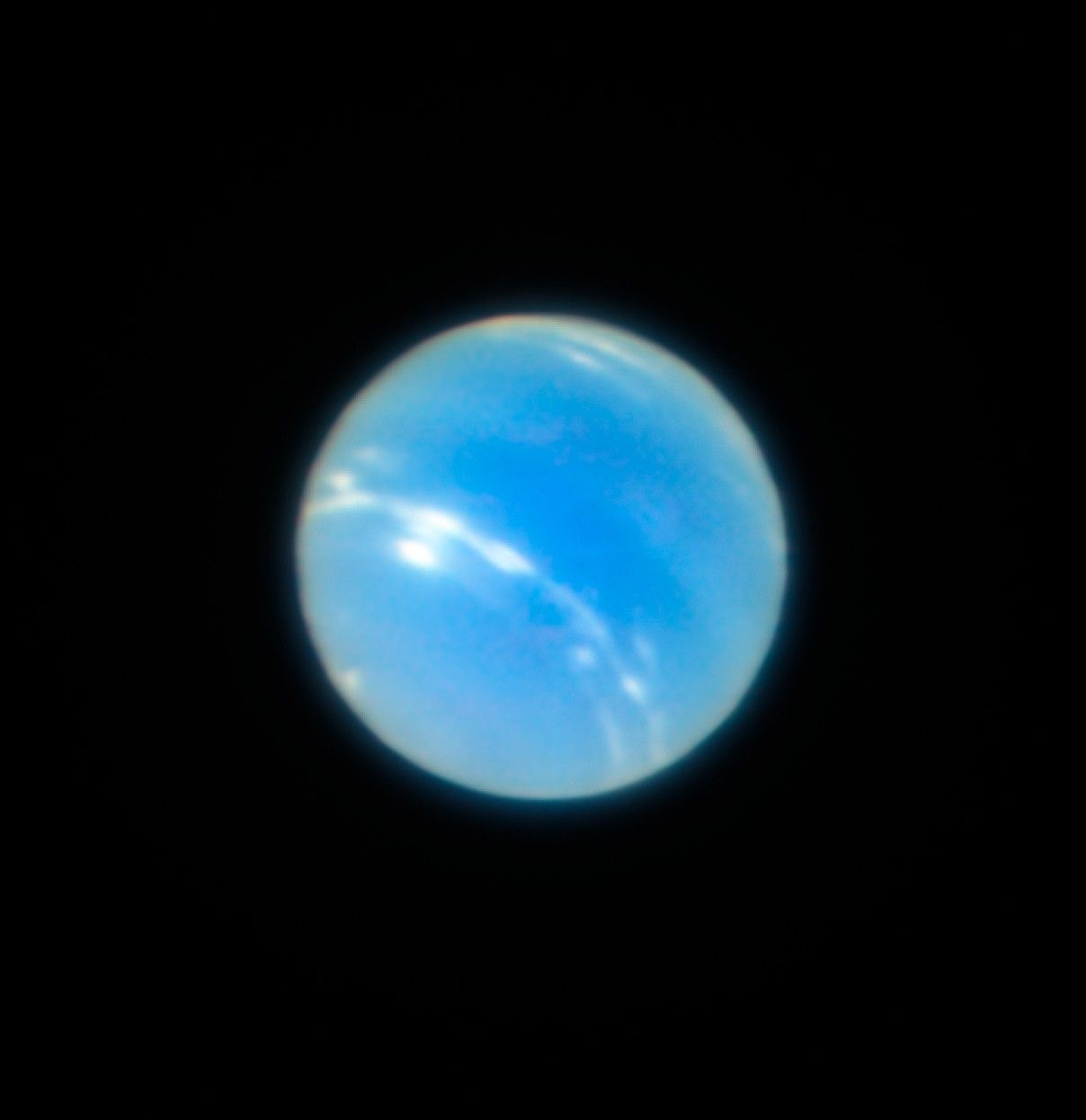
It became clear that planets could remain invisible due to the imperfection of our observation technique, but at the same time reveal themselves through their gravitational influence. This was confirmed by the 1846 discovery of Neptune, whose position had been calculated in advance. But the deviations of observations from the calculations continued to be found, so the assumption of the existence of another planet beyond Neptune’s orbit was quite logical.
The discovery of Pluto in 1930 seemed to confirm that new planets in the Solar System could be discovered in the future, but later it became clear that it was too small to seriously affect the movement of other bodies. Instead, more dwarf planets began to be found near it. However, the search for something big has become a tradition.
Meanwhile, in the early 21st century, the motion of the great planets was tracked with much greater accuracy, and there were fewer and fewer discrepancies with theoretical predictions. The theory of a large planet beyond Neptune was becoming more and more marginalized.
Brown and Batygin
In 2010-2011, the search for the ninth planet suffered a serious blow that should have put an end to it. The WISE satellite surveyed the entire sky in infrared light and discovered several previously unknown brown dwarfs at distances of only a few light years from us.
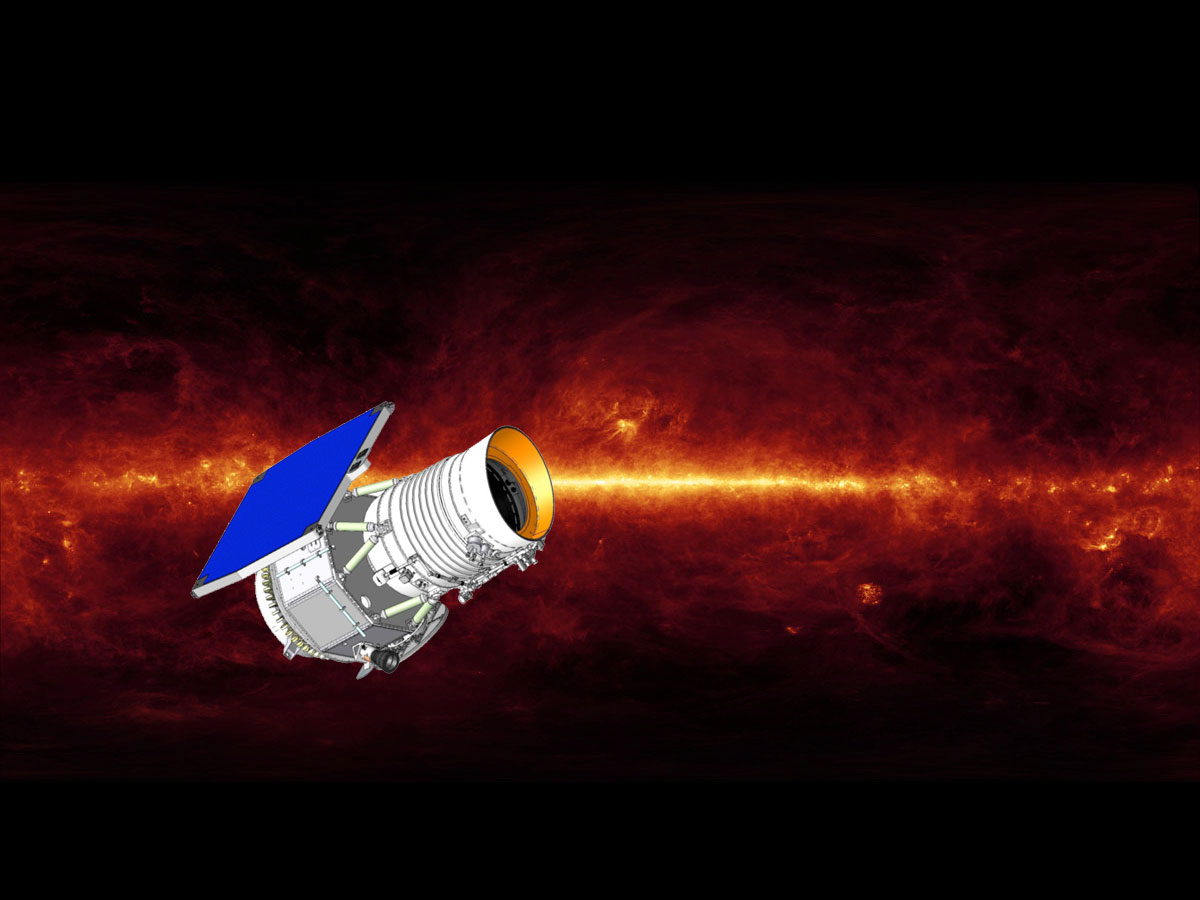
But at the same time, this discovery meant that there are no large bodies directly beyond Neptune’s orbit, otherwise they would have been seen by now. The existence of planets the size of Jupiter or brown dwarfs is excluded altogether. The existence of Neptunes and super-Earths is excluded up to a distance of several hundred AU from the Sun.
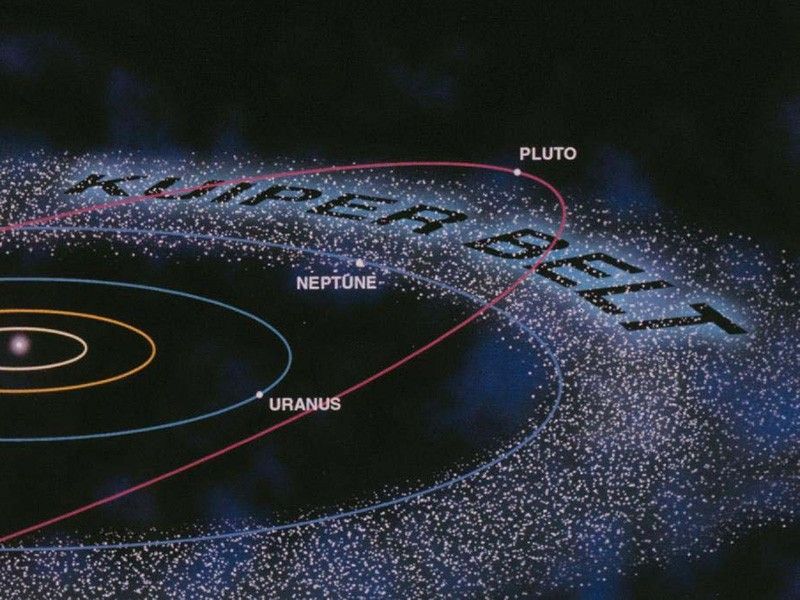
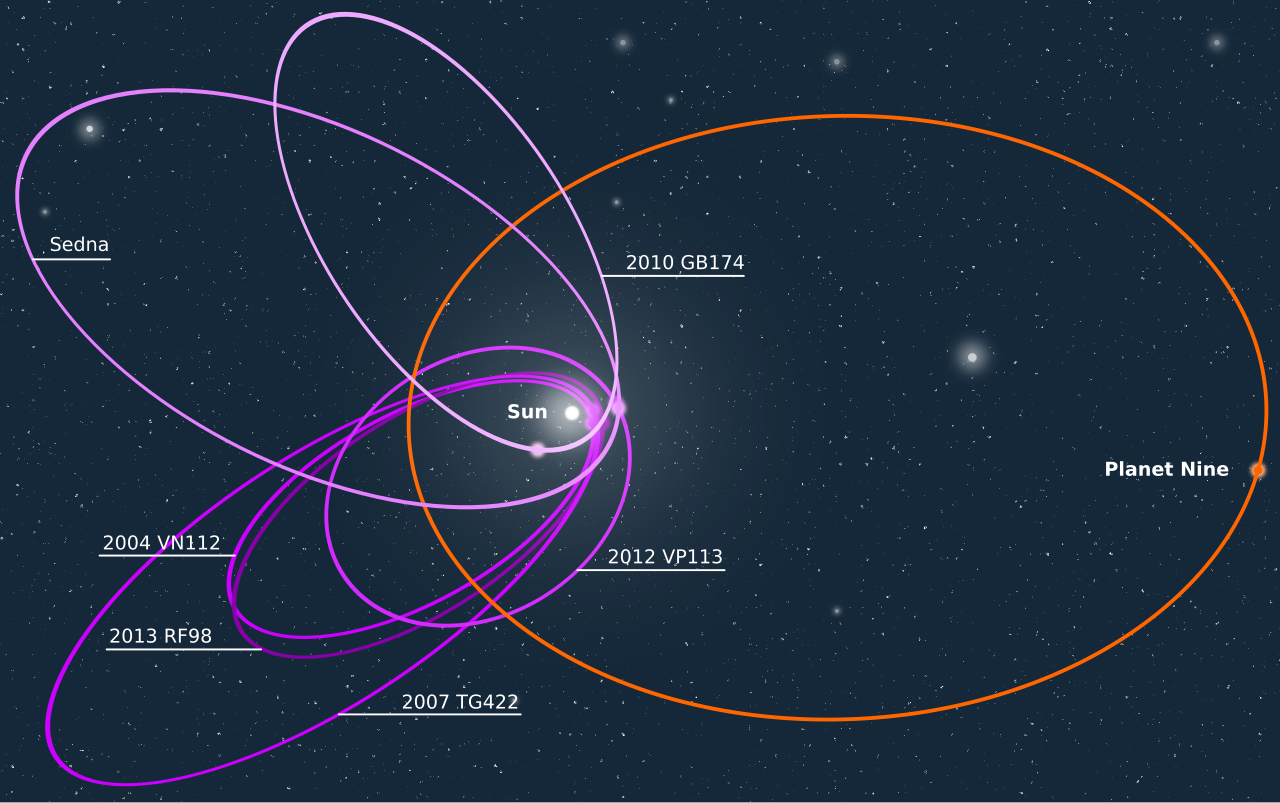
However, it was then that the theory of the ninth planet received a second wind and acquired its modern form. In 2014, Chad Trujillo and Scott Sheppard discovered that six of the then-known large trans-Neptunian objects cross the ecliptic plane at the moment of perihelion, i.e., their closest approach to the Sun. This could be explained by the presence of a ninth planet, and this argument has been the main one for the search for it ever since.
The new theory is no longer tied to the big planets and does not contradict the WISE data. In general, it can be reduced to the statement that yes, there is a planet, but it is smaller than Neptune and is located much further from the Sun than it is.

In 2016, Michael Brown and Konstantin Batygin showed that there are several dozen trans-Neptunian objects with orbits that have a certain anomaly, and with their help calculated that the planet’s mass should be about ten times larger than the Earth’s, and 2-4 times larger in diameter.
Moreover, they have calculated several possible areas in which the ninth planet could be observed now. But this would require a lot of observations with the largest astronomical instruments on Earth.
Almost immediately, however, other astronomers said that the selection of trans-Neptunian objects looked somewhat artificial and that the whole idea looked like an attempt to promote themselves and bargain for scarce time on large telescopes. However, the assumptions could not be denied immediately.
Only in 2021, scientists analyzed data from several astronomical surveys and concluded that there was nothing so anomalous about the trans-Neptunian objects that Brown and Batygin relied on, and their orbits could not serve as an argument in favor of the existence of the ninth planet. To which the authors of the sensational theory replied that critics do not have enough data to completely deny their conclusions.
So is it true or not?
Since then, the scientific community has been divided over the ninth planet: most scientists do not find Brown and Batygin’s calculations convincing, while a minority continues to look for a way to prove that the planet does exist. The problem is that without a direct image, all of these calculations remain just a hypothesis.
And “picking it up and looking” is not as easy as it seems. At a size of several Earth radii and a distance of several hundred AU, the ninth planet will seem like a speck among millions of similarly distant stars, even with the best astronomical instruments.
There is a proven way to distinguish a star from a Solar System object that has been around for centuries. The latter should have a relatively large magnitude of their motion, that is, they should move relatively significantly against the background of the former. However, for the ninth planet, if it is now near the aphelion, this speed is so small that it is almost impossible to trace its movement.
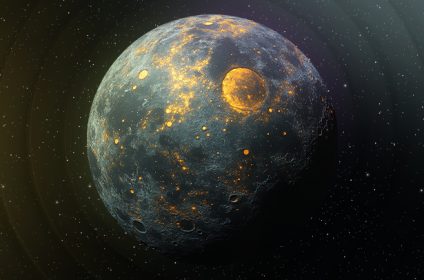
In June 2025, astronomers found two possible candidates for the role of the ninth planet. This was done by working with an archive of infrared data. However, again, this is just a speck that hardly moves in the sky. It may take years to confirm or deny its existence.
Now, scientists have high hopes for the Vera Rubin Observatory, which saw its first light in the summer of 2025. This telescope will be able to see not only the ninth planet, if it exists, but also a bunch of trans-Neptunian objects that remain unknown. One way or another, in a few years it will either confirm the existence of something large beyond Neptune’s orbit or refute the possibility of its presence there, putting an end to years of searching.

