

Australian company HEO Space wants to buy an old geostationary satellite that will soon be decommissioned. It will be used to photograph the asteroid Apophis.
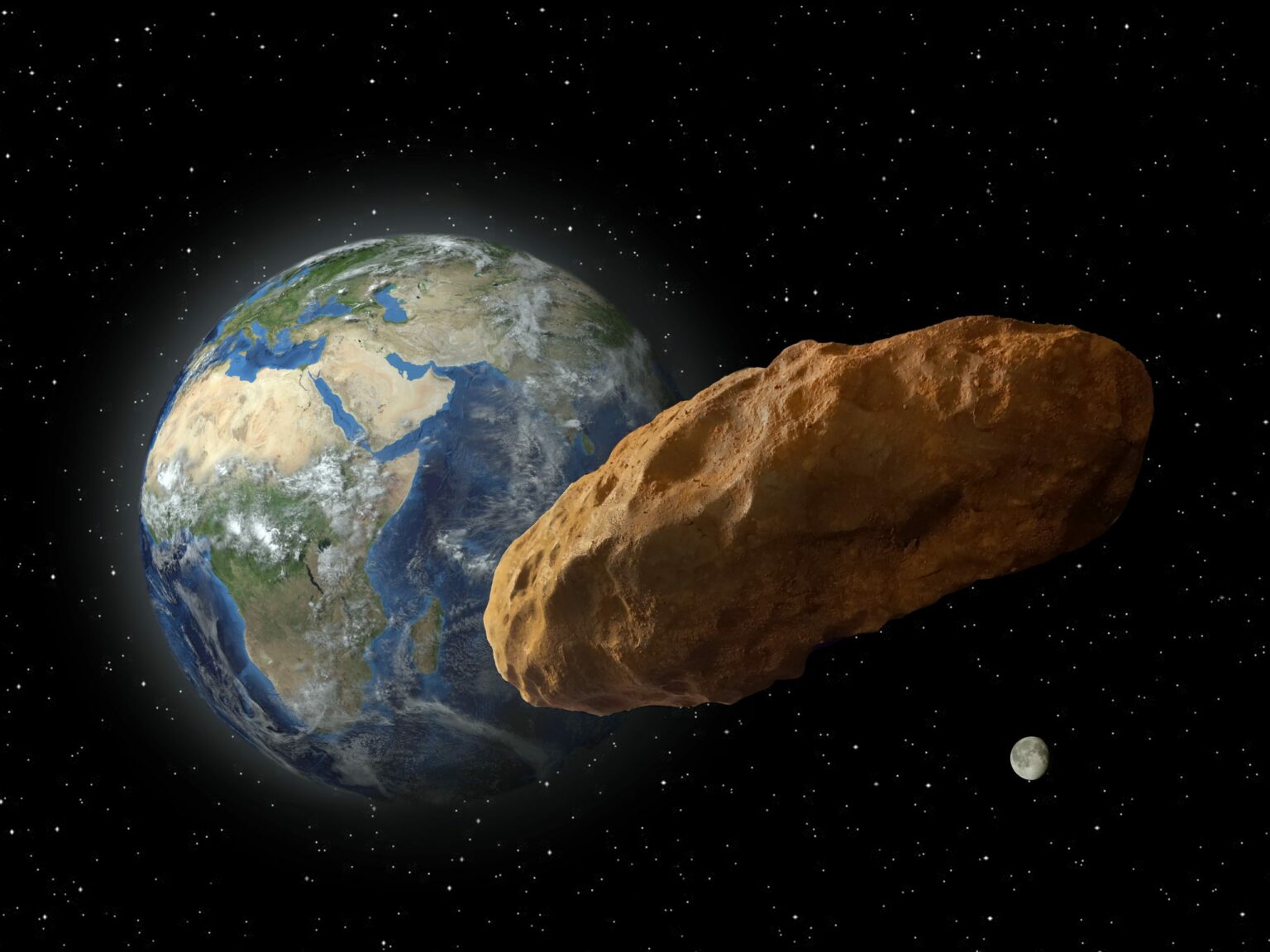
Immediately after its discovery, Apophis was considered the most dangerous asteroid known to us. However, subsequent observations ruled out the possibility of it colliding with Earth in the next century. Nevertheless, Apophis is still of enormous interest. On April 13, 2029, the 350-meter asteroid will fly by at a distance of only 32,000 km from Earth’s surface.
According to scientists’ estimates, such large objects come close to Earth only once every 7,500 years. At the moment of its flyby, Apophis will be visible in the sky with the naked eye. Therefore, the upcoming event is attracting a lot of attention. Virtually all leading space agencies are preparing to send their own missions to the asteroid.
Australian startup HEO Space also plans to contribute to the study of Apophis. The company is primarily known for its work photographing objects in near-Earth orbit using its partners’ satellites. In the past, it has photographed the ISS, the Chinese Tiangong space station, and the Hubble Telescope. Now, Apophis may be added to this “collection.”
At the moment of minimum approach to Earth, the asteroid will be closer to it than geostationary satellites. HEO Space wants to take advantage of this circumstance and use such a device to photograph Apophis. The company plans to purchase an old satellite that will soon be decommissioned. Usually, at the end of their life, geostationary satellites are sent into a graveyard orbit. But HEO Space wants to use a little more fuel than is necessary for the flight to the graveyard orbit in order to get closer to Apophis and photograph it.
This step is part of HEO’s plans to expand its activities. In addition to photographing man-made objects in near-Earth orbit, the company wants to start providing images from across the Solar System on demand. The first step will be asteroids. HEO Space will start with bodies that pass through the Earth-Moon system, after which it plans to gradually cover more distant objects.
According to Space.com

