

A new study has shown that around 41,000 years ago, during an event known as the Laschamps excursion, the Earth’s magnetic field weakened significantly. This led to more harmful solar radiation penetrating the planet’s surface. Therefore, early humans had to adapt to these extreme conditions by hiding in caves and using natural pigments to protect their skin from harmful ultraviolet rays.
The corresponding study was published in the magazine Science Advances.
In particular, during an event known as the Laschamps excursion, the magnetic field protecting Earth from cosmic radiation lost more than 90% of its strength. It split into several weak poles located across the planet. As a result, the Earth’s surface was exposed to increased levels of ultraviolet radiation and charged particles from the Sun.
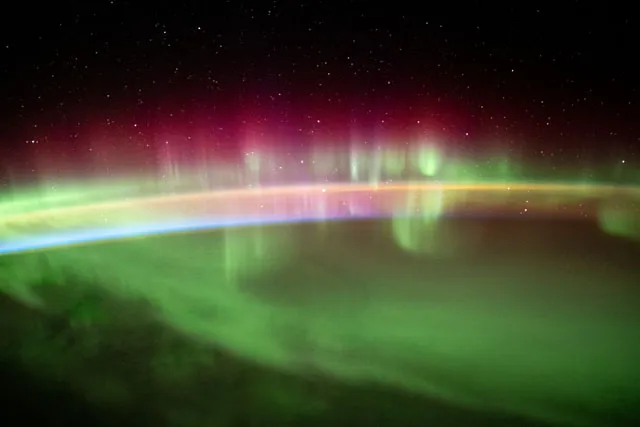
One of the notable changes was unusual phenomena in the sky: auroras, which are usually only visible at the poles, appeared in many latitudes.
In addition, increased solar radiation could have caused sunburn, eye damage, birth defects, and other health problems in early humans. Archaeological evidence suggests that, in order to avoid danger, people began to use deep caves more often as shelters and applied ochre, a natural pigment that could serve as sunscreen, to their skin.
“This remarkable event may have been the factor that stimulated innovation and adaptability in our ancestors,” say the authors of the study.
Could cosmic radiation have caused the extinction of Neanderthals? Scientists believe that although the impact of radiation was significant, it was unlikely to have been the only decisive factor. However, space weather may have influenced the behavior and lifestyle of people at that time, exacerbating other challenges they faced.
Scientists are convinced that understanding how the Earth’s magnetic field has changed in the past and how this has affected life can help humanity better prepare for similar events in the future. This is especially important today, when our lives significantly depend on modern technologies: satellites, electrical networks, the Internet, and other digital systems.
All these technologies are very sensitive to changes in space weather, such as solar storms or radiation bursts. These events often cause disruptions to communications, power supplies, and other important services.

