

Scientists have reproduced the chemical composition and size of Theia. It is believed that at the beginning of the Solar System’s existence, it collided with Earth. Research shows that, like our planet, it formed not too far from the Sun.
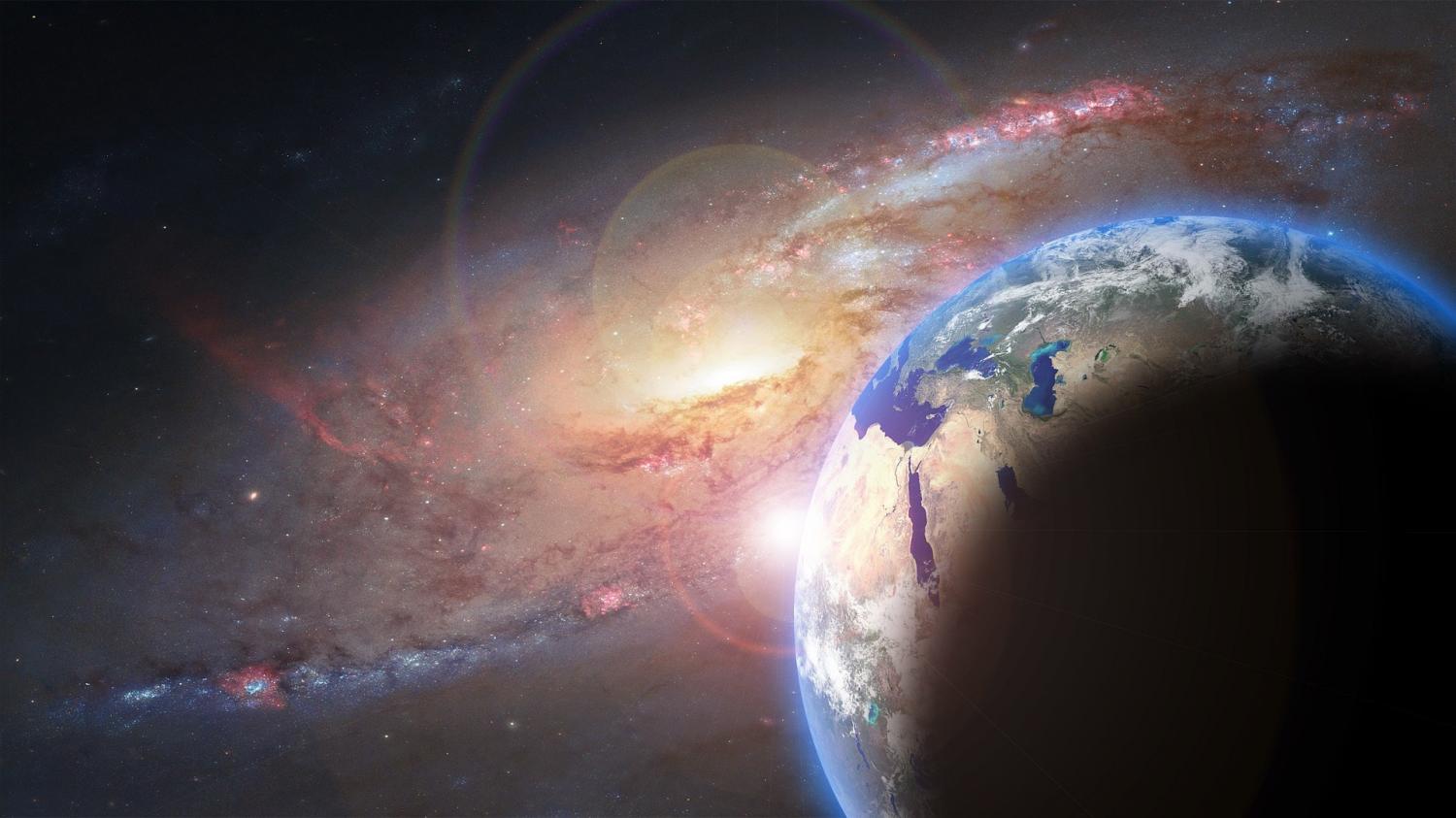
Theia
In a study published in the journal Science, researchers led by the Max Planck Institute for Solar System Research (MPS) and the University of Chicago have discovered where the planet Theia might have come from. It is believed that this small body collided with Earth only a few tens of millions of years after it was formed.
This theory was put forward to explain where the Moon came from. And in principle, it is consistent. However, to this day, no one has been able to definitively say where this mysterious body came from. Did it follow the same orbit as Earth? Or did it follow a different orbit within the inner Solar System? Could it have come from beyond Jupiter’s orbit?
The answers to these questions could be found in the isotopic composition of the Earth and the Moon. Atoms of the same element can have different weights. And they were already separated in the protoplanetary disk around the Sun. The inner parts had one set, while the outer parts had another.
Chemical analysis
Theoretically, the origin of Theia can be determined by the differences in the isotopic composition of its material from that of Earth. To this end, researchers analyzed 15 samples of Earth rocks and six more brought back from the Moon. It is believed that most of Theia’s material may remain on our moon.
Scientists were interested in the ratio of iron isotopes, as well as chromium, molybdenum, and zirconium. And they found no particular differences. It seems that Theia did not come to us from the vicinity of the Solar System, but formed somewhere nearby?
But how close? Simple isotopic analysis cannot answer this question. Scientists resorted to modeling how Earth and Theia could have formed. It turns out that the chemical composition of our planet can easily be reproduced as a combination of different types of meteorites.
However, Theia should have contained a small but noticeable impurity of unknown origin. Scientists believe that this can be explained by assuming that this body formed closer to the Sun than Earth.
According to phys.org

